A licence label alone does not show which regulator oversees an operator or what protections and recourse are available.
What “Non-UKGC” Means—and Which Licences May Appear
A non-UKGC casino is an online gambling site that operates without oversight from the UK Gambling Commission. The term describes the regulator absent from the picture; it does not, by itself, say whether the site has a licence from another authority. Some operators are licensed elsewhere, while the defining point in this label is that the UKGC is not supervising their operation.
That distinction matters because “licensed” is not a complete description unless the licensing authority is identified. A UKGC-licensed online casino is under the Commission’s oversight. A casino described as non-UKGC is outside that particular system, even if its operator presents a licence issued by another jurisdiction. The two descriptions refer to different regulatory arrangements, not to two versions of one UK licence.
The phrase “non-UKGC licensed casinos” can therefore be misleading if read as though it names a single licence category. It is more precise to read it as shorthand for casinos without UK Gambling Commission oversight. The phrase does not establish which authority, if any, has issued a licence, nor does the word “licensed” alone identify what that authority supervises.
Jurisdictions that may appear
Non-UK-regulated casinos are typically associated with licences from jurisdictions such as Malta, Curaçao, Gibraltar or Anjouan. These names refer to separate licensing frameworks. They should not be treated as interchangeable labels: a casino’s stated jurisdiction points to the authority or framework it says governs its licence, rather than to UKGC regulation.
This is why a description such as “licensed in Malta” or “Anjouan casino licence” answers a different question from “UKGC-licensed”. The first identifies a non-UK licensing connection; the second indicates oversight by the UK Gambling Commission. A foreign licence does not become a UKGC licence because a site is accessible to British users or uses UK-facing language.
Nor does the list of jurisdictions mean that every non-UKGC casino holds one of these licences. The jurisdictions are examples commonly associated with such operators, not a complete register of sites or authorities. A label on a casino page is a claim about its regulatory position; the label alone does not provide the full terms of that position.
Casinos & Safety: UK Licensing and Player Checks
The distinction also prevents a common category error: “non-UKGC” does not mean “unlicensed” in every case. It means the site is not operating under UK Gambling Commission oversight. An operator may instead rely on a licence associated with another jurisdiction. Conversely, the use of a foreign place name in promotional material does not, on its own, change the meaning of the term or establish that the UKGC regulates the casino.
Reading the label accurately
The wording “UKGC licensed online casinos” refers to a specific group: online casinos overseen by the UK Gambling Commission. “Casinos not licensed by the UKGC” is broader in everyday use, but the more exact distinction is whether the operator is under the Commission’s oversight. A casino may be licensed elsewhere and still be outside the UKGC system.
The same point applies to searches for which online casinos are licensed by the UKGC. That is a question about UKGC authorisation, not about whether a site displays any licence badge. A badge naming Malta, Curaçao, Gibraltar or Anjouan is not evidence of UKGC oversight; it names a different licensing connection. The terminology should not be collapsed into a single yes-or-no question about whether a casino is “licensed”.
The year in a phrase such as “non-UKGC casinos in 2026” does not create a new licence class. It dates the discussion, while the core meaning remains the same: the casino operates without UK Gambling Commission oversight. The relevant distinction is between oversight by the UKGC and a possible licence from another jurisdiction, not between “licensed” and “unlicensed” as if those were the only two categories.
In practical terms, the label identifies the regulatory boundary of the term, not a full account of a casino’s status. “Non-UKGC” says what it is not regulated by. The jurisdiction named alongside it may indicate a separate licensing framework, but those are distinct pieces of information. Keeping them separate makes descriptions of UKGC-licensed casinos and non-UKGC casinos less ambiguous.
A non-UKGC casino is a site operating without oversight from the UK Gambling Commission, though it may hold a licence from another jurisdiction like Malta, Curaçao, Gibraltar, or Anjouan.
Our top casino picks for the UK
- EvoSpinBonus: 125% up to €2500 + 125 Free Spins · Payout speed: 1-3 business days
- ZombillionBonus: Welcome Pack 250% up to £4000 + 200 FS · Payout speed: 1-3 business days
- ChanzeBonus: Slots Welcome Bonus #1 200% up to €500 · Payout speed: 1-3 business days
- BritsinoBonus: Welcome Package – Get your £2,200 + 2,000 FS · Payout speed: 1-3 business days
- JetsetspinsBonus: 200% Bonus + 100 Free Spins + Free Royal Wheel · Payout speed: 1-3 business days
- Revery PlayBonus: 100% up to€1,000+ 100 FS · Payout speed: 1-3 business days
- NightWinBonus: £900 + 400 free spins · Payout speed: 1-3 business days
- DieselwinBonus: Welcome Pack 250% up to £4000 + 200 FS · Payout speed: 1-3 business days
- BeOnBetBonus: 100% up to €500 + 100 FS · Payout speed: 1-3 business days
- AmunbetBonus: Join now and get 450% up to 2,700 GBP + 450 FS · Payout speed: 1-3 business days
Who May Serve Great Britain, Regardless of Where a Casino Is Based
The relevant boundary is where the gambling service is supplied, not where the operator has its offices or is incorporated. A casino based overseas that serves customers in Great Britain still needs a licence from the UK Gambling Commission. Moving the company’s base abroad does not remove that requirement.
This distinction matters when comparing UKGC-licensed casino sites with casino sites without a UKGC licence. The first category holds the authorisation required for operators serving Great Britain. A non-UKGC casino may hold permission from another jurisdiction, but that does not replace the UKGC licence needed to supply gambling services to customers in Great Britain.
“International” describes an operator’s reach or location; it does not describe its status under British regulation. Likewise, a casino site outside the UKGC system is not exempt from the local requirement simply because its games, customer support or payment operations are managed elsewhere. The test is not whether the company is physically present in Britain. It is whether it serves customers in Great Britain.
That makes the location of a company a poor shortcut for assessing whether it is authorised to serve the market. A business can be based outside the country and still fall within the licensing requirement. Conversely, an overseas licence alone does not show that the operator holds the British authorisation. The two questions—where the operator is based and whether it has the required UKGC licence—must be kept separate.
Non-UK-Regulated Casinos: Licences and UK Rules
The same distinction applies to casino sites without a UKGC licence that are accessible from Britain. A website appearing in search results, accepting account registrations, or being technically reachable does not establish that its operator has permission to serve Great Britain. Access and authorisation are different matters: the former is a feature of the website; the latter is a regulatory status.
For an operator, the licence requirement follows the service relationship rather than the company’s postal address. A UKGC casino site is not defined by having a British office; it is defined, for this purpose, by the relevant UKGC authorisation. An operator based elsewhere may hold that authorisation. An operator with no such licence remains outside the UKGC system, even if its site is presented in English or its business is described as international.
The rule concerns operators supplying gambling services to customers in Great Britain. It is therefore not a special category for UK-owned companies, nor does an offshore corporate structure create a separate route around the requirement. Where real-money casino services are offered to customers in England, Scotland or Wales, the operator must hold a UK Gambling Commission licence.
This is a useful way to read claims about “offshore” or “non-UKGC” casino sites without treating the label as permission. A foreign base may explain why an operator is outside the UKGC framework; it does not establish that it can lawfully serve Great Britain under that framework. The licence question remains attached to the market being served, not to the distance between the operator and its customers.
Regulatory Boundary
An operator’s physical location does not determine their requirement for a UKGC licence; the obligation follows the service provided to customers in Great Britain.
The distinction is narrow but important: a foreign location is not the same thing as a foreign-only service. If an operator serves Great Britain, its location does not change the licensing requirement. If it does not hold the required UKGC licence, describing it as an international casino or pointing to a licence from another jurisdiction does not turn it into a UKGC-licensed operator.
GamStop Status Is Separate from a Casino’s Licence
A casino’s relationship with GamStop and its regulatory status are separate matters. GamStop is the UK Gambling Commission’s self-exclusion scheme; a casino outside it does not participate in that scheme. That fact alone does not establish whether the casino holds a UK Gambling Commission licence.
This distinction matters when a phrase such as “UKGC casino without GamStop” is used. It combines two checks that answer different questions: whether the operator is licensed by the Commission, and whether it is part of GamStop. One status should not be inferred from the other. A site’s absence from the scheme is not proof of a UKGC licence, and the phrase itself is not evidence that a UKGC-licensed casino operates outside GamStop.
The reverse is also important: GamStop membership does not, by itself, establish a casino’s licence status. The scheme is not a substitute for checking the regulator’s records, and a licence label is not a substitute for confirming participation in the scheme. These are separate entries in the risk calculation, not two versions of the same credential.
Curacao Casino License UK: What It Means
For a site claiming UKGC authorisation, the relevant question is whether the operator holds the required Gambling Commission licence. Remote gambling operators serving customers in Great Britain need that licence regardless of where they are based. For GamStop, the question is simply whether the casino participates in the self-exclusion scheme. A statement about one does not settle the other.
This is why “UKGC casinos outside GamStop” should not be treated as a defined class of sites. The wording may describe a claim made by an operator or a label used in a listing, but it cannot verify either status. The licence must be assessed as a licence; GamStop participation must be assessed as scheme participation. Treating the two as interchangeable can turn a search label into an unsupported assurance.
The same caution applies to claims that a casino is “not affected by GamStop” or “not registered with GamStop.” Those descriptions concern the scheme, not regulatory approval. A casino that is not part of GamStop is outside the scheme’s participation framework; that does not make it a UKGC casino. Equally, the fact that a site mentions GamStop does not demonstrate that it is licensed by the Commission.
In practical terms, these labels should be read narrowly. GamStop status says whether the site is included in that self-exclusion scheme. UKGC status concerns the operator’s authorisation to provide gambling services in Great Britain. Keeping the two checks distinct prevents a misleading shortcut: scheme status cannot stand in for a licence, and a licence claim cannot stand in for confirmation of scheme participation.
GamStop Distinction
Attention Being outside the GamStop scheme does not mean a casino is unlicensed; it simply means the operator does not participate in that specific self-exclusion service.
What UK Law Says About Players Using Overseas Gambling Services
The Gambling Act 2005 places its regulatory focus on businesses supplying gambling services to the UK market. Its licensing duties apply to operators, rather than creating a criminal offence for an individual who uses an online casino not regulated by the UK Gambling Commission.
That distinction is narrower than it may first appear. British law does not specifically make it unlawful for a British citizen to use a gambling service licensed in another country. Nor does that mean an overseas licence gives an operator permission to serve customers in Great Britain. The operator’s position and the player’s potential liability are separate legal questions.
For a player, the stated position is that gambling at an unlicensed site is not itself a criminal offence under UK law. For an operator, supplying gambling services into the British market without the required UKGC licence is a different matter: the licensing obligation is directed at the business, wherever it is based. An online casino not licensed by UKGC is therefore not made lawful to offer services in Great Britain simply because the customer is not criminally liable for using it.
This is the key limit on what can be inferred from the player-liability point. It does not amount to official approval of a site, confirmation that its terms comply with UK requirements, or assurance that a UK regulator will supervise the service. An overseas licence describes the operator’s regulatory position in the jurisdiction that issued it; it does not convert the site into a UKGC-licensed online casino.
The same distinction applies when a site is described as a new non-UKGC online casino, or when it is labelled the best or top non-UKGC online casino. Those descriptions do not change the legal test. A ranking, marketing claim or foreign licence cannot substitute for the UKGC operating licence required of operators serving the British market.
The practical summary is therefore two-part: UK law targets operators supplying gambling services into the market, while it does not explicitly criminalise British citizens for using gambling services licensed abroad. Neither part should be stretched into a broader claim. “Not a criminal offence for the player” is not the same as “the operator is authorised to serve Great Britain”; and “licensed elsewhere” is not another name for a UKGC-regulated online casino.
That distinction also prevents a common category error. A UKGC online casino is regulated under the British licensing system. A casino outside UKGC oversight may be licensed in another country, or may lack a relevant licence; neither fact changes who the UK licensing rules address. The player-liability position is limited to the player’s conduct, not a finding that every overseas service is permitted to operate in the UK.
Player Liability
Under UK law, the Gambling Act 2005 targets businesses supplying services to the UK market, rather than creating a criminal offence for individuals using unlicensed sites.
While a British citizen is not specifically made a criminal for using an overseas casino, the operator remains legally obligated to hold a UKGC licence if they intend to serve the British market.
Payment Routes, Withdrawal Timelines and Limits
A non-UKGC casino may route deposits through card payments, e-wallets, bank transfers or cryptocurrency. Alternative payment processors can sit between the player and the casino, so the method shown at checkout may not identify the company handling the transaction. Crypto is one route that can bypass the UK ban on credit-card-funded gambling; that describes the payment mechanism, not a guarantee that a deposit or withdrawal will work as expected.
Deposit availability does not establish withdrawal availability. A casino may accept a particular method for funding an account but use different conditions, processors or routes when paying out. The practical cash-out amount therefore depends on more than the balance displayed: the account must meet the operator’s withdrawal terms, and the chosen payment channel must be usable for that transaction.
Published withdrawal estimates conflict. One account of non-GamStop withdrawals gives a range from 24 hours to 5 business days, with the payment method affecting the timing. Another account of withdrawals at non-UK-regulated casinos warns that a payment can take three or four weeks. These are materially different expectations, not two ways of describing the same service. With no regulatory clock enforcing a deadline, an estimate is not the same as a payment commitment.
Limits can also change the cash-flow calculation. A specialist review has reported operators setting daily, weekly or monthly withdrawal ceilings, which can divide a large win into instalments. That is a reported condition, not a standard that applies to every casino; the applicable limit has to be checked against the operator’s current terms. If a cap applies, the full balance may not be available as one transfer even after a withdrawal request is approved.
Non-GamStop Curacao Casino Sites: UK Guide
The useful comparison is therefore between the deposit route and the cash-out rules attached to the account. A fast funding method says little about how quickly a withdrawal will be processed, and a displayed balance does not reveal whether a cap will spread payment over several periods. The final amount received may arrive in stages rather than as a single payment. Until the withdrawal conditions and payment method are confirmed, the money remains an account balance, not cleared funds.
The Protection and Recourse That May Be Missing
The cost of using a non-UKGC-regulated casino is not limited to differences in account terms. The regulatory framework also determines which safeguards are compulsory and where a complaint can be taken. At a UKGC-regulated casino, mandatory responsible-gambling tools form part of the operator’s obligations. At a non-UK-regulated site, those UK requirements do not apply.
That distinction matters for practical controls such as deposit limits and self-exclusion. A site may display its own controls, but their presence, scope and operation are not the same as protections required under UK regulation. Players using offshore casinos forfeit access to mandatory UK responsible-gambling tools. A control described on a casino’s website should therefore be assessed as an operator’s own policy, not assumed to carry the same status or enforcement as a UKGC requirement.
Data protection is another area where the standard may differ. Non-UK-regulated casinos may operate under less stringent data-protection rules than UKGC-licensed operators. This does not establish that every such operator mishandles personal information; it does mean that UK regulatory oversight cannot be taken for granted. The site’s privacy terms describe what it says it will do, but do not by themselves provide the same assurance as a UK regulatory framework.
Missing Safeguards
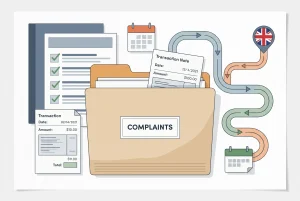
Players at non-UKGC regulated casinos may lack access to mandatory UK responsible-gambling tools and the UK Financial Ombudsman Service for dispute resolution.
Redress is narrower too. Players at offshore casinos do not have access to the UK Financial Ombudsman Service for a dispute with the operator. That removes an established UK route for independent consideration; it is not replaced simply because a casino has a support team or an internal complaints process. If a disagreement concerns account restrictions, funds or the application of terms, the practical route depends on the operator and the protections attached to its own jurisdiction.
A non-UKGC casino review may concentrate on games, payment options or promotions, but those features do not measure the value of safeguards. For a meaningful comparison, the relevant questions are whether limits and exclusion controls are available, whether they are mandatory or voluntary, what data rules apply, and what independent redress exists. A polished interface is not evidence of a stronger protection framework.
The calculation is therefore broader than a possible gain against a possible loss. It includes the value of controls that cannot be relied on as UK-mandated, and the cost of losing access to UK-based recourse. Non-UK-regulated casinos may offer their own policies, but those policies should not be treated as substitutes for UKGC requirements or the Financial Ombudsman Service.
Why “Best” Cannot Be Read from a Licence Label
A licence name identifies a regulatory framework; it does not, by itself, show what would happen if an operator failed or whether its licence permits activity in a particular market. That distinction matters when comparing a UKGC casino with an offshore non-UKGC casino: the label is not a quality score, and “top” or “trusted” cannot be inferred from the jurisdiction printed in a footer.
An Anjouan licence, for instance, does not authorise a casino to operate in the United Kingdom or in other restricted markets. Its presence therefore cannot be treated as evidence that the operator is authorised to serve British customers. Nor does the label establish that player money is protected if the business collapses. Under the Anjouan framework, player funds are not guaranteed to be segregated; if the operator fails, players are unsecured creditors.
That is a material difference, not a technicality. Segregation would concern whether customer funds are kept apart from the operator’s own money. Without a guarantee of that separation, a balance shown in an account does not amount to the same thing as protected funds available on demand if the company becomes insolvent. The licence label alone cannot settle that outcome.
The same caution applies to searches for the best non-UKGC casino in the UK, or for a new international casino with an offshore licence. “New” describes timing, not safeguards; “best” requires criteria beyond the name of a jurisdiction. A site may display a genuine licence and still leave separate questions about where it may operate and what claim a player would have if the operator failed.
Anjouan Licence
Does not authorise operation in the UK and does not guarantee the segregation of player funds.
UKGC Licence
Provides oversight by the UK Gambling Commission and mandates specific player protections.
Other Jurisdictions
Frameworks like Malta or Curaçao identify a non-UK licensing connection.
A comparison is more useful when it separates three things: the regulator named, the markets the licence permits, and the treatment of player funds if the operator ceases trading. Those are distinct conditions. An offshore licence should not be read as a substitute for UKGC oversight, and a UKGC label should not be confused with a general ranking of casino quality. The practical value of either label depends on what it actually establishes—not how prominently it appears.
There is no reliable shortcut from “licensed” to “best”. A licence can identify a framework, but it cannot answer every question about market authorisation or the availability of money after an operator failure. For an Anjouan-licensed casino, the unsecured-creditor position makes that limitation concrete.
What GamStop Does Not Block
GamStop’s reach is limited to gambling businesses that participate in its self-exclusion scheme. A registration therefore does not create a technical block across every casino website. Casinos not on GamStop are outside that scheme, so the self-exclusion does not prevent a registered person from opening or using an account with them.
This is a limit of the scheme, not evidence that a site is suitable or authorised to serve customers in Great Britain. A casino’s absence from GamStop does not establish its regulatory status, and the name of a licence cannot extend GamStop’s coverage. Anjouan-licensed casinos, for instance, are not required to connect to GAMSTOP. That means the scheme cannot apply its exclusion there.
Gibraltar casino licence in the UK: what it means
The distinction matters because self-exclusion is a specific control, not a universal restriction on gambling access. Where a site is outside GamStop, the account may remain available even while an exclusion is active elsewhere. The fact that a website accepts registration does not cancel the exclusion or alter its scope; it means only that the site is not covered by that mechanism.
Nor does the absence of GamStop amount to an alternative self-exclusion arrangement. Anjouan-licensed casinos are not required to provide a comparable independent dispute-resolution process, and their lack of a GamStop connection should not be read as equivalent protection under another scheme. A site may describe its own controls, but that does not make them part of GamStop.
For someone relying on self-exclusion to stop gambling, this is a material gap: the scheme does not block casinos that have not joined it. Searching for a casino beyond its coverage is not a way to extend the exclusion; it removes the external barrier that registration provides on participating sites. Non-UK-regulated casinos may also lack safeguards such as mandatory deposit limits or self-exclusion tools, so the absence of a GamStop block should not be mistaken for a controlled route back to gambling.
The practical boundary is straightforward: GamStop applies within its participating network, not to every casino described as international or non-UK based. Its registration cannot be treated as a site-wide access restriction.
Checking an Anjouan Licence and the Complaint Route
A UK Gambling Commission licence checker and an Anjouan licence check answer different questions. The UKGC tool is for confirming whether an operator holds a UKGC licence; an Anjouan entry does not substitute for one. Online casino sites outside the UKGC should therefore not be treated as UKGC-licensed merely because they display a different regulator’s details.
Anjouan Licence Check
- Verify the company name matches the casino’s name
- Confirm the licence is listed on the public register
- Check that the licence expiry date has not passed
For an Anjouan casino, compare the operator’s details with the public register entry before considering the site. Check that the licence is listed, that its expiry date has not passed, and that the company name matches the one shown by the casino. A mismatch matters: a licence displayed under a different company name does not establish that the operator you are dealing with holds it. The check is about identity and stated licence status, not a guarantee of the casino’s conduct.
The limits of the framework matter alongside the register. Anjouan’s rules do not require RNG testing, audits or segregated player funds. A listed licence should not be read as evidence that those checks or protections are in place.
The complaint route is narrower than the one associated with UKGC-approved independent dispute resolution. Anjouan’s authority does not handle, mediate or decide complaints from players, and an Anjouan-licensed casino does not provide an equivalent independent ADR route. Under the framework, the operator must respond to a complaint within 30 calendar days. That is a response requirement, not a promise that the complaint will be resolved in the player’s favour.
A complaint should be sent to the operator in writing, with the account details and relevant correspondence retained. If the response is unsatisfactory, the Anjouan authority is not a substitute adjudicator. The practical distinction is simple: a licence entry can help establish whether the named company appears on the register, while the complaint process offers no comparable independent decision-maker. Verification confirms a record; it does not create a remedy.
Bonus Terms: The Wagering Requirement Is Part of the Price
A welcome bonus is not cash at face value. Its practical value depends on what must be wagered, which funds the multiplier applies to, whether winnings are capped and how long the offer remains available. Those conditions determine how much play is required before bonus-related funds can be withdrawn.
Anjouan Casino Licence in the UK: Legal Limits
A specialist review reports offshore welcome offers with wagering requirements of 35 times the qualifying amount or more; this is a reported example, not a standard applying to every casino not licensed by the UKGC. The definition of “qualifying amount” matters. A 40-times requirement could apply to the bonus alone, the deposit and bonus together, or a package combining a bonus with free spins, depending on the offer. The same multiplier therefore produces different wagering totals when its base changes.
For a hypothetical bonus of £10, a 40-times requirement on the bonus alone means £400 in wagering. If the terms apply the multiplier to a £10 deposit plus a £10 bonus, the required wagering is £800. These figures illustrate the calculation, not a claim about a current offer. The promotional balance is not the same as withdrawable cash, and a qualifying-winnings cap can reduce the amount payable even after the wagering condition is met.
A specialist review also reports free-spin winnings subject to wagering of 30–50 times those winnings, with withdrawal caps of £5–£50. These terms are offer-specific rather than a reliable market-wide rule. A package may also have a stated expiry window; a specialist review reports free-spin offers expiring within 24–72 hours, but that timing should not be assumed for another promotion.
Before valuing an offer, the relevant calculation is: qualifying amount × wagering multiplier, then compare the resulting play requirement with any winnings cap and expiry condition. If a bonus expires before its conditions can be completed, its advertised value does not become withdrawable funds. A bonus from a non-UKGC casino in the UK should therefore be assessed by its written terms, not its headline amount.
Is it legal for a UK player to gamble at an Anjouan-licensed casino?
UK law does not explicitly prohibit British citizens from using gambling services licensed abroad, and players do not commit a criminal offence by gambling on an unlicensed site. However, an Anjouan licence does not authorise an operator to serve customers in Great Britain; operators serving them need a UK Gambling Commission licence.
Can UK players legally play at casinos licensed in Anjouan?
UK law does not explicitly prohibit British citizens from using gambling services licensed abroad, and players do not commit a criminal offence by gambling on an unlicensed site. An Anjouan licence does not authorise an operator to serve customers in Great Britain, where operators need a UK Gambling Commission licence.
Are sites that are not on GamStop legal for players in the UK to access?
UK law does not explicitly prohibit players from using gambling services licensed abroad, and players do not commit a criminal offence by gambling on an unlicensed site. Operators serving customers in Great Britain need a UK Gambling Commission licence, and sites outside its system are not part of GamStop.
Are gaming sites not on GamStop permitted for UK players?
UK law does not explicitly prohibit players from using gambling services licensed abroad, and players do not commit a criminal offence by gambling on an unlicensed site. Operators serving customers in Great Britain need a UK Gambling Commission licence; sites outside its system are not part of GamStop.
Are Anjouan casinos connected to the GamStop self-exclusion scheme?
No. Anjouan-licensed casinos are not required to integrate GamStop, and casinos outside the UK Gambling Commission system are not part of the scheme.