
Money questions are often the point where a gambling site becomes real: can you deposit, can you withdraw, and what happens if a payment is blocked or delayed? The safe answer is to check the rules before money moves. Do not rely on a headline about easy deposits or fast withdrawals, and do not assume that a method shown on one site will be available, permitted or suitable on another.
This page explains the practical checks around deposits, withdrawals, credit-card restrictions, bank gambling blocks and records. It does not name payment providers, promise access to any method, or give advice on getting around controls. A block, limit or declined payment can be a protection, not a problem to defeat.
Reviewing Casino Deposit & Withdrawal Terms
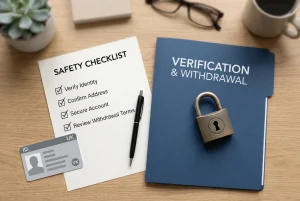
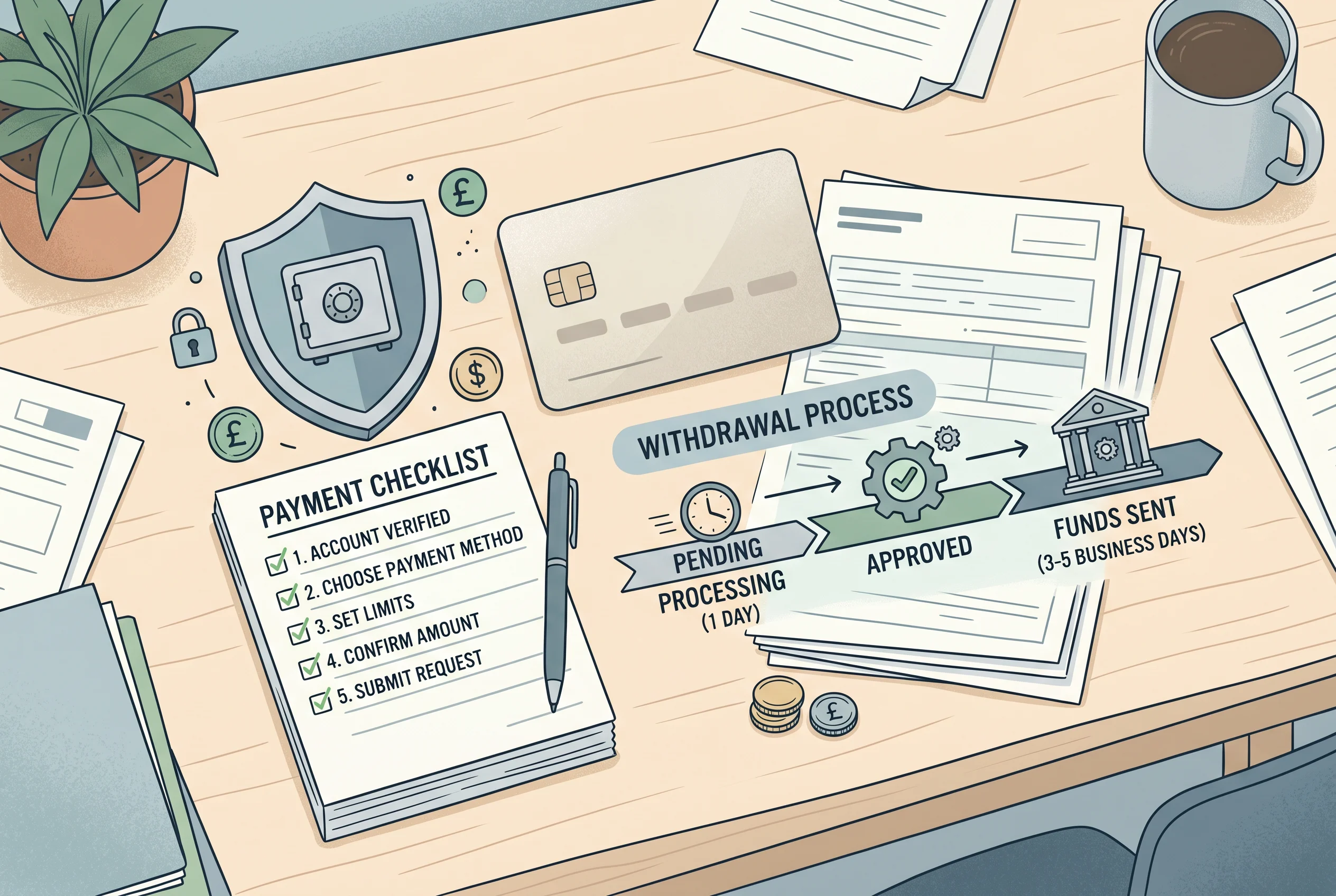
A common mistake is to check only how to put money in. The more useful check is to read deposit and withdrawal terms together. Ask whether the site explains eligible payment methods, account-name matching, document checks, withdrawal limits, pending periods, account review triggers and complaints steps in a way a normal reader can understand.
Great-looking payment icons do not answer those questions. A site can display a general method while still applying restrictions, checks or terms that affect your account. If a rule is unclear before you deposit, it may become a serious practical issue later. You should know what the site says about the route money takes in, the route money can take out, and whether extra checks can happen before release of funds.
Where Great Britain rules apply, payment wording also needs to be read alongside official restrictions. The Gambling Commission states that operators in covered sectors must not accept credit-card payments for gambling. Official guidance also covers credit-card-funded payments through money service businesses such as e-wallet or fintech routes where the rule applies. This is why any message that hints at paying with a credit card through another route should be treated with caution.
Our top casino picks for the UK
- EvoSpinBonus: 125% up to €2500 + 125 Free Spins · Payout speed: 1-3 business days
- ZombillionBonus: Welcome Pack 250% up to £4000 + 200 FS · Payout speed: 1-3 business days
- ChanzeBonus: Slots Welcome Bonus #1 200% up to €500 · Payout speed: 1-3 business days
- BritsinoBonus: Welcome Package – Get your £2,200 + 2,000 FS · Payout speed: 1-3 business days
- JetsetspinsBonus: 200% Bonus + 100 Free Spins + Free Royal Wheel · Payout speed: 1-3 business days
- Revery PlayBonus: 100% up to€1,000+ 100 FS · Payout speed: 1-3 business days
- NightWinBonus: £900 + 400 free spins · Payout speed: 1-3 business days
- DieselwinBonus: Welcome Pack 250% up to £4000 + 200 FS · Payout speed: 1-3 business days
- BeOnBetBonus: 100% up to €500 + 100 FS · Payout speed: 1-3 business days
- AmunbetBonus: Join now and get 450% up to 2,700 GBP + 450 FS · Payout speed: 1-3 business days
Money check table: before deposit vs before withdrawal
| Check | Before depositing | Before withdrawing |
|---|---|---|
| Deposit eligibility | Read whether the method is allowed for your account and whether the payment name must match the account name. | Check whether the same route must be used for withdrawal or whether extra review can apply. |
| Payment-source checks | Look for wording about account ownership, affordability or source-of-funds information without assuming the request will be simple. | Keep messages and documents if a later check affects a withdrawal request. |
| Credit-card rule | For Great Britain licensed gambling, treat credit-card use as restricted under official rules. | Do not expect a withdrawal issue to be solved by changing to a restricted funding route. |
| Bank block | If a gambling block is active, respect it as a protective tool and consider why it was turned on. | If a transaction is stopped, check with your bank or support resources and take the control seriously. |
| Withdrawal terms | Read limits, timing wording and verification requirements before money is committed. | Compare the operator’s response with the terms you saved at the time of deposit. |
| Records to keep | Save relevant terms, payment confirmations and account messages. | Save withdrawal requests, replies, dates and any reasons given for delay or refusal. |
Credit-card restrictions are not a technical inconvenience
The official credit-card restriction for Great Britain should be understood as a protection measure, not as a puzzle to solve. If a site or message suggests that a credit card can be used indirectly for gambling where the restriction applies, pause and check the official guidance. The rule is not limited to the surface of a checkout page; it also deals with credit-card-funded routes through certain money service businesses where relevant.
This matters because payment convenience can hide risk. A reader under pressure may focus on making a deposit work and ignore why a route is restricted. That can make money stress worse, especially if gambling is being used during financial difficulty. If a payment route is unclear, or if the explanation seems designed to sidestep a control, the sensible response is to stop rather than try another route.
You can read official guidance on preventing credit-card use and the related page on credit-card payments through money service businesses. These links are not a substitute for legal advice, but they show why careful wording matters.
Bank gambling blocks are there to help
Many UK banks offer gambling blocks that stop transactions categorised as gambling. The details vary by bank, and a reader should check their own bank’s current information. The important framing is simple: a bank block is a protective tool. It should not be treated as a barrier to beat, especially if it was activated because gambling had become difficult to manage.
If a transaction is blocked, do not rush to another method. Ask what the block is telling you. Is it a control you chose when gambling felt risky? Is a cooling-off period involved? Would making a deposit now conflict with a limit you set for yourself? These questions are more useful than looking for a route that ignores the protection.
The Gambling Commission and support organisations describe financial blocks as part of gambling-management tools. If money pressure is part of the situation, the safer next step is to use support information, review account limits and avoid further deposits while you are unsure.
Why withdrawals get complicated
A withdrawal delay does not automatically prove wrongdoing, and it should not automatically be dismissed as normal either. Delays can involve identity checks, account-name matching, payment-source questions, disputed terms, bonus conditions, system issues or complaint handling. The problem is that a reader may only discover the detail after depositing. That is why the pre-deposit check matters.
The Gambling Commission has highlighted concerns where a business accepts deposits and then raises payment-method issues only at withdrawal. A careful reader should therefore ask before depositing: are the withdrawal rules clear, are ID and account checks explained, and does the site say what happens if the original payment route cannot be used?
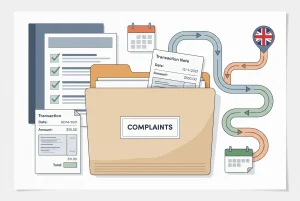
Keep a timeline. Save the date of deposit, the date of withdrawal request, the terms you relied on, and every message about documents or payment method. If the issue becomes a complaint, a clear record is more useful than anger or assumptions.
Practical next steps
- Read the payment terms, withdrawal terms and identity-check wording before depositing.
- Check whether any Great Britain credit-card restriction or bank gambling block applies to your situation.
- Do not use a payment route you do not understand, and do not treat controls as obstacles.
- Save terms and account messages while they are current.
- If a withdrawal issue appears, compare the response with the terms and move to the complaint route if needed.
To ensure smooth transactions, always review the specific ID checks and account verification requirements before making your first deposit.
For identity questions, read ID checks, account verification and withdrawals. If a withdrawal has already turned into a dispute, read complaints and ADR. If a bank block or spending control is active, read support and money controls before making any gambling payment.
This page gives general information about checks and official guidance. It does not promise that any payment method will work or that any withdrawal will be paid.
You can always return to the top UK non-GamStop betting sites list to compare available payment methods across different platforms.