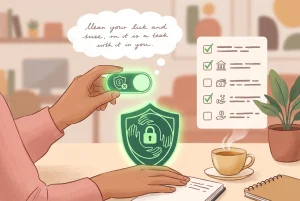
European branding does not change the effect of UK self-exclusion, and casino, bonus and crypto claims need verification.
What “Not on GamStop” Means for UK Players
“Not on GamStop” describes an operator or account that is outside the access-blocking effect of GAMSTOP. It does not mean that a UK self-exclusion has ended, been cancelled or been transferred to a different provider. For someone who has registered with the scheme, the distinction is material: GAMSTOP blocks access to existing gambling accounts and prevents new ones being opened with the online operators covered by the scheme.
GAMSTOP is Great Britain’s national online self-exclusion scheme. It applies across participating licensed gambling websites and apps, rather than to one casino alone. The Gambling Commission made participation compulsory for online operators from 31 March 2020. As a result, UK-licensed online casinos are required to block customers who are excluded through GAMSTOP. A site’s description as a European casino does not alter that obligation when it serves the British market.
The phrase “European casinos not on GamStop” can therefore refer to several different things, but it is not a formal regulatory category. A business may be located in Europe, use European branding or accept customers from different countries; none of those features establishes that it is licensed to serve people in Great Britain. Remote operators offering gambling to British customers must hold the relevant UK Gambling Commission licence, regardless of where the business is based. A foreign location does not create an exception to that rule.
There is also a difference between a UK-licensed account and a gambling service outside the UKGC system. An offshore casino does not hold a UKGC licence. Its ability to appear online or to describe itself as available to British visitors does not make it a UK-regulated casino, nor does it acquire the protections and obligations attached to a British licence. Online gambling in the UK is legal only through licensed and regulated sites.
Casinos & Safety: UK Licensing and Player Checks
For a person who has self-excluded through GAMSTOP, an account at a site outside the scheme does not remove the exclusion. It may instead put the person in a position where the account is not covered by the scheme’s block. Playing at non GamStop casinos could breach the terms of a self-exclusion agreement, even where the operator’s own account system allows registration. Opening another account elsewhere to get around an exclusion is not a safe or appropriate response; the exclusion remains a decision not to gamble, not merely a restriction on one login.
This is why the wording “not on GamStop” should not be read as a recommendation or as proof of suitability. It says something about the relationship between a service and the scheme’s blocking arrangements. It says nothing, by itself, about the service’s UK licensing status, the protections available, or whether using it is consistent with an existing exclusion. The label is not a substitute for a licence, and it does not change the terms of a player’s self-exclusion.
Gambling businesses are required by law to offer self-exclusion. GAMSTOP provides a multi-operator route for online gambling, while an individual business can also have its own self-exclusion process. These are not interchangeable descriptions: an account-level request concerns that business, whereas GAMSTOP is designed to block access across participating licensed online operators. Anyone considering exclusion should include every place where gambling may be tempting, rather than treating one blocked account as the full boundary.
The practical reading is narrow. A UK-licensed online casino must take part in GAMSTOP and block a registered customer. A service described as outside GAMSTOP may sit beyond that particular block, but that does not make it a lawful UK casino or erase an active self-exclusion. The distinction is about coverage, not permission.
European Casino Roulette: What the Search Term Covers
“European casino” can describe a casino associated with Europe, a business operating from a European country, or a site aimed at customers in a particular European market. Those meanings are not interchangeable. For someone in the UK, a casino’s location or European branding does not establish whether it may legally offer real-money gambling to customers in Great Britain. Remote operators serving the British market must hold the relevant UK Gambling Commission licence, regardless of where they are based.
Remote operators serving the British market must hold the relevant UK Gambling Commission licence, regardless of where they are based.
Roulette adds another layer to the phrase. It may indicate an interest in playing roulette at an online casino, rather than a request for a particular casino or a particular roulette table. The wording alone does not identify a verified operator, establish what games it offers, or show which rules apply. A casino label is not a substitute for checking the service behind it.
The practical distinction is between a business’s claimed geography and its regulatory position in the market where the customer is located. A site may present itself as European or operate from elsewhere in Europe, but that does not make it a UK-licensed casino. In Great Britain, real-money online gambling is legal only through operators holding a UK Gambling Commission licence. Offshore casinos sit outside that regulatory system; a European address does not move them inside it.
A roulette search can also leave the key commercial terms unresolved. The word “roulette” does not specify the rules of a table, its limits, the treatment of bets or the conditions attached to play. Those are details of an individual game and operator, not facts that can be inferred from a broad description such as “European casino”. Treating a general label as a complete product description would be a poor basis for calculating risk or deciding where to play.
The same caution applies to phrases that suggest a “best” casino or a list of recommended sites. A ranking has meaning only if its criteria are clear and its entries are checked against them. A polished presentation, a European theme or the presence of roulette in a menu does not establish the operator’s licence or the terms of a particular game. No list can be treated as a reliable selection simply because it is labelled as one.
For British customers, the licence is a material part of the transaction, not a decorative credential. It determines whether the operator is authorised to serve the market under UK rules. The Gambling Commission requires remote operators serving Great Britain consumers to hold the relevant licence. Northern Ireland has a different legal framework: the Gambling Act 2005 applies in England, Wales and Scotland, not Northern Ireland. That distinction matters when broad claims about “UK” availability are made.
Non-UK Registered Casinos: Regulation and Risks
Self-exclusion is another boundary that a roulette offer cannot override. Gambling businesses must provide a way to self-exclude, and a person can exclude themselves from one gambling business or use GAMSTOP to block access across participating UK-licensed online gambling websites and apps. A non-GamStop casino may not be covered by that scheme, but using it while an exclusion is active could breach the terms of that self-exclusion. Opening another account elsewhere is not a way to resolve the restriction; the sensible boundary is to exclude from every place where gambling may be tempting.
Self-exclusion is a formal agreement. Once made, the gambling business must close the account, return the funds held in it and remove the customer’s details from marketing databases. Businesses must also take reasonable steps to prevent an excluded customer from gambling. The regulator cannot refund money spent gambling, so a licence should not be mistaken for a promise that losses can later be recovered.
Important Distinction
"European" describes a broad geographic association, while "roulette" describes the kind of casino activity being sought.
In short, “European” describes a broad geographic association, while “roulette” describes the kind of casino activity being sought. Neither word, on its own, answers the questions that determine whether a site is authorised to serve Great Britain or what terms apply to a particular game. Those distinctions keep a broad casino description from being mistaken for evidence of a suitable or lawful UK service.
Our top casino picks for the UK
- EvoSpinBonus: 125% up to €2500 + 125 Free Spins · Payout speed: 1-3 business days
- ZombillionBonus: Welcome Pack 250% up to £4000 + 200 FS · Payout speed: 1-3 business days
- ChanzeBonus: Slots Welcome Bonus #1 200% up to €500 · Payout speed: 1-3 business days
- BritsinoBonus: Welcome Package – Get your £2,200 + 2,000 FS · Payout speed: 1-3 business days
- JetsetspinsBonus: 200% Bonus + 100 Free Spins + Free Royal Wheel · Payout speed: 1-3 business days
- Revery PlayBonus: 100% up to€1,000+ 100 FS · Payout speed: 1-3 business days
- NightWinBonus: £900 + 400 free spins · Payout speed: 1-3 business days
- DieselwinBonus: Welcome Pack 250% up to £4000 + 200 FS · Payout speed: 1-3 business days
- BeOnBetBonus: 100% up to €500 + 100 FS · Payout speed: 1-3 business days
- AmunbetBonus: Join now and get 450% up to 2,700 GBP + 450 FS · Payout speed: 1-3 business days
European Roulette Searches and the Limits of Verified Information
A request for an online casino offering European roulette is more specific than a search for a European casino generally. The first concerns a particular roulette label and its availability at an online operator; the second may refer to a casino’s perceived location or identity. Neither wording establishes where a business is based, which rules govern it, or whether it is authorised to accept customers in Britain.
The word “European” is not a substitute for a licence check. Remote gambling operators serving consumers in Great Britain are required to hold the relevant UK Gambling Commission licence, wherever the operator itself is located. Online gambling is legal in the UK only through licensed and regulated sites. A casino’s name, a roulette label, or a claim of premium or VIP status does not establish that requirement.
What the roulette wording can and cannot establish
The phrase European roulette identifies the kind of table a person is seeking, but it does not by itself confirm that a particular casino offers that game. Nor does it establish the game’s provider, rules, table limits, or availability to a UK account. Those details would need to be checked against the operator’s own current information; they cannot be inferred from the phrase alone.
Non-GamStop Curacao Casino Sites: UK Guide
The same distinction applies to requests for an online European roulette table or a casino that features one. These are descriptions of desired features, not evidence that a named site has them.
Terms such as “premium” and “VIP” add another layer of description, not proof of a defined service. Without established terms for a particular operator, those labels do not show what access includes or what conditions apply. The useful distinction is between a search description and a documented offer: the former states an interest; only the latter can support a specific claim.
A European roulette label also says nothing about whether a site is licensed for the British market. Offshore casinos operate outside the UK Gambling Commission system and do not hold a UKGC licence. Their accessibility does not make them legal UK online casinos. For a site serving British customers, the relevant question is whether it holds the required UK operating licence, not whether its branding or game description sounds European.
The self-exclusion boundary still applies
The casino and game sought do not alter an existing self-exclusion. GAMSTOP blocks access to current accounts and the creation of new ones with participating licensed online gambling operators across the UK. A player who has excluded themselves should not open another account elsewhere to get around that restriction. Playing at a non-GamStop casino could breach the terms of the self-exclusion.
Do
- Include every place where gambling may be tempting in your self-exclusion.
- Use GAMSTOP to block access across participating licensed online operators.
Don’t
- Open another account elsewhere to get around an existing exclusion.
- Treat a non-GamStop casino as a way to bypass a self-exclusion agreement.
Self-exclusion is not limited to one online scheme: it can also be requested from an individual gambling business. Gambling businesses are required to offer self-exclusion, and a formal agreement means the customer should be refused service by the venues or websites covered by it. Exclusion should cover all places where there may be a temptation to gamble, rather than only the casino or game currently being considered.
These protections matter more than a table label. A person who has self-excluded should not treat a different roulette category, operator location, or account as a route around the agreement. A regulator cannot provide refunds for money spent gambling, so the decision to avoid further access cannot sensibly depend on recovering previous losses.
For anyone comparing European-roulette descriptions, the defensible conclusion is narrow: the wording expresses a preference for a particular roulette category, but it does not verify a game, operator, licence, or VIP benefit. Claims about those details require evidence tied to the specific casino and its current terms. Without that, presenting a recommendation or ranking would turn a label into a promise it cannot support.
Deposits and the Self-Exclusion Boundary
A deposit is not the first decision in an account relationship when self-exclusion is active. The relevant question is whether the gambling business is one from which the player has excluded themselves, or whether the exclusion was registered through a scheme covering multiple operators. Those boundaries matter more than labels such as “European” or “new”.
British Casinos Not on GamStop: Rules and Risks
A player can ask a single online casino to apply self-exclusion, or register with GamStop to block access across participating UK-licensed online gambling websites and apps. GAMSTOP allows one request to cover online operators in the scheme. These are different scopes: an exclusion from one business is not the same arrangement as a multi-operator exclusion. Neither changes according to the deposit method offered by a site.
The phrase “non-GamStop European casino” can suggest that a site is simply outside the scheme. That description does not establish whether the site may lawfully offer real-money gambling to people in Great Britain. Operators serving the British market must hold a UK Gambling Commission licence, regardless of where they are based. Offshore casinos outside the UKGC system are not an alternative category of UK-licensed casino. Nor does the label establish that a particular operator accepts deposits from a UK customer.
Where an exclusion is in force, opening an account elsewhere to get around it is not a sound response. Playing at non-GamStop casinos could breach the terms of a self-exclusion agreement. The exclusion is a formal commitment not to gamble with the business or within the scheme’s scope; moving money to another account does not remove that boundary. Anyone considering self-exclusion should include all places where gambling may be tempting, rather than treating the choice of site as a workaround.
Attention Opening an account elsewhere to get around an exclusion is not a sound response and could breach the terms of a self-exclusion agreement.
Age checks also precede account funding: gambling operators must verify a customer’s age before allowing a deposit. For legal online gambling in the UK, the operator must hold the relevant UKGC licence, and the customer must be at least 18. A page advertising a deposit option or a no-deposit promotion does not, by itself, establish either point. No conclusion about an operator’s status follows from a European location or a promotional label.
The financial consequence is straightforward. A deposit made while excluded does not cancel the exclusion or create permission to gamble. The regulator cannot refund money spent gambling. That is why the decision to self-exclude belongs before account funding, not after a balance has been lost.
Self-exclusion is available through individual online gambling businesses as well as through GamStop for participating licensed operators. The first route sets a boundary with one business; the second applies across the scheme. A deposit-focused search cannot resolve which scope is relevant, and a site’s distance from GamStop is not proof that it is suitable or lawful for a UK player.
Casino Sites and Slots: What Can Be Stated
A European location does not, by itself, establish whether an online casino may legally serve customers in Great Britain. Remote gambling operators selling into the British market must hold a Gambling Commission licence, wherever the business is based. Online gambling is legal in the UK only through licensed and regulated sites, and a legal online casino serving UK players needs a current operating licence. “European” describes geography, not the operator’s UK regulatory status.
That distinction matters when comparing casino sites or slot pages. A polished site, a familiar currency, or a catalogue described as European does not replace the required UK licence. Offshore casinos operate outside the UK Gambling Commission system and do not hold a UKGC licence. A non-GamStop label is not a substitute for that licence, nor does it establish that a site is suitable for a UK customer.
Slot play on UK-licensed sites also has defined limits. Operators must verify a customer’s age before allowing a deposit into a gambling account. Online slot autoplay is prohibited in Britain, and each online slot spin must last at least 2.5 seconds. The maximum stake per game cycle is £5 for customers aged 25 and over, and £2 for those aged 18 to 24. These are operating restrictions, not marketing features; a site description cannot make them optional.
A ranking based on terms such as “best” or “top” would require comparable evidence about the operators and products being ranked. The label alone supplies none. A meaningful assessment would need to establish, at minimum, whether a site is licensed to serve the British market and whether its stated terms match the relevant rules. No particular casino site or slot product should be treated as endorsed merely because it appears in a European-themed description.
Self-exclusion is another boundary that a site label cannot remove. Gambling businesses must offer self-exclusion, and playing at a non-GamStop casino could breach the terms of an existing exclusion. Opening an account elsewhere to get around an exclusion is not a safe workaround; exclusion should cover every place where gambling may be tempting.
Online slot autoplay is prohibited in Britain, and each online slot spin must last at least 2.5 seconds.
For UK-licensed casinos, responsible-gambling controls form part of the regulated service. That does not make every promotional claim a reliable measure of value. The practical distinction is between a site’s presentation and the conditions under which it can lawfully provide gambling to customers in Great Britain.
UK Players and the Consequences of Self-Exclusion
A European label does not determine whether an online casino may legally serve customers in Britain. Remote gambling operators offering services to the British market must hold a UK Gambling Commission licence. Gambling businesses are also required to offer self-exclusion: a customer can ask a company to stop them betting with it for an agreed period, commonly within a range from six months to five years.
The protection has practical consequences for an excluded customer. Once the agreement is in place, the business must close the account, return any remaining account funds and remove the customer’s details from its marketing database. The excluded person must then be refused service at the venues or websites covered by that agreement. An age check is required before an operator allows a customer to deposit into a gambling account; that check does not cancel or override an active exclusion.
Self-exclusion applies to the businesses included in the agreement. It is not a general instruction that automatically covers every gambling venue or website. Where gambling remains tempting in more than one place, exclusions should cover all of those places. Opening an account with another operator to get around an exclusion is not a safe workaround. Playing at non GamStop casinos could breach the terms of a self-exclusion agreement, even if the site is accessible.
For UK players considering an online casino described as European, the relevant distinction is not the operator’s branding or location but whether it holds the licence required to serve the British market. A foreign site without the required UK licence is outside the UKGC regulatory system; it should not be treated as a lawful alternative for British customers. A list labelled “best” cannot change that legal position.
Self-exclusion is a preventive control, not a way to recover money already spent. The Gambling Commission cannot provide refunds for gambling losses. Account funds due back under a self-exclusion agreement are different: returning those funds is an obligation of the gambling business, not a refund of past play.
The financial effect is therefore specific. Access to the covered account ends, remaining funds must be returned, and marketing contact must stop. The agreement does not make other gambling accounts part of its scope unless they are separately covered. For customers seeking a broader barrier, the practical step is to include every venue or online business where gambling may otherwise continue.
No-Deposit Bonus Searches: Offers Cannot Be Verified
A no-deposit bonus is a promotional claim, not a cash payment with no conditions attached. Its value depends on the operator’s stated terms: what is credited, which games qualify, whether winnings can be withdrawn, and what restrictions apply.
Understanding No-Deposit Bonuses
A no-deposit bonus is a promotional claim, not a cash payment with no conditions attached. Its value depends on the operator’s stated terms regarding qualifying games, withdrawal conditions, and specific restrictions.
The phrases “European casino” and “European online casino” do not identify a single operator or a common set of bonus rules. Nor does the word “free” settle the calculation. A promotion may carry conditions that determine whether any resulting balance can be withdrawn; the label alone says nothing about those conditions.
For UK players, the licensing position is separate from the promotion. Remote operators offering gambling to customers in Great Britain must hold a Gambling Commission licence, wherever the business is based. A European location or a no-deposit offer does not replace that requirement. Online gambling in the UK is legal only through licensed and regulated sites. A bonus advertisement is not evidence that an operator is authorised to serve the British market.
Self-exclusion also changes the practical meaning of an offer. GAMSTOP blocks access to current gambling accounts and prevents new accounts with participating licensed online gambling operators across the UK. A person who has excluded themselves should not open an account elsewhere to get around that restriction. Gambling at a non GamStop casino could breach the terms of the self-exclusion agreement; a promotion does not cancel the agreement or make the account appropriate to use.
Promotional wording should therefore be kept separate from the amount a customer can actually withdraw. If a bonus is presented without clear operator identity and full applicable terms, its advertised value is not a reliable measure of money available. “No deposit” describes one feature of an offer; it does not establish that the offer is cost-free in practical terms, that winnings are withdrawable, or that the operator is licensed for UK customers. A ranking of European no-deposit bonuses would need comparable, current terms for identified operators.
Casino and Slot Searches Without a Ranked List
A European label is not a measure of a casino’s standing. It may describe an operator’s location, its audience or the way a site presents itself, but it does not establish which business is behind the account or what rules apply to a UK customer. A list assembled around that label therefore cannot, by itself, show which casino is best.
For customers in Great Britain, the relevant legal distinction is whether a remote operator holds a Gambling Commission licence to serve the market. Operators selling remote gambling into Great Britain must hold the relevant licence, wherever they are based. Offshore casinos outside the UK regulatory system do not hold that licence; a European location does not alter the position. Online gambling is legal in the UK only through licensed and regulated sites.
The same caution applies to claims about the best slots. A broad regional description says nothing about the terms of a particular game or the operator offering it. Nor does a casino list establish that every entry is suitable for a UK customer. These are separate questions, and a shared label does not answer them.
A practical assessment starts with the operator’s status, not a ranking badge. UK-licensed casinos must provide responsible-gambling tools, including self-exclusion, and gambling businesses are required by law to offer self-exclusion. A person who has excluded themselves should not open another account elsewhere to get around that agreement. Playing at a non GamStop casino could breach the terms of that exclusion. The exclusion should cover every place where there may be a temptation to gamble.
Summary of Findings
- A European label is not a measure of a casino’s standing or regulatory status.
- Offshore casinos outside the UK regulatory system do not hold a UKGC licence.
- Regulatory oversight cannot refund money lost through gambling.
- A list or ranking is not a substitute for verifying an operator’s legal status and operating terms.
There is also a financial limit to what regulatory oversight can do: the Gambling Commission cannot refund money lost through gambling. A ranking or regional label does not change that. For selection purposes, the useful distinction is between a description of a site and evidence about its legal status and operating terms. Without that distinction, a long list supplies names, not a reliable basis for a decision.
Crypto Casino Searches: No Verified Operators to Name
A European label and cryptocurrency payments are separate claims. A site may present itself as European, but that description does not establish where it is licensed, whether it accepts cryptocurrency, or whether it may legally serve customers in Great Britain. For real-money gambling offered to British customers, the operator must hold the relevant UK Gambling Commission licence, regardless of its location.
That distinction matters because an offshore casino is outside the UKGC regulatory system. A foreign licence, if displayed, does not replace the British operating licence required to serve the market. A cryptocurrency option would not alter that requirement. The payment method is not a substitute for checking the operator’s regulatory status.
The phrase “European crypto casino” can therefore combine several assumptions: European location, cryptocurrency deposits or withdrawals, and availability to UK players. None follows automatically from the others. A promotional label is not evidence of the licence or payment arrangements, and no named operator should be treated as confirmed on that basis.
For an account holder who has self-excluded, the payment route does not change the exclusion. Playing at a non GamStop casino could breach the terms of that self-exclusion. Opening another account elsewhere to get around an exclusion is not a safe workaround; self-exclusion is a formal agreement, and gambling businesses must take reasonable steps to prevent excluded customers from gambling.
The practical distinction is between a payment claim and permission to offer gambling in Britain. A site’s use of cryptocurrency says nothing by itself about UKGC authorisation or whether access is consistent with an existing self-exclusion. UK gambling rules apply to operators serving the British market, not just to those physically based in the country. A European address or crypto payment option does not change that boundary.
European Casino Games: Evidence Boundaries
A reference to European casino games does not, by itself, establish which games a particular site offers, who supplies them or whether they are available to UK customers. “European” may describe a site’s intended market or branding; it is not proof of a casino’s legal status or a catalogue of its games.
Under the Gambling Act 2005, a casino is an arrangement that gives people the opportunity to take part in one or more casino games. That definition does not verify any particular game or online product. In Great Britain, a remote operator offering real-money gambling to customers must hold the relevant Gambling Commission licence. An overseas location or European label does not replace that requirement.
The same distinction applies to references to a European roulette game. The wording identifies a subject, not a confirmed game, provider, rule set or offering at any named casino. No particular game can be recommended on that basis. Details such as rules and availability need evidence tied to the specific operator and product, rather than inference from a broad regional label.
Self-exclusion also remains relevant regardless of the games on offer. Gambling businesses must provide a way to self-exclude, and an excluded customer must not open another account elsewhere to get around that agreement. Playing at a non GamStop casino could breach the terms of an existing self-exclusion. The boundary is therefore about the customer’s exclusion, not the game catalogue: a different label does not cancel an active commitment.
How does self-exclusion work?
You identify the gambling venues or websites you want to exclude yourself from, provide information to confirm your identity, choose a duration and receive confirmation. A request can cover one gambling business or, through GAMSTOP, participating licensed online operators.
How do I return from self-exclusion?
For GAMSTOP, contact the scheme directly to request removal. A 24-hour cooling-off period applies after identity verification, and it can take operators a further 24 to 48 hours to update your status.
How does Gamstop benefit me?
GAMSTOP lets you block access to existing accounts and prevent new accounts with participating UK online gambling operators through one free request. The exclusion applies across those operators, rather than to just one gambling business.
How long does it require for GamStop to become active after sign-up?
The 24-hour cooling-off period starts once your identity has been verified, and the exclusion remains active during that period.
How does a non-GamStop casino handle self-exclusion?
A casino outside GAMSTOP may not be covered by GAMSTOP’s access block, but that does not end or cancel your exclusion. You can contact an individual gambling business to request self-exclusion from its service.
Can I play roulette at non-GamStop casinos from the UK?
No—not legally at a real-money casino that is outside the UK Gambling Commission’s licensing system. Operators serving Great Britain must hold the relevant UK licence, and UK-licensed online casinos must participate in GAMSTOP.
What self-exclusion options are available at non-GamStop casinos?
You can ask an individual gambling business to exclude you from its service, usually through its Responsible Gambling or Safer Gambling page or by contacting customer services. This individual exclusion is separate from GAMSTOP.
Can a self-excluded player use a non-GamStop casino?
A casino outside GAMSTOP may not block access through the scheme, but using it does not cancel the self-exclusion. Self-exclusion is a formal agreement not to gamble, so using another account to get around it is not an appropriate response.