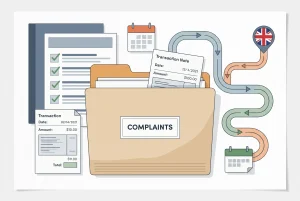
A jurisdictional claim alone does not establish UK oversight, authority to operate in the UK or the protections and complaint routes available.
What “Non-UK-Regulated” Means
A non-UK-regulated casino is an online gambling site operating without oversight from the UK Gambling Commission (UKGC). The term describes the site’s regulatory position, not the games it offers, the currency it uses or the country shown in its branding. A casino may present itself as international, use a name associated with another place or accept customers from several markets; none of those details alone establishes which regulator oversees it.
Non-UK-regulated casinos are commonly associated with licences issued in Malta, Curaçao, Gibraltar and Anjouan. These are separate jurisdictions, and the phrase “licensed overseas” is a broad description rather than the name of one shared regulatory system. The authority and framework relevant to a particular casino depend on the licence it claims to hold. Naming a jurisdiction, therefore, identifies a possible licensing connection; it does not establish that every casino linked to that place has the same status or conditions.
Curacao Casino License UK: What It Means
Gibraltar is one jurisdiction that appears in descriptions of non-UK-regulated casinos. That can make phrases such as “Gibraltar online casinos” sound more precise than they are. The wording may refer to a casino licensed in Gibraltar, a company associated with Gibraltar, or a site described as having a Gibraltar connection. Those are not interchangeable claims. A place in a brand or company description is not, by itself, evidence of a particular licence.
The same distinction applies to searches for online casinos in Gibraltar or casino sites associated with Gibraltar. A reader may be looking for a local operator, a site whose licence is said to come from Gibraltar, or simply a casino that accepts customers in Britain and mentions Gibraltar in its materials. The wording alone cannot settle which meaning applies. The useful starting point is to separate the operator’s location, the jurisdiction named in its licensing information and the regulator that actually provides oversight.
“Non-UK-regulated” is also a more exact label than “foreign casino.” A company may be based outside the UK, but location alone does not define whether the UKGC oversees its gambling activity. Conversely, the presence of a foreign licence does not make a site UK-regulated. The label is about the absence of UKGC oversight, not a claim that no regulator anywhere is involved.
Non-UK Registered Casinos: Regulation and Risks
That distinction matters when Gibraltar appears beside a casino name. The phrase “Gibraltar-licensed” describes a claimed connection to a licensing jurisdiction; “UK-regulated” describes oversight by the UKGC. They answer different questions. Treating them as synonyms would collapse two separate regulatory descriptions into one, which is convenient wording but poor classification.
There is no single list implied by the phrase “best Gibraltar online casinos”. “Best” might refer to a player’s preferred games, payment arrangements or other features, while “Gibraltar” might refer to licensing, company location or marketing. Those are separate points to establish. A ranking label cannot confirm the licensing position of every named site, and a Gibraltar reference cannot by itself show what services a particular operator provides.
The same care applies to claims about “top” Gibraltar casinos or the best online casinos associated with Gibraltar in a particular year. Such wording can combine a time-sensitive assessment with an unclear jurisdictional description. The year may indicate when a page was prepared, but it does not turn a broad label into proof of current regulatory oversight. The classification still depends on the regulator overseeing the site, rather than on the wording of a headline.
For comparison, Malta, Curaçao and Anjouan also appear among jurisdictions commonly associated with non-UK-regulated casinos. Their inclusion in the same broad category does not make their licensing arrangements identical to one another or to Gibraltar’s. It means only that these jurisdictions are frequently named in connection with casinos outside the UKGC system. The term groups sites by their relationship to UKGC oversight; it does not certify equivalent standards across the jurisdictions.
A careful description keeps those distinctions visible. “Non-UK-regulated casino” identifies a site without UKGC oversight. “Gibraltar-licensed” is a separate claim about licensing jurisdiction. “Based in Gibraltar” is a statement about location. Each phrase carries a different meaning, and one should not be used as a substitute for another. The terminology is less impressive than a ranking badge, but it gives a cleaner account of what is being claimed.
"Non-UK-regulated" refers specifically to the absence of oversight from the UK Gambling Commission (UKGC), regardless of a site’s branding or location.
UK Law and the Limits of a Gibraltar Licence
A Gibraltar licence and a player’s legal position in Britain are separate questions. The first concerns the jurisdiction under which a gambling service is licensed. The second concerns what UK law says about operators and individuals. Treating them as the same issue can lead to a misleading conclusion: that a foreign licence either makes an operator UK-regulated or makes a player criminally liable.
The Gambling Act 2005 is directed at operators supplying gambling services into the UK market, rather than at individual customers. Its territorial scope is England, Wales and Scotland; it does not govern Northern Ireland. In that framework, the legal burden falls on the business providing the service, not on a player simply because they use it.
For an individual, the position is narrower than a blanket statement that every overseas gambling service is lawful to use. UK law does not expressly make it an offence for a British citizen to use a gambling service licensed abroad. Likewise, a player who gambles on a site without a UK licence does not, on that account alone, commit a criminal offence under UK law. Those points concern criminal liability for the player; they do not establish that the operator is authorised to supply services in Britain.
That distinction matters when assessing a Gibraltar online casino. A Gibraltar licence may describe the operator’s regulatory status in Gibraltar, but it does not decide whether the player has committed an offence under UK law. Nor does the absence of player criminal liability turn the foreign licence into UK approval. The licence’s jurisdiction and the customer’s personal legal exposure are different entries in the calculation.
Anjouan Casino Licence in the UK: Legal Limits
“Licensed abroad” also covers more than one legal arrangement. A site may hold a licence issued by another jurisdiction, while its relationship with customers in Britain raises a separate question under British gambling law. The player’s position cannot be inferred solely from the licence label, and the operator’s position cannot be inferred from the fact that a British customer can access a site. Access, licensing status and criminal liability are not interchangeable concepts.
The phrase “Gibraltar casino licence UK” therefore needs careful reading. It might refer to a licence issued in Gibraltar, or to the legal position of a British resident considering a service associated with Gibraltar. Those are not equivalent claims. The first identifies a licensing jurisdiction; the second asks what consequences UK law attaches to the customer’s use of that service. The answer to the latter does not convert the former into a UK licence.
This is a distinction about legal responsibility, not a recommendation to use any particular service. The absence of a criminal offence for the player does not mean that every foreign-licensed site is authorised for the British market, and it does not settle other risks attached to using it. Conversely, the fact that an operator may face requirements when supplying services into Britain should not be rewritten as a claim that the individual customer commits a crime by playing.
In practical terms, a Gibraltar online gambling licence and the player’s UK legal position should be assessed independently. The former identifies where an operator is licensed; the latter concerns the rules applying to the individual. Confusing those two points makes a foreign licence appear to answer a question it does not.
Our top casino picks for the UK
- EvoSpinBonus: 125% up to €2500 + 125 Free Spins · Payout speed: 1-3 business days
- ZombillionBonus: Welcome Pack 250% up to £4000 + 200 FS · Payout speed: 1-3 business days
- ChanzeBonus: Slots Welcome Bonus #1 200% up to €500 · Payout speed: 1-3 business days
- BritsinoBonus: Welcome Package – Get your £2,200 + 2,000 FS · Payout speed: 1-3 business days
- JetsetspinsBonus: 200% Bonus + 100 Free Spins + Free Royal Wheel · Payout speed: 1-3 business days
- Revery PlayBonus: 100% up to€1,000+ 100 FS · Payout speed: 1-3 business days
- NightWinBonus: £900 + 400 free spins · Payout speed: 1-3 business days
- DieselwinBonus: Welcome Pack 250% up to £4000 + 200 FS · Payout speed: 1-3 business days
- BeOnBetBonus: 100% up to €500 + 100 FS · Payout speed: 1-3 business days
- AmunbetBonus: Join now and get 450% up to 2,700 GBP + 450 FS · Payout speed: 1-3 business days
A Foreign Licence Does Not Authorise UK Operations
A Gibraltar licence and permission to offer real-money gambling in Great Britain are separate regulatory questions. The deciding requirement for a casino serving customers in Great Britain is a licence from the UK Gambling Commission. That requirement applies regardless of where the operator is based.
Licensing Distinction
A Gibraltar licence does not grant permission to offer gambling services to customers in Great Britain; only a UK Gambling Commission licence satisfies this requirement.
A licence issued in Gibraltar may indicate that an operator is authorised under Gibraltar’s framework. It does not, by itself, establish that the operator holds the UK licence needed to serve the British market. The same distinction applies to any online casino licensed outside the UK: the issuing jurisdiction’s approval is not a substitute for UK Gambling Commission authorisation.
This matters when a site describes itself as a Gibraltar-licensed casino or displays a foreign licence badge. Those details concern the licence it claims to hold; they do not answer whether it is authorised to offer gambling to customers in Great Britain. A reference to a Gibraltar online casino licence should therefore not be read as evidence of UK approval.
The relevant distinction is between the operator’s base and the market it serves. A company does not avoid the UK licensing requirement by locating its business abroad or obtaining permission from another jurisdiction. If it serves customers in Great Britain, the UK Gambling Commission licence requirement still applies.
This is an operator-level condition, not a matter of whether the games look familiar or the site accepts a particular payment method. Branding, a foreign regulator’s name and an operator’s own description of its credentials do not convert one licence into another. A Gibraltar licence may be relevant to the operator’s status in Gibraltar; it does not establish the separate UK permission.
For that reason, “licensed” is not a complete description. The useful question is which authority issued the licence and whether the operator has the UK Gambling Commission licence required to serve Great Britain. Treating a foreign licence as interchangeable with UK authorisation collapses two different permissions into one—and leaves the central market-access question unanswered.
Jackpot Mobile Casino UK: Rules, Games and Odds
How Offshore Casino Access Changes the Risk Calculation
An account at a non-UK-regulated casino can operate under different conditions from one at a UK-regulated site. The practical difference is not simply the name of the licence or the location of the company. It is the set of controls attached to the account: how deposits and withdrawals are handled, which restrictions apply, and whether a self-exclusion scheme covers the operator.
Non-UK-regulated casinos may apply more lenient deposit and withdrawal policies. That can mean fewer account restrictions and, in some cases, faster payouts. The same flexibility changes the risk calculation. A policy that removes friction from adding or withdrawing money can also leave fewer points at which spending is interrupted. The financial value of an account therefore cannot be assessed from its advertised payment options alone; the operator’s limits and account terms determine how much control remains in practice.
For anyone comparing an online casino associated with Gibraltar with a UK-regulated site, the location label does not settle those practical questions. Gibraltar is one of the jurisdictions associated with non-UK regulation, but a Gibraltar connection does not tell a player how an individual account will be managed. It does not establish whether a deposit cap can be set, how withdrawal requests are treated, or whether self-exclusion applies. Those are separate operating conditions, not consequences that can safely be inferred from a place name.
Account Controls
Non-UK-regulated casinos may operate under different conditions regarding deposit caps, withdrawal processing, and self-exclusion schemes like GamStop.
Casinos not on GamStop do not participate in the UK Gambling Commission’s self-exclusion scheme, meaning a GamStop exclusion does not cover accounts at such casinos.
The same caution applies to searches for real-money casinos linked to Gibraltar, including newer sites. A launch date or a Gibraltar reference does not show that account policies are generous, restrictive or stable. Nor does a list described as the best or top online casinos in Gibraltar establish what happens after registration. Rankings and promotional labels are not substitutes for the terms governing deposits, withdrawals and account access. The calculation starts with the conditions attached to the account, not the wording used to attract it.
The GamStop gap
Casinos not on GamStop do not participate in the UK Gambling Commission’s self-exclusion scheme. A GamStop exclusion therefore does not cover accounts at such casinos. That distinction matters before any comparison of offers or account policies: a person relying on GamStop cannot treat it as a universal barrier to gambling across every site available online.
This is an access issue, not just an administrative difference. Where an operator is outside the scheme, its account is not included in GamStop’s self-exclusion arrangement. A player who has chosen self-exclusion may therefore encounter a different operating environment at a non-UK-regulated casino. The absence of scheme participation should be treated as a material condition, not as a minor feature buried among payment methods.
A less restrictive account policy can appear useful when the immediate concern is access to funds or fewer interruptions. But fewer restrictions can also mean that the player has less structured friction between deciding to deposit and completing a deposit. If spending control depends on account limits or a self-exclusion tool, the presence and scope of those measures matter more than a smooth registration process. Non-UK-regulated casinos do not offer gambling safeguards such as deposit limits or self-exclusion schemes in the same way as UK-regulated operators; GamStop itself does not include them.
Casino Without a UK Licence: Rules and Risks
A different balance of control
The relevant comparison is between convenience and control, not between a short list of advertised features. A permissive deposit policy may reduce delays, while a less restrictive withdrawal policy may make access to a balance simpler. Those conditions can be attractive on their face. Their value changes if the account offers fewer ways to cap activity or if a self-exclusion choice does not reach the operator.
The distinction is particularly important for anyone comparing Gibraltar-licensed online casinos with UK-regulated services. The jurisdiction named in a site’s branding does not answer whether the account participates in GamStop, and it should not be read as a promise of any particular deposit or withdrawal policy. Each condition has to be considered separately. A licence label is not an account-control tool.
The risk calculation also changes over time. A policy that appears manageable when an account is opened may matter differently once repeated deposits, a withdrawal request or a decision to stop gambling is involved. The terms can determine how much flexibility the operator retains and what choices remain available to the account holder. A new Gibraltar-facing casino is not automatically safer or more favourable because it is new; novelty says nothing about the protections or restrictions built into its accounts.
For British players, the practical dividing line is therefore clear: non-UK-regulated account policies may be more permissive, but that flexibility comes with a different control environment. GamStop does not extend to Casinos not on GamStop, and the account may not provide the same deposit-limit and self-exclusion safeguards as a UK-regulated site. Any comparison of Gibraltar-based online gambling services should account for that gap before treating easier access or fewer restrictions as a financial advantage.
Player Protections
Players using offshore casinos may forfeit access to the UK’s Financial Ombudsman Service and mandatory responsible-gambling tools provided by the UKGC.
Player Protection, Complaints and the Cost of Less Oversight
A casino’s location or branding does not establish what happens when an account is disputed, personal information is mishandled or gambling starts to exceed a player’s intended limits. For a Gibraltar-branded casino site, the practical question is which protections apply to the operator and which routes remain available to a player in Britain. A name or marketing label is not a substitute for those terms.
Outside the UK Gambling Commission framework, responsible-gambling and data-protection requirements may be less stringent than those imposed on UK-licensed operators. That difference matters because safeguards are useful before a problem becomes a complaint. A player at a non-UK-regulated casino may not have access to mandatory responsible-gambling tools, including the protections available through the UK system. Deposit limits and self-exclusion should not be assumed to work in the same way—or to be available at all.
Casinos not on GamStop are not part of the UK scheme. That is a practical gap, not merely a difference in terminology: a UK self-exclusion arrangement cannot be treated as a universal block on access to every site operating beyond it. A player seeking to limit gambling therefore cannot rely on UK tools alone to control activity at a non-UK-regulated casino. Any limits offered by the operator are governed by that operator’s own arrangements, rather than by the UKGC’s mandatory framework.
Personal data presents a separate exposure. Where data-protection rules are less stringent, the level of oversight and the protections surrounding account information may differ from those attached to a UK-licensed service. This does not establish that a particular Gibraltar casino mishandles information. It does mean that the jurisdictional label by itself cannot answer how information is collected, retained, used or protected. Those details need to be assessed in the operator’s privacy terms; the word “Gibraltar” is not a data-security control.
Non-UK Licence Casinos: Regulation and Player Rights
The loss is also procedural. Players using offshore casinos forfeit access to the UK’s Financial Ombudsman Service and to mandatory responsible-gambling tools. They should not assume that a disagreement can be escalated through the same UK complaint routes available for a UKGC-licensed operator. If terms are applied differently than expected or a complaint remains unresolved, there may be no recourse to UK regulators. That leaves the operator’s own complaint process as a central part of the practical relationship, rather than a first step before an equivalent UK route.
This distinction is important when comparing claims about the best online casino in Gibraltar. A polished site, a wide choice of games or attractive promotional wording does not measure the quality of complaint handling or the strength of player safeguards. Those are separate conditions. If the operator’s rules do not explain how complaints are submitted, reviewed and answered, the uncertainty belongs in the assessment—not in a footnote after an account has been opened.
The financial cost of weaker oversight is difficult to quantify in advance because it depends on what goes wrong. The relevant comparison is not simply whether a site offers a tool or publishes a policy, but whether a player can rely on enforceable protections and an independent route when the operator’s decision is disputed. An internal policy may offer a process; it is not equivalent to access to UK services or mandatory UKGC protections.
Withdrawal Reality
Payment availability and withdrawal timing vary significantly outside the UK regulatory framework.
A Gibraltar casino claim should therefore be treated as a jurisdictional description, not as evidence of UK-level player protection. Before any account is used, the operator’s responsible-gambling settings, privacy terms and complaint process need to be understood, alongside the fact that UK remedies and mandatory tools may not apply. Players remain responsible for checking local laws and understanding the implications of using an offshore gambling service. When those protections are absent, the apparent convenience has a cost: fewer independent safeguards if the relationship with the operator breaks down.
Payments and Withdrawals: Timing, Limits and Verification
A payment method shown on a deposit page does not establish that the same route will be available for a withdrawal. Non-UK-regulated casinos may accept credit cards, e-wallets, bank transfers and cryptocurrencies, sometimes using alternative processors. The route chosen affects the transfer process, but the cashier’s terms determine whether deposits and withdrawals can use the same method.
Published accounts of withdrawal timing do not agree. Some describe payments at Casinos not on GamStop as arriving within 24 hours to five business days, depending on the method. Other accounts warn that a non-UK-regulated casino withdrawal can take three or four weeks. Those are materially different cash-flow expectations, not two ways of describing the same service. Outside the UK regulatory framework, there is no regulatory clock requiring an operator to complete payment within a specified period.
Merkur casino online UK: licence and bonus checks
Processing time can also be separate from the operator’s handling time. A casino may need to review a withdrawal before releasing it, while the payment provider then has its own transfer process. The headline estimate therefore cannot be treated as a guaranteed arrival date. Any estimate should be read alongside the terms on pending withdrawals, processing stages and available payment methods.
A specialist review reports that some non-UK-regulated casinos set daily, weekly or monthly withdrawal caps, which can split a large win into instalments. This is a reported condition, not a rule that applies to every operator. Where a cap applies, the practical value of a balance depends on how much can be withdrawn in each period and how long the remaining amount may take to clear. A displayed balance and immediately accessible funds are not necessarily the same figure.
Verification can add a further stage. A specialist review reports that some offshore operators may ask for notarised documents or a video call before releasing a withdrawal. Such requirements should not be assumed to apply across the market, but they can change the time and effort involved after a request has been submitted. The relevant conditions are those attached to the individual account and withdrawal, not a general description of a Gibraltar-facing casino site.
For a realistic cash-flow estimate, the useful comparison is therefore not just the list of deposit options. It is the withdrawal route, any processing estimate, any cap on the amount released, and the documents or checks that may be required. A cryptocurrency deposit, card payment or e-wallet balance does not by itself confirm that a matching withdrawal route is supported. Until the terms establish otherwise, payment availability and payment out should be treated as separate questions.
Do
- Verify the actual operating company name
- Check for current and valid licensing details
- Confirm RNG testing and audit records
Don’t
- Assume a Gibraltar brand implies UK approval
- Treat a jurisdictional label as a guarantee of player fund segregation
- Rely on promotional wording for security assessments
Gibraltar Casino Companies and the Limits of Slot-Site Claims
A casino brand, the company operating it and the jurisdiction named in a licence claim are separate pieces of information. A site presenting itself as connected with Gibraltar does not, by that description alone, establish which legal entity runs the gambling service or what the licence covers. A list of Gibraltar casino companies would therefore need current, verifiable company and licensing details; brand names or promotional pages are not a substitute.
The same distinction applies to online slots. A site’s association with Gibraltar does not, on its own, demonstrate that its games have undergone independent random-number-generator testing, that audits have been completed, or that player balances are held separately from operating funds. Those are specific safeguards requiring their own evidence. A jurisdictional label cannot do the work of a testing report, audit record or clear statement about fund handling.
Anjouan illustrates why licensing claims must be read narrowly. Its framework does not require casinos to arrange RNG testing or audits, and it does not require player funds to be segregated. Those are facts about Anjouan’s framework; they should not be transferred to Gibraltar or treated as a description of every foreign licence. Equally, a claim that a casino is Gibraltar-licensed should not be taken as proof of safeguards unless the relevant evidence supports it.
For a Gibraltar-related claim, the useful checks are specific: whether the named operating company matches the entity identified in the licensing information, whether the licence is current, and whether the stated permission corresponds to the service being offered. The Gibraltar Regulatory Authority is the relevant regulator named for Gibraltar. Its presence in a site’s footer, however, is not itself evidence that a particular brand or company holds a valid licence.
The financial distinction is straightforward. A licence claim identifies a regulatory connection; it does not automatically establish how a slot’s random outcomes are tested or what happens to customer balances if the operator fails. Those questions require separate, documented answers. Where the evidence ends at a jurisdiction name, the remaining safeguards are unconfirmed—not included by implication.
Real-Money Slots: Calculate the Bonus Before the Balance
A bonus balance is not cash available for withdrawal. Its value depends on the qualifying amount for the wagering requirement, the multiplier and any cap on winnings. Those terms determine how much play is required before a withdrawal can be requested.
Specialist casino-review material has reported offshore welcome offers with wagering requirements of 35x or higher. That figure should be treated as an offer-specific condition, not a standard applying to every real-money slots offer associated with Gibraltar.
The base for the calculation matters as much as the multiplier. A 40x requirement could apply to the bonus alone, to the bonus plus the deposit, or to a combined bonus-and-free-spins amount. If the terms count the deposit as well, the required turnover is 40 times the combined qualifying amount; if they count only the bonus, it is 40 times that smaller base. The same headline multiplier can therefore produce a materially different play-through obligation.
Before valuing an offer, the terms need to identify what is counted, which games contribute, and whether the requirement is attached to cash bonus funds or promotional winnings. A balance displayed in an account does not answer those questions. Where the qualifying base is unclear, its usable value is unclear too.
Bonus Calculation
Step 1: Identify the base
Determine if the wagering requirement applies to the bonus alone, the deposit, or a combination of both.
Step 2: Apply the multiplier
Multiply the qualifying amount by the specific wagering requirement (e.g., 40x).
Step 3: Check restrictions
Factor in any withdrawal caps or expiry windows that may limit the final playable value.
Free spins can create a separate calculation. Specialist review material has described free-spin winnings with wagering requirements of 30 to 50 times the winnings, alongside withdrawal caps ranging from £5 to £50. These are reported conditions, not universal Gibraltar rules; the specific promotion determines whether either restriction applies. A cap can limit the amount payable even after the wagering requirement is met, so completing the required play-through does not necessarily make all resulting winnings withdrawable.
For any offer, the practical calculation is: identify the eligible balance, apply the multiplier to the correct base, then check the withdrawal cap and expiry terms. Only the amount left after those conditions is a meaningful comparison with a cash balance. The bonus headline is packaging; the terms decide the final figure.
New Casino Offers and the Withdrawal Conditions Behind Them
A newly launched casino associated with Gibraltar is not safer simply because its offer is recent. Newness says nothing by itself about how a withdrawal will be handled, or whether the promotion’s conditions leave any value after the required play.
The offer should be assessed as a set of terms, not as a headline. The relevant details include when the promotion expires, which games count, how winnings are treated and what conditions apply before a balance can be withdrawn. A specialist review reports that free-spin packages may have expiry windows of 24–72 hours; that is a reported offer condition, not a rule applying across casinos. A short window can make the promotion unusable if account checks or other steps take longer than expected.
Withdrawal verification deserves separate attention before accepting an incentive. A specialist review also reports cases in which offshore operators request notarised documents or a video call before releasing funds. These are reported practices, not a standard requirement for every new casino. Their cost is practical: extra preparation, delay and the possibility that an account remains unresolved while documents are reviewed.
Casinos & Safety: UK Licensing and Player Checks
The useful comparison is therefore between the offer’s stated value and the conditions attached to it. A large-looking promotion has little financial value if its expiry is difficult to meet or its withdrawal requirements are unclear. Terms should be checked as they appear at registration, and any material conditions retained in a record, since the headline alone does not establish what can ultimately be withdrawn.
A new online casino linked to Gibraltar should be treated as an untested set of operating conditions, not as a clean slate. The decision turns on the written promotion and the stated verification steps; if either is unclear, the advertised offer cannot be valued reliably.
Gibraltar Licensing Claims Versus Anjouan Complaint Routes
A reference to Gibraltar and an Anjouan casino licence describe different regulatory arrangements. Conditions documented for Anjouan-licensed casinos should not be treated as evidence of how a Gibraltar licence handles complaints or protects customer balances. The jurisdiction named in a casino’s claim matters; a licence from one authority does not establish the terms of another.
For Anjouan-licensed casinos, the authority does not take up player complaints, mediate disputes or issue decisions on them. That leaves a player without an authority-run complaint route in that framework. It is a specific limitation of the Anjouan arrangement, not a general description of every licence issued outside the UK.
There is also a direct financial consequence if an Anjouan-licensed operator fails. The licence does not guarantee that customer money is held separately from the operator’s funds. Players may therefore rank as unsecured creditors, rather than having a guaranteed claim to a ring-fenced balance. A displayed account balance is not, by itself, evidence that equivalent funds are protected.
Gibraltar-related licensing claims require separate assessment against the relevant Gibraltar arrangements. The Anjouan complaint and fund conditions cannot be applied to a Gibraltar operator merely because both jurisdictions appear in discussions of non-UK-regulated casinos. Equally, a Gibraltar label alone does not establish the complaint route or treatment of player funds offered by a particular company.
The useful distinction is narrow but material: identify the jurisdiction actually named in the licence claim, then assess its own terms. Anjouan’s lack of authority-led complaint handling and guaranteed fund segregation are relevant where the casino is Anjouan-licensed; they are not a substitute for evidence about Gibraltar.
What happens if I have a dispute with an Anjouan-licensed casino as a UK player?
The Anjouan authority does not handle or decide player complaints, and these casinos do not provide an independent dispute-resolution route comparable to UKGC-approved services. The operator must respond to a complaint within 30 calendar days.
What are non-UK-regulated casinos?
They are online gambling sites that operate without oversight from the UK Gambling Commission. They may be licensed in jurisdictions such as Malta, Curaçao, Gibraltar or Anjouan, but those licences do not make them UKGC-regulated.
What payment options are available at non-UK casinos?
They may accept credit cards, e-wallets, bank transfers and cryptocurrencies, sometimes through alternative processors. Some also allow deposits through a mobile phone bill or prepaid balance.
Are gaming sites not on GamStop permitted for UK players?
UK law does not explicitly prohibit British citizens from using gambling services licensed abroad, and using an unlicensed site does not by itself make a player criminally liable. However, operators serving customers in Great Britain require a UK Gambling Commission licence, and sites outside GamStop are not part of its self-exclusion scheme.