A Malta connection does not replace UKGC authorisation for operators offering remote gambling to customers in Great Britain.
Malta Casino Claims and the UK Licensing Boundary
A casino described as Maltese may have a connection to Malta, but that description does not settle whether it may provide remote gambling to customers in Great Britain. The decisive boundary is the operator’s permission to serve the British market: an operator offering remote gambling facilities to consumers in Great Britain must hold a UKGC licence, wherever the operator is physically based.
That rule matters when a site presents itself as a Malta online casino or emphasises that it operates from Malta. Location and authorisation answer different questions. A Malta address describes where an operator is based; it does not replace the operating licence required for remote gambling in Great Britain. The same distinction applies if a company, its staff or its website infrastructure has some other connection to Malta. None changes the licensing requirement.
For real-money gambling, the market is not defined by the casino’s branding or the place where its servers are located. It is defined by the service being offered to customers in Great Britain. A business based abroad that provides remote gambling facilities to those customers still needs the relevant UKGC licence. Physical distance does not create an exception, and a foreign licence cannot be treated as a substitute for the UK one.
This is why labels such as “Malta-licensed” need to be read narrowly. They may describe a claimed permission in another jurisdiction, but they do not establish that the operator is authorised to serve Great Britain. The two statements are not interchangeable: one concerns a Malta connection or status; the other concerns permission to provide remote gambling within the British market. Confusing them turns a jurisdictional detail into a conclusion it cannot support.
The same logic applies to lists promoted as the best Malta online casinos, top Malta casinos or new Malta sites. A ranking label does not answer the regulatory question. Nor does a casino’s age, its apparent popularity or a polished presentation change the rule. These are claims about the site, not evidence that it holds the UKGC licence required to provide remote gambling facilities to consumers in Great Britain.
There is a practical difference between being able to open a webpage and being authorised to serve a market. A site may be visible online and may describe itself as available internationally. That visibility does not establish permission to offer gambling to British consumers. The relevant distinction is not whether the site can be found, but whether the operator holds the licence required for the service it is providing in Great Britain.
Casinos & Safety: UK Licensing and Player Checks
For that reason, a Malta connection should not be treated as a shorthand for British eligibility. An operator’s location cannot stand in for its UKGC licence, and wording that highlights overseas status does not change the requirement. If a site claims to serve Great Britain, the claim and the operator’s regulatory position are separate matters; the first does not prove the second.
The phrase “Malta casino” can also refer to different things in ordinary use: a company based in Malta, a site that claims a Malta-related licence, or a casino marketed to people interested in Malta-linked operators. Those descriptions may overlap, but none on its own answers whether the operator is entitled to provide remote gambling in Great Britain. Broad labels are poor substitutes for the specific regulatory status relevant to the customer’s location.
This boundary is particularly important in pages that combine “best”, “top” or “new” with Malta. Such wording can make a list sound like a considered selection, but the label itself establishes no licensing fact. A fresh launch is still subject to the same market requirement as an established operator. A strong reputation, a Malta address or a claim of overseas authorisation likewise does not displace the UKGC requirement.
The distinction is narrow but decisive: Malta may describe an operator’s location or claimed connection, while a UKGC licence is required for remote gambling facilities provided to consumers in Great Britain. These are separate pieces of information, not competing descriptions of the same permission. Any assessment of a Malta-linked casino serving this market begins by keeping them separate.
Our top casino picks for the UK
- EvoSpinBonus: 125% up to €2500 + 125 Free Spins · Payout speed: 1-3 business days
- ZombillionBonus: Welcome Pack 250% up to £4000 + 200 FS · Payout speed: 1-3 business days
- ChanzeBonus: Slots Welcome Bonus #1 200% up to €500 · Payout speed: 1-3 business days
- BritsinoBonus: Welcome Package – Get your £2,200 + 2,000 FS · Payout speed: 1-3 business days
- JetsetspinsBonus: 200% Bonus + 100 Free Spins + Free Royal Wheel · Payout speed: 1-3 business days
- Revery PlayBonus: 100% up to€1,000+ 100 FS · Payout speed: 1-3 business days
- NightWinBonus: £900 + 400 free spins · Payout speed: 1-3 business days
- DieselwinBonus: Welcome Pack 250% up to £4000 + 200 FS · Payout speed: 1-3 business days
- BeOnBetBonus: 100% up to €500 + 100 FS · Payout speed: 1-3 business days
- AmunbetBonus: Join now and get 450% up to 2,700 GBP + 450 FS · Payout speed: 1-3 business days
What MGA Licensing Means for Players in Great Britain
An MGA licence has a specific bearing on how a licensed operator must hold player money: funds must be kept in segregated accounts with a financial institution approved for that purpose. This separates the player-fund balance from the operator’s ordinary business money. It is a material safeguard, but it is not the same as a guarantee that every balance will be recovered in every circumstance. The requirement describes how funds are to be held; it does not turn a Malta licence into permission to serve customers in Great Britain.
An MGA licence requires player funds to be held in segregated accounts at an approved financial institution, separating them from the operator’s business money.
That distinction matters when a casino describes itself as Maltese, Malta-based or licensed by the Malta Gaming Authority. The location of its business and the regulator named on its licence address different questions from whether it may offer real-money gambling to people in England, Scotland and Wales. Operators serving those parts of the UK must hold a UK Gambling Commission licence. An MGA licence does not replace that operating licence.
For a player, then, the MGA condition concerns the treatment of funds under the operator’s Malta regulation. The UK requirement concerns authority to provide remote gambling in Great Britain. One cannot be counted as a substitute for the other. A claim about segregated accounts may indicate a relevant financial-control requirement, but it does not establish that the site is authorised to take British customers.
What segregation does—and does not—say
Segregation means that player funds are held apart from the operator’s business funds, in accounts at an approved financial institution. The point is structural: customer balances are not simply treated as ordinary working capital. For a person considering a Malta-licensed casino, this is a meaningful distinction in how the operator is required to manage money.
It is not, by itself, a statement about the amount held for any one player, the timing or method of a withdrawal, or the outcome of a dispute. Nor does the existence of a segregated account establish that an individual account has been handled correctly. The condition concerns the operator’s arrangements for holding funds; it should not be expanded into promises about every transaction or eventual recovery.
Online Casino No Registration UK: What It Means
This is why “player funds are segregated” should be read narrowly. It is a fact about custody arrangements, not a complete measure of the customer’s position. A licence may impose a defined obligation on the operator, while the practical outcome for a player still depends on the circumstances of the account and the matter in question. The protection has value precisely because it is specific; it loses accuracy when described as a blanket guarantee.
Malta status and Great Britain
The phrase “MGA casinos for UK players” can blur two separate conditions. An operator may hold an MGA licence, while the permission required to offer remote gambling in Great Britain is a matter for the UK Gambling Commission. For customers in England, Scotland and Wales, a foreign regulator’s authorisation does not remove the British licensing requirement.
A Malta address does not alter that division. “Based in Malta” describes a location; “licensed by the MGA” identifies a regulatory relationship. Neither phrase, on its own, demonstrates that the operator holds the UKGC licence required to offer real-money gambling in Great Britain. The money-holding rule and the local operating requirement need to be considered separately rather than compressed into a general impression of being “regulated”.
The same applies to descriptions such as Malta online casinos or casinos registered in Malta. Registration, location and licensing are not interchangeable terms. A company’s presence in Malta does not itself establish the scope of its authorisation, and MGA oversight does not confer British permission. For a British customer, the relevant distinction is not a matter of wording: an overseas licence can govern an operator under its own regulator, but it does not satisfy the separate UKGC requirement.
Attention An MGA licence is not a substitute for a UKGC licence; it does not grant an operator permission to provide remote gambling services to consumers in Great Britain.
The narrow value of the licence
An MGA licence is relevant to player funds because its licensees must keep those funds in segregated accounts at an approved financial institution. That is a concrete requirement, not merely a description of where a company is located. It gives the licence a player-facing significance, while leaving clear limits on what can be inferred from it.
It does not follow that every Malta online casino is suitable for a customer in Great Britain, or that a Malta licence authorises service there. The requirement on funds cannot be used to infer a right to accept British customers. The reverse is equally important: the existence of a UK operating requirement does not erase the separate meaning of the MGA’s funds rule. These are distinct regulatory questions with distinct consequences.
A careful reading therefore keeps the claim and its scope together. MGA licensing carries a specific obligation on the handling of player funds; real-money gambling offered to customers in Great Britain requires the relevant UKGC licence. Calling a site “Malta licensed” may identify one part of its regulatory position, but it cannot settle the other. For the customer, the difference is practical: an account-funds safeguard is not operating permission, and operating permission cannot be inferred from a foreign licence.
The Licence Is Not a Substitute for UKGC Oversight
A Malta Gaming Authority licence and a UKGC licence belong to separate regulatory systems. The first identifies a connection to Malta’s gambling regulator. It does not, by itself, give an operator permission to provide remote gambling to consumers in Great Britain. For that, the relevant requirement is a UKGC licence.
Gibraltar casino licence in the UK: what it means
The distinction is about the operator’s authority to serve a market, not where its offices or servers are located. An operator may be based in Malta and hold an MGA licence, but its physical location does not replace the UK operating licence required for gambling services offered to people in Great Britain. The same principle applies if a site describes itself as a Malta-licensed online casino or displays an MGA licence reference: that wording establishes no UKGC status on its own.
The UK Gambling Commission licenses and oversees gambling in Great Britain. Its role is not an extension of Malta’s regulator, and an overseas authorisation does not become a UK authorisation through recognition or association. The two licences answer different jurisdictional questions. An MGA licence concerns the operator’s status under Malta’s regulatory framework; a UKGC licence is the relevant authorisation for providing remote gambling to consumers in Great Britain.
That division matters because a casino’s terms, footer or promotional material may foreground the licence it holds abroad. Those details can describe the operator’s regulatory position in another jurisdiction, but they do not settle whether it is authorised to serve the British market. A Malta casino licence is therefore not a substitute for checking the separate UKGC requirement. The wording may be accurate about Malta and still say nothing sufficient about permission in Great Britain.
For operators, the British rule does not turn on corporate location. A business outside the country must still hold a UKGC licence if it provides remote gambling facilities to consumers in Great Britain. Offering those services without the required UKGC licence is illegal. An MGA licence does not create an exception to that requirement, and the existence of a foreign licence cannot cure the absence of the British one.
Jurisdictional Boundary
An MGA licence concerns the operator’s status under Malta’s regulatory framework, while a UKGC licence is the required authorisation for providing remote gambling to consumers in Great Britain.
This is why “licensed” needs a jurisdiction attached to it. A statement that a casino is licensed may be incomplete unless it identifies which authority issued the licence and what market that authorisation covers. “MGA licensed” and “UKGC licensed” are not interchangeable descriptions. Treating them as equivalent collapses two separate regulatory decisions into one label.
The practical test is narrow: does the operator hold the UKGC licence required to offer remote gambling in Great Britain? A Malta licence may be relevant to its status in Malta, but it does not answer that question. Nor does a Malta address, a reference to the Malta Gaming Authority, or a general claim of international regulation.
In regulatory terms, a casino with an MGA licence is not automatically authorised for Great Britain. The UKGC’s oversight applies to gambling in its jurisdiction, and operators serving that market must meet the British licensing requirement regardless of where they are established. That boundary is the point: overseas licensing and UKGC oversight are separate matters, not alternative routes to the same permission.
Assessing Casino Claims Without a “Best” List
A ranking of Malta-linked casinos needs a stated method and comparable evidence. Without both, labels such as “best online casino in Malta” or “best MGA casino” are opinions presented as measurements. A list of names, even one described as an MGA casino list, does not show which operator performs better or whether its claims are accurate.
The comparison also needs a clear scope. A review of a Malta-licensed casino may assess its games, bonus terms or service, but those are different subjects and require different evidence. A promotion cannot establish that an operator has sound complaint handling; a broad selection of slots does not establish the status of its operating licence. Combining unlike claims into a single score makes the ranking look precise without making it useful.
Online Casinos with No Sister Sites in the UK
Separate the claim from the evidence
A useful assessment starts with the operator’s identity and the regulatory claim it makes. The name shown on a casino site should be considered alongside the entity said to hold the operating licence and the regulator named in the claim. If those details are unclear or inconsistent, a high position in a ranking does not resolve the discrepancy.
The same discipline applies to claims about the best Malta casino bonus, the best online casino bonuses in Malta or the best online slots. Each claim needs evidence relevant to what it promises. A bonus assessment depends on its terms; a slots assessment depends on the games being compared and the basis for comparison. Neither type of claim can stand in for evidence about regulatory status.
There is no meaningful “best” result without criteria that can be checked across the operators included. The criteria should be stated, applied consistently and supported by evidence. If a review does not explain how its choices were made, its ranking is a recommendation, not a verified comparison. That distinction matters especially where the subject is an online casino that presents itself as Malta-licensed to a British audience: the label alone does not establish the protections available in Great Britain.
Check the complaint route
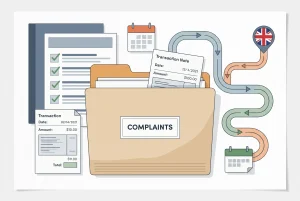
Complaint handling offers a more concrete point of comparison for operators serving Great Britain under a UKGC licence. Such operators must have an approved Alternative Dispute Resolution (ADR) provider for player complaints. The operator’s own complaint information should identify the route available and the ADR provider involved.
UKGC Complaint Process
Under a UKGC licence, if a complaint remains unresolved after the operator’s internal process, it can be taken to an approved Alternative Dispute Resolution (ADR) provider. If still unresolved, it can then be raised with the Gambling Commission.
Under a UKGC licence, a complaint that remains unresolved after the operator’s process is taken to its ADR provider first. If it is still unresolved, it can then be raised with the Gambling Commission. A site’s description of this route can be checked against what it says about its licence and operating entity. A vague promise to “resolve issues fairly” is not equivalent to naming a process and an approved ADR provider.
That check should not be misapplied to every Malta-linked casino. The ADR requirement described here concerns UKGC licensees; it does not establish that an MGA-licensed operator has the same UK complaint route. A review that treats the two arrangements as interchangeable is comparing different regulatory positions.
Queries about the best Malta casino, roulette casinos or bitcoin casinos invite a simple ranking. The sounder test is less decorative: establish what is being compared, check whether the evidence supports the claim, and look for a complaint route that matches the operator’s stated regulatory status. Where those details do not align, a “best” badge adds no useful information.
Casino Site Claims and What the UKGC Cannot Resolve
A complaint about a Malta-connected casino and a complaint about a UKGC-licensed operator do not enter the same regulatory process. The key point is not where a website is hosted, which currency it displays or how prominently it describes its licence. It is whether the operator is licensed by the UK Gambling Commission for the relevant service.
Anjouan Casino Licence in the UK: Legal Limits
The UKGC does not approve licences issued overseas, maintain reciprocal agreements with overseas regulators or accept complaints about operators licensed outside the UK. A Malta Gaming Authority licence therefore does not create a route to the UKGC for a dispute with an operator that is outside its licensing remit. A complaint does not become a UKGC matter because the customer is in Great Britain or because the site presents itself as serving a British audience.
That boundary matters when a dispute concerns money or account terms. A rejected withdrawal, a closed account, a bonus disagreement or a problem with online slots may be serious to the player, but the subject of the complaint does not change which regulator has jurisdiction. The UKGC cannot investigate the operator under a UKGC licence it does not hold, and it cannot act as an appeal body for a Malta regulator’s decisions.
The same applies to claims attached to Malta casino sites. A page may describe an operator as MGA-licensed, advertise Malta casino bonuses or promote a catalogue of games. Those details do not establish that the UKGC can resolve a later complaint. Marketing language and a foreign licence claim are not substitutes for UKGC oversight, and neither creates a reciprocal complaints arrangement.
This is why lists of “best” or top Malta online casino sites are of limited use for assessing recourse. A ranking may compare promotions or presentation, but those comparisons do not tell the reader whether the UKGC will take a complaint. The answer depends on the operator’s UK regulatory status, not on its position in a list or the apparent value of a bonus. A generous offer is still a set of conditions; it does not purchase access to a regulator.
Warning The UKGC does not investigate operators licensed outside the UK. A Malta Gaming Authority licence does not provide a route to the UKGC for resolving disputes.
For a complaint about a non-UKGC licensed casino, the practical limit is precise: the UKGC will not take it up. That does not establish that the operator has no regulator, nor does it establish how another authority will handle an individual case. It means only that UKGC complaint support is not available for an operator licensed outside the UK. Treating an MGA licence as if it carried UKGC complaint access would confuse two separate jurisdictions.
The distinction should be kept in view before a dispute arises, not after a balance is contested. A licence claim can describe a regulatory relationship with Malta; it cannot, by itself, demonstrate that a British customer has the complaint route associated with a UKGC-licensed operator. For anyone comparing Malta online casino sites, that is a material term of the arrangement: the regulator that will not accept the complaint cannot resolve it, regardless of how clearly the site displays its overseas credentials.
Reading Licence Claims for the 2026 UK Market
A Malta connection and permission to serve customers in Great Britain are separate matters. An operator may be based in Malta or hold authorisation from the Malta Gaming Authority, but that does not replace the UKGC licence required to provide remote gambling facilities to consumers in Great Britain. The operator’s physical location does not alter that requirement.
This distinction is central when interpreting claims about online casinos with a Malta licence in 2026. The phrase describes a connection to a regulator in Malta; by itself, it says nothing about whether the operator holds the separate UKGC licence needed to serve customers in Great Britain. The two statuses should not be treated as interchangeable.
Curacao Casino License UK: What It Means
The relevant jurisdiction is England, Scotland and Wales. Under the Gambling Act 2005, the UK Gambling Commission’s remit covers Great Britain, while Northern Ireland operates under a separate regulatory regime. A statement about the Great Britain licensing boundary should not automatically be applied to Northern Ireland as though the regulatory arrangements were identical.
For a casino offering remote gambling to consumers in Great Britain, the decisive point is whether it holds the required UKGC licence. A Malta address, a Malta-based company or a reference to an MGA casino licence does not answer that question. Nor does the label “international” change which rule applies to an operator serving this market.
This is a jurisdictional distinction, not a judgement on the quality of Malta’s regulator or on the services an individual operator provides elsewhere. A Malta licence may identify one regulatory relationship; it does not establish UK authorisation. Treating the first as proof of the second is a category error, not a close reading of the terms.
The same logic applies to claims about casinos with MGA licences generally. The wording can be accurate about an operator’s Malta status and still leave its position in Great Britain unresolved. For the 2026 market, the boundary remains clear: a foreign location does not remove the UKGC licensing requirement for remote gambling facilities offered to consumers in Great Britain. No Malta connection changes the jurisdiction in which that service is being provided.
The Malta Gaming Authority: What Can Be Established
An MGA licence establishes a regulatory connection, but the specific player-funds requirement is narrower than broad claims about protection can suggest. MGA licensees must keep player funds in segregated accounts held at an approved financial institution. The account arrangement separates those funds from the operator’s ordinary finances; it is a concrete condition, not a general promise that every balance will be paid in every circumstance.
MGA licensees must keep player funds in segregated accounts at an approved financial institution to separate customer balances from the operator’s ordinary business money.
That distinction matters when interpreting descriptions of Malta Gaming Authority casinos. A statement that an operator is licensed by the MGA does not, by itself, set out how much of a particular customer balance is protected, how a claim would be handled, or how quickly funds might be returned if the operator failed. Those details should not be supplied by inference from the word “segregated”.
The same limit applies to a Malta Gaming Authority online casino licence. It can support a claim about the operator’s regulatory status only when the claim is genuine and relates to the relevant operator. It does not establish that every site using the same brand name, or every website presenting itself as part of a group, is covered by that licence. The name on the site and the legal entity behind it are not necessarily the same thing.
A Malta Gaming Authority casino list is useful only if it identifies the licensed entity clearly enough to match it to the business operating the site. A list of brand names, without that link, cannot settle the question. Nor does the phrase “MGA-regulated” explain the terms attached to an account or the treatment of a specific dispute. Regulatory status and the practical outcome of an individual claim are separate matters.
The defensible summary is therefore specific: MGA licensees are required to hold player funds in segregated accounts at an approved financial institution. That is relevant information about how funds are held. It should not be inflated into an assurance about complete recovery, immediate access, or an authority-endorsed catalogue of online casinos. Licence language has a defined scope; the rest requires evidence of its own.
Casino Without a UK Licence: Rules and Risks
Bonus Terms: Contribution Rates and the Real Cost of Play
A Malta casino bonus is not cash with no conditions attached. Its value depends on the terms governing eligible games, qualifying bets and the point at which any resulting balance becomes withdrawable. A no-deposit promotion has the same basic issue: the absence of an initial payment does not make the conditions disappear.
Contribution rates determine how much of a stake counts towards a wagering requirement. Slots commonly count the full bet, while table games may count only 10% or 20%; some table games contribute nothing. The same stake can therefore move a bonus requirement forward at very different rates, depending on the game.
The calculation is based on the qualifying amount, not simply on the money placed. If a game contributes 10%, only a tenth of an eligible stake is credited towards wagering. At 20%, a fifth counts. Where the contribution is zero, the bet does not advance the requirement at all. A larger-looking balance can therefore take longer to clear if play is concentrated on games with low or no contribution.
The terms need to be read as a set: which games qualify, what contribution each receives, whether the bonus or winnings are subject to further conditions, and what must happen before withdrawal is allowed. A headline bonus amount leaves those details out. It is packaging, not the final amount available to withdraw.
This applies whether the promotion is described as a Malta online casino bonus, an MGA casino bonus or a bitcoin casino offer. The label does not determine the calculation. Payment method and promotional wording do not establish how individual games count; the published terms do. A Malta casino no-deposit bonus should be assessed on the same basis: identify eligible play and the contribution rate before treating any displayed balance as usable value.
Do
- Identify the eligible games for a bonus
- Check the contribution rate for each game
- Review the full terms before depositing
Don’t
- Assume a headline bonus is immediately withdrawable
- Treat all games as having equal contribution rates
- Ignore how specific game types affect wagering
For a clear comparison, separate the bonus amount from the qualifying wagering credited by each game. If the terms do not state how a game contributes, the amount needed to complete the requirement cannot be calculated reliably. In that case, the headline figure is not a measure of the promotion’s practical value.
Outside GamStop: A Different Protection Framework
A Malta licence does not, by itself, connect a casino to GamStop. The relevant distinction is whether the operator holds a UKGC licence: all operators licensed by the UK Gambling Commission must participate in the national self-exclusion scheme. A non-UKGC licensed casino, including one operating under an overseas licence, is outside that scheme.
GamStop lets a person exclude themselves from all UKGC-licensed gambling sites for a selected period: six months, one year or five years. The exclusion applies across the participating sites, rather than only to the operator where it was first arranged. Its reach is therefore defined by the UKGC licensing system.
That boundary matters when a site is described as a Malta online casino outside GamStop. If it is not UKGC licensed, a GamStop exclusion does not cover it. The same applies to MGA-licensed casinos that are not signed up to GamStop: MGA licensing does not make them participants in a UK self-exclusion scheme. A Malta connection and GamStop participation are separate matters.
This is a practical limit, not a feature to seek out. A site being outside GamStop means that the exclusion will not block access to it through the scheme. It does not extend the exclusion, carry it over to another regulator or make the operator part of the UK system. Calling such a site “not on GamStop” describes the scope of the scheme; it does not establish equivalent safeguards.
The difference can be stated plainly: UKGC-licensed operators participate in GamStop, while non-UKGC licensed casinos do not. A Malta or MGA label does not alter that distinction. For someone relying on self-exclusion, the controlling question is whether the site is within the UKGC-licensed group covered by GamStop—not whether its branding or licence refers to Malta.
The phrase “outside GamStop” is therefore a jurisdictional description, not an assurance about access controls. A self-exclusion arrangement has a defined perimeter, and an overseas licence does not bring a casino within it.
New Casino Claims and the First Eligibility Check
“New” describes a claim about a casino, not a measure of its reliability. A newly launched brand, a recent redesign and a site newly encountered by a player are different things. Without a clear basis for the label, the word says little about when the operator began trading or what checks it applies.
The same distinction matters when a site is presented as a new Malta online casino or a new MGA casino. The Malta reference and the “new” label do not establish when the service opened, who operates it or whether a particular claim is accurate. A payment option, including Neteller, is not evidence of a launch date or an age-check process. These are separate details, and one cannot be calculated from another.
For customers in Great Britain, the first operational check is age verification. The Gambling Commission requires a UKGC-licensed operator to confirm that a customer is at least 18 before allowing a deposit or play. This is a pre-access requirement, not a check that can be postponed until a withdrawal is requested.
A site’s description of itself as a new MGA casino in 2026 should therefore be treated as a time-sensitive statement, not as proof of suitability. The wording may refer to a brand, a relaunch or a newly noticed service; those meanings are not interchangeable. Age verification remains a distinct requirement for UKGC-licensed operators, regardless of how recently a site says it appeared.
The useful sequence is straightforward: identify what “new” refers to, then distinguish that claim from the operator’s customer checks. A fresh name or payment logo cannot substitute for confirmation that the required age check takes place before money is deposited or gambling begins.
Can I still play at non-UKGC casinos if I’m based in the UK?
No, not legally if you are in Great Britain: operators offering remote gambling to customers there must hold a UKGC licence, regardless of where they are based. A Malta or other offshore licence does not replace it.
Are no-deposit spin offers legal in Great Britain?
They may be offered by UKGC-licensed operators, and players must be physically in Great Britain to claim them. An offshore licence alone does not authorise an operator to offer gambling to customers there.
What tools do UK operators have to provide?
UKGC-licensed operators must offer deposit and loss limits, session limits, time-outs and self-exclusion, including GamStop. They must also provide session time reminders and reality checks.