
Seeing a gambling site described as outside GAMSTOP can raise a practical question: is this just a different type of site, or is it a warning sign? The safest answer is not to guess. Treat the wording as a prompt to slow down and check evidence before creating an account, sending documents or depositing money.
This guide focuses on checks an ordinary reader can do without relying on operator marketing or third-party lists. It does not recommend casinos, compare bonuses or say that any site is suitable for you. It explains what can be verified, what cannot be inferred, and when unclear information should make you stop.
Verifying Non-GamStop Casino Licensing Standards
GAMSTOP is connected with online gambling companies licensed in Great Britain. A site being described as outside GAMSTOP does not, by itself, prove that the site is licensed, unlicensed, safe, unsafe, available to you, or suitable for someone who has self-excluded. It is a label that needs context. The important question is not whether the phrase sounds convenient, but whether the site can show clear and current evidence for the market it claims to serve.
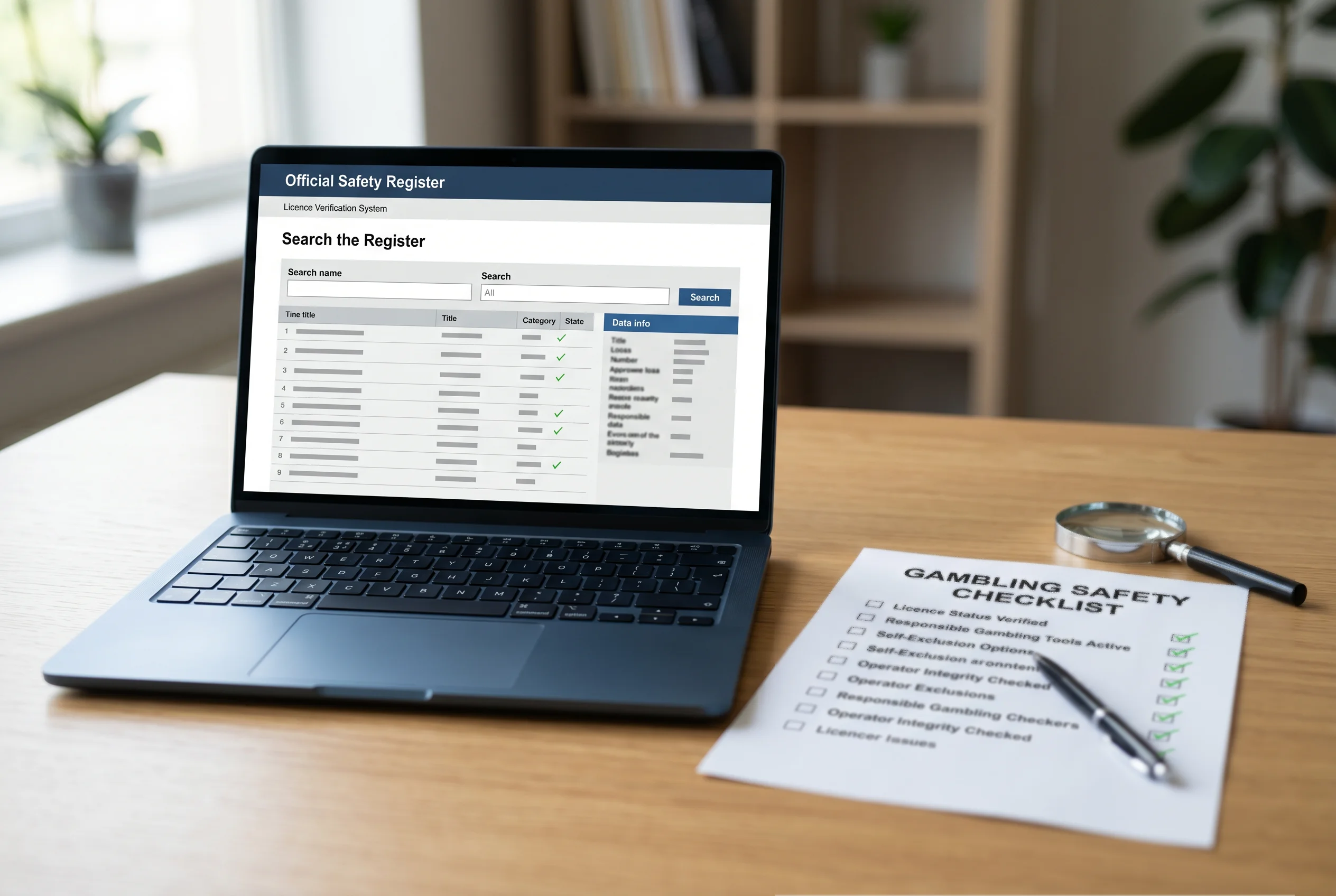
For Great Britain, the most important first step is the official Gambling Commission public register. If a business says it is licensed for the British market, the exact business name, trading name and domain details should be checked against that register. Do not rely on a logo, a badge, a footer claim or a screenshot. Names can be similar, brands can move between companies, and a domain can matter as much as a familiar trading name.
A register entry also should not be treated as a personal recommendation. It is a way to check a claim about licensing, not a promise that the site is right for you or that every term is favourable. You still need to look at payment rules, verification wording, customer-funds information, complaints routes and data handling before making any decision.
Our top casino picks for the UK
- EvoSpinBonus: 125% up to €2500 + 125 Free Spins · Payout speed: 1-3 business days
- ZombillionBonus: Welcome Pack 250% up to £4000 + 200 FS · Payout speed: 1-3 business days
- ChanzeBonus: Slots Welcome Bonus #1 200% up to €500 · Payout speed: 1-3 business days
- BritsinoBonus: Welcome Package – Get your £2,200 + 2,000 FS · Payout speed: 1-3 business days
- JetsetspinsBonus: 200% Bonus + 100 Free Spins + Free Royal Wheel · Payout speed: 1-3 business days
- Revery PlayBonus: 100% up to€1,000+ 100 FS · Payout speed: 1-3 business days
- NightWinBonus: £900 + 400 free spins · Payout speed: 1-3 business days
- DieselwinBonus: Welcome Pack 250% up to £4000 + 200 FS · Payout speed: 1-3 business days
- BeOnBetBonus: 100% up to €500 + 100 FS · Payout speed: 1-3 business days
- AmunbetBonus: Join now and get 450% up to 2,700 GBP + 450 FS · Payout speed: 1-3 business days
Start with the exact domain and business details
Before you type personal details into any gambling site, copy the domain exactly as shown in the browser. Look for small spelling changes, extra words, unusual subdomains or a different ending. Then look for the business name and any trading name in the site’s legal or footer information. If the site claims Great Britain licensing, compare those details with the Gambling Commission public register.
The check is strongest when the domain, trading name and business details line up clearly. If the site shows a licence number but the register does not support the exact site you are using, that is not a small detail. If the site gives a business name but no clear domain match, treat the gap as a warning. If you cannot tell who runs the site, where the gambling contract sits, or which licence is being claimed, do not fill in the missing pieces yourself.
Some readers look for reassurance from review pages, badges or “trusted” labels. Those can be out of date or commercially motivated. They are not a substitute for the official register where a British licence is claimed. A careful check means going back to the primary record and asking whether the site in front of you is the same site covered by the record.
Before you create an account: evidence to check
The following checklist keeps the decision grounded in evidence rather than sales wording.
- Exact domain match: compare the full domain you are using with any official record or legal page. Do not assume that a similar brand name is enough.
- Business name and licence claim: check whether the site gives a clear operator name, trading name and licence claim. Vague legal text is a reason to pause.
- Customer-funds wording: read how account balances are described. Official guidance explains that customer-funds protection can vary, so do not assume every balance is protected in the same way.
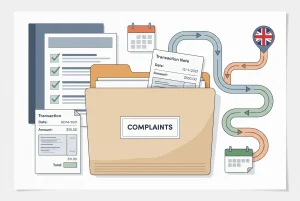
- Complaints route: look for a clear complaints process and, where relevant, information about dispute handling. If the route is hidden or confusing, that matters before money is involved.
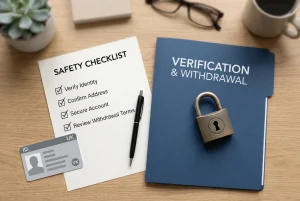
- Privacy and ID-document handling: check how personal details and identity documents will be handled before uploading anything.
- Support-control warning: if you are self-excluded or worried about your gambling, do not treat an outside-GAMSTOP message as a safe next step.
Even with a valid license, players must perform their own privacy and document-safety checks before sharing sensitive information with customer support.
Customer-funds wording is a real check, not small print
Many people focus on deposits and withdrawals first, but account-balance protection is just as important. Gambling Commission guidance explains that protection of customer funds can vary, and that readers should check the operator’s own disclosure rather than assuming a single level of protection. Open bets are not the same as account balances, so the detail matters.
Good wording should be easy to find and easy to understand. It should not require you to chase several pages just to learn whether money is held separately or what level of protection is claimed. If the site does not explain customer-funds treatment clearly, that is a practical risk signal. It does not prove a particular outcome, but it does mean you lack a basic piece of information before you deposit.
Use the Gambling Commission customer-funds guidance as a reference point for the concept, then read the site’s own current disclosure. Do not copy assumptions from another brand or another country. The wording you need is the wording for the site where you are considering opening an account.
Marketing language should not replace safety checks
Gambling advertising and commercial wording are expected to be socially responsible and should not exploit vulnerable people or under-18s. In plain terms, be wary of messages that make a gambling site sound like an answer to money stress, a way to ignore self-exclusion, or a low-risk shortcut. Responsible wording does not guarantee a site is suitable, but irresponsible wording is a warning sign.
Some pages may use urgency, large claims or loose descriptions of “freedom” to make the reader act quickly. That is the opposite of a careful decision. A trustworthy account-opening process should give you time to read terms, check the legal entity, understand verification, and decide whether the activity is appropriate for you. If the offer seems built around speed and pressure, step back.
When the checks are unclear
Unclear information should not be treated as neutral. If the register details do not match, if the business name is hard to identify, if the customer-funds disclosure is missing, if the complaints route is vague, or if the site encourages you to ignore protection tools, the safe response is to stop and gather better evidence. A missing answer before registration often becomes a bigger problem after a deposit or document upload.
Keep a copy of the pages you relied on if you go further: account terms, payment terms, customer-funds wording, verification wording and any complaint instructions. These records are useful if a later dispute arises. They also make you read the parts of the site that matter most, rather than only the promotional parts.
Where to go next
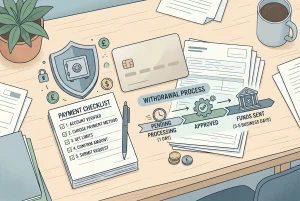
If the first checks are clear, the next questions are more specific. Read about payments, withdrawals and bank blocks before depositing. If identity checks are your concern, read the guide to verification and withdrawals. If something has already gone wrong, the page on complaints and dispute handling explains the safer evidence-first route. If gambling feels hard to control, go to support and money controls before looking at any gambling site.
This page is informational. It does not recommend gambling sites or provide legal advice for an individual case.
Find the most secure options by browsing our premium non-GamStop casino selection tailored specifically for UK players.