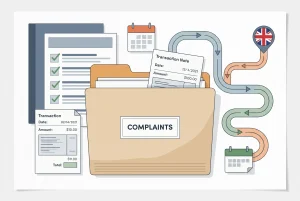
Deposits are added to a casino balance, while the cost is collected through a monthly phone bill or deducted from existing pay-as-you-go credit.
How Phone-Credit Deposits Are Charged
A Pay by Phone deposit uses the mobile account as the payment route. Instead of taking the deposit from a bank card or bank account, the casino charges it against the phone service. The money is then made available as casino funds, while the corresponding cost is recorded by the mobile provider.
The key distinction is between the amount credited to the casino account and where that amount is collected. The casino records the deposit in the gambling balance; the phone provider accounts for the charge through the mobile account. This means that a deposit can appear in the casino balance before it appears as a separate entry on a bill. For pay-as-you-go service, the value is deducted from the available phone credit instead.
The billing route depends on the kind of mobile account. With a monthly contract, the charge is added to the next mobile phone bill. With pay-as-you-go service, it comes out of the existing credit. In either case, the cost is linked to the phone account rather than collected as an ordinary card payment. The bill or credit balance is therefore the place to check how the payment has been recorded after the deposit.
This arrangement can make the deposit feel less like a conventional purchase: there may be no immediate bank-card entry to match against the casino transaction. That does not change the cost. It changes only the account from which it is collected and the place where the charge becomes visible. A casino balance and a phone balance are separate records of the same payment: one shows funds credited for gambling, the other shows the charge being collected.
Pay by Phone should not be confused with using a mobile phone to make a card payment. In the latter case, the phone is simply the device used to authorise a card transaction. A phone-credit deposit instead relies on the mobile account as the payment source. The distinction matters when checking statements: a card payment is looked for among card transactions, whereas a phone-credit charge is reflected through the mobile bill or the pay-as-you-go balance.
Casinos & Safety: UK Licensing and Player Checks
The basic route can be understood as a transfer of value through the mobile account: a deposit is requested at the casino, the payment is assigned to the phone account, and the resulting cost is collected through the provider’s billing arrangement. The precise screens and labels can vary between casinos and mobile services, so the name shown during payment may not match the wording later used on the phone bill. The relevant point is the account being charged, not whether the transaction description uses the casino’s name.
A specialist payment review reports that many operators set a per-transaction ceiling of £30 for Pay by Phone. That figure describes a reported operator cap, not a universal billing rule. The mobile provider’s role is to collect the charge through the relevant phone account; it does not mean that every phone account or every casino applies identical terms. The available deposit option and its stated conditions need to be read at the point of payment.
Non-GamStop European Casinos: UK Rules Explained
For account-keeping, the practical record is split across two places. The casino account shows the deposit credited to the gambling balance. The phone account shows the cost collected, either on the next bill or as a reduction in prepaid credit. Comparing those records helps distinguish the amount entered at the casino from the way it is charged. It also avoids treating the absence of an immediate bank transaction as evidence that no payment has been made.
Phone-credit payment is therefore not a separate kind of casino balance. It is a collection method: the casino receives a deposit through a charge associated with the mobile account, and the provider reflects that charge through billing or prepaid credit. The financial outcome remains a real cost even when it does not pass through a bank card statement.
Our top casino picks for the UK
- EvoSpinBonus: 125% up to €2500 + 125 Free Spins · Payout speed: 1-3 business days
- ZombillionBonus: Welcome Pack 250% up to £4000 + 200 FS · Payout speed: 1-3 business days
- ChanzeBonus: Slots Welcome Bonus #1 200% up to €500 · Payout speed: 1-3 business days
- BritsinoBonus: Welcome Package – Get your £2,200 + 2,000 FS · Payout speed: 1-3 business days
- JetsetspinsBonus: 200% Bonus + 100 Free Spins + Free Royal Wheel · Payout speed: 1-3 business days
- Revery PlayBonus: 100% up to€1,000+ 100 FS · Payout speed: 1-3 business days
- NightWinBonus: £900 + 400 free spins · Payout speed: 1-3 business days
- DieselwinBonus: Welcome Pack 250% up to £4000 + 200 FS · Payout speed: 1-3 business days
- BeOnBetBonus: 100% up to €500 + 100 FS · Payout speed: 1-3 business days
- AmunbetBonus: Join now and get 450% up to 2,700 GBP + 450 FS · Payout speed: 1-3 business days
Deposit Limits: The Amount That Can Actually Be Charged
The amount available for a Pay by Phone deposit is defined by the payment option shown at the casino, not by a general limit that applies across every mobile casino. The practical range reported in a specialist review runs from a low entry point of £2 at some apps to a £30 ceiling per transaction at many operators. Those figures describe a reported market pattern, not a promise that a particular account will display the same options.
Reported minimum deposit £2
Reported maximum deposit £30
Common minimum deposit £5
The lower end matters when the aim is to test whether phone-credit funding is available without committing to a larger deposit. Some apps have been reported to accept £2, while £5 is the minimum cited for most. That distinction is material: an app with a £5 minimum will reject a smaller amount even if the mobile network has enough credit to cover it. The casino’s displayed minimum is the operative figure.
At the other end, a specialist review reported that many operators set a £30 maximum for a single Pay by Phone deposit. A request above that threshold may not be available as one transaction. The practical ceiling is therefore not the amount that could theoretically be spent on a casino account; it is the maximum the payment option permits in one go. Where the displayed choices stop at £30, the transaction cannot be treated as a larger deposit simply because the account would accept more by another method.
A reported entry range of £5 to £30 gives a useful working reference for the amount field, but it should not be read as a universal menu. The same review material notes that some apps allow £2, so the minimum can sit below that range. Conversely, a casino may display fewer choices, or none at all, for Pay by Phone. The exact options shown on the deposit screen settle the question for that operator and account.
Foreign Casinos for UK Players: UKGC Rules
Minimums and ceilings are separate tests
A deposit amount has to fit between two separate boundaries. It must meet the payment method’s minimum, and it must stay within the method’s maximum for a single transaction. A proposed £2 deposit could fit an app that supports that minimum but fail where the minimum is £5. A proposed amount above £30 could exceed the reported per-transaction ceiling at an operator using that limit. Neither boundary can be inferred from the balance of the casino account.
This makes the payment menu more useful than a general description of a casino’s deposit options. A site may support several ways to fund an account, but that does not establish that each method shares the same minimum or maximum. Pay by Phone should be assessed on its own displayed terms. An amount accepted through a bank card or another payment route is not evidence that the same amount can be charged to mobile credit.
The distinction also prevents a common calculation error: treating the top of the account’s funding range as the Pay by Phone cap. The relevant ceiling is attached to the transaction method. If the payment screen permits an amount only within a narrower band, that band controls this deposit, regardless of other methods listed for the account.
What to check before entering an amount
The amount field should be checked for both the smallest and largest permitted values before a deposit is submitted. Where preset amounts are shown, the available choices reveal the practical range for that transaction. Where an amount can be typed, the screen’s accepted minimum and maximum remain the limits to follow. A number that can be entered is not necessarily an amount that the method will accept.
Do
- Check the smallest and largest permitted values on the payment screen
- Verify the amount shown on the screen before submitting
Don’t
- Assume the Pay by Phone cap is the same as your overall casino account funding range
- Assume a £5 minimum applies to every single app
The figures in the reported range are useful for screening, not for assuming eligibility. A £5 minimum is a reasonable expectation to check against, while the reported £2 option shows that lower entry points exist. The £30 figure is a reported per-transaction cap at many operators, not a guaranteed maximum for every app. The operator’s own payment screen takes precedence over either benchmark.
If the intended deposit falls outside the displayed range, the amount is not available through that Pay by Phone option as presented. Changing the figure to one inside the permitted band is a separate decision; it does not alter the operator’s minimum or ceiling. The useful comparison is therefore between the intended amount and the method’s stated boundaries, not between the intended amount and a casino’s general claims about deposits.
For a mobile casino using phone credit, the practical question is narrow: does the selected method accept the required amount in a single transaction? The reported figures give a starting point—some apps begin at £2, most reported minimums are £5, and many operators’ transaction ceiling is £30—but only the live payment options establish the amount available at a specific casino.
UK Legality and the Operator’s Licence
Online casinos are legal in the UK when they operate under the required UK licence. The distinction matters for mobile casinos that accept Pay by Phone: a payment option does not make an operator lawful, and a casino’s mobile-friendly site does not establish that it is regulated. The operator’s licensing status is the relevant starting point.
For real-money gambling serving customers in England, Scotland and Wales, the operator must hold a licence from the UK Gambling Commission (UKGC). The requirement applies whether the business is based in Britain or abroad. A company cannot avoid it simply by hosting its website elsewhere if it is selling gambling services into the British market. In practical terms, a foreign address is not a substitute for a UK licence.
Online Casinos with No Sister Sites in the UK
The Gambling Act 2005 governs gambling in England, Wales and Scotland. It defines a casino as an arrangement that gives people an opportunity to take part in one or more casino games. The legal framework therefore concerns the gambling service being offered, not merely the device used to access it. A casino game played on a phone remains gambling; presenting it through a mobile website does not change the operator’s obligations.
Online gambling is legal for adults aged 18 and over when the operator holds the appropriate UKGC licence. That makes two separate conditions relevant: the customer must meet the age requirement, and the casino must be authorised to serve the market. A phone-credit deposit cannot replace either condition. Nor does the fact that a transaction can be made through a mobile network provide evidence of regulatory approval.
This is why the phrase “mobile casinos that pay with phone credit” needs to be treated as a description of a payment feature, not a category of legally approved businesses. The payment method and the licence answer different questions. Pay by Phone indicates how a deposit may be funded; the UK licence indicates whether the operator is permitted to offer remote gambling to the relevant UK market. One does not prove the other.
A UKGC licence is the strongest consumer protection in the market. It places the operator within the UK regulatory system and gives the customer a meaningful basis for assessing whether the casino is accountable under domestic rules. Without that licence, the operator is outside the UKGC framework. A polished mobile layout, familiar branding or availability of a phone-credit option should not be treated as equivalent safeguards.
Licensing Check
An offshore location or a mobile-friendly site is not proof of regulation. Always verify the operator holds a valid UKGC licence.
The distinction also applies to casinos based offshore. An overseas operator may be accessible through a browser, but accessibility alone does not make it licensed to serve British customers. Remote gambling operators selling into the British market must hold the relevant Gambling Commission licence regardless of where they are located. Offshore casinos outside the UKGC system do not hold that licence, so their presence online should not be mistaken for authorisation.
The legal position is not that all sites using phone-credit payments are licensed, or that the payment route confers a special legal status. It is that online gambling in the UK is lawful at licensed and regulated sites. A phone-credit casino therefore needs to be considered as an operator first and as a payment option second. If the business is not authorised for the market, the availability of its deposit method does not correct the problem.
There is also a territorial detail behind the familiar shorthand “UK rules”. The Gambling Act 2005 covers England, Wales and Scotland, but not Northern Ireland. The regulatory requirement described for remote operators serving the British market is specifically tied to customers in England, Scotland and Wales. This distinction does not change the central point for a British-facing mobile casino: the relevant UKGC licence is an operator-level requirement, not a feature that can be inferred from a payment page.
A mobile casino may advertise phone-credit deposits prominently and still require a separate assessment of its legal standing. Conversely, an operator’s licence does not mean that every payment method will be available to every account. Regulatory authorisation and payment availability are separate matters, and neither should be used as a shortcut for judging the other.
Casino Sites Not Registered with GamStop in the UK
The sound legal test is therefore narrow: real-money online gambling offered to customers in the covered British market must come from an operator holding the appropriate UK Gambling Commission licence. For anyone comparing casinos that accept Pay by Phone, this is more consequential than the convenience of the payment label. The method describes the transaction; the licence establishes whether the operator belongs within the regulated market.
The Extra Cost of Paying Through a Mobile Network
A phone-credit deposit can cost more than the amount displayed by the casino. Some mobile networks add a premium-rate charge to Pay by Phone transactions. A specialist review reports fees in the range of £0.50 to £1.50, but that figure should not be treated as a charge applied by every network or to every transaction. The relevant terms depend on the network and the payment route.
The distinction is between the casino deposit and the network fee. The deposit is the amount credited to the casino account; a separate network charge, where applied, increases the total cost of making that payment. In simple terms, the effective outlay is the deposit amount plus any applicable premium-rate fee. The added fee does not increase the casino balance unless the payment terms explicitly say otherwise.
That difference matters when comparing a Pay by Phone option with another payment method. A deposit that appears to match the amount being paid may still have an additional cost outside the casino account. Looking only at the balance credited would therefore understate the money spent if the network adds a charge. The fee is small relative to many casino transactions, but its size is not the only issue: it is an extra cost for the payment itself, not extra gambling funds.
Network Fees
Some mobile networks may apply a premium-rate charge of £0.50 to £1.50 to your transaction, which is separate from the casino deposit amount.
The fee should be checked before confirming the transaction. The casino’s payment screen may identify the amount it will credit, while the mobile network’s terms or payment confirmation may show whether a premium-rate charge applies. Those figures answer different questions. One is the value reaching the casino account; the other is the total cost carried by the phone service. If the details are unclear, the payment should not be treated as fee-free merely because the casino displays no separate charge.
The way the cost is collected can also make it less visible. A charge may be added to the next mobile phone bill or taken from pay-as-you-go credit. In either case, the amount can appear outside the casino’s transaction history, so a casino balance alone is not a complete record of the cost. Checking the relevant phone account or bill provides the other side of the calculation.
A fair comparison therefore needs the same basis on both sides: the amount credited to the casino and the full amount deducted or billed for the payment. If the network fee applies, the difference between those figures is a transaction cost, not a change to the casino’s deposit value. If no fee applies, there is no premium-rate addition to include. The charge is conditional, not an automatic feature of every phone-credit deposit.
International Casinos for UK Players: Rules and Risks
This is separate from the casino’s own deposit conditions. A network fee does not alter the casino’s stated deposit amount or turn a payment into a larger credited deposit. Nor should a casino’s acceptance of Pay by Phone be taken as confirmation that the mobile network will process it without an additional charge. The operator controls what reaches the account; the network may determine whether a premium-rate amount is added.
For a phone-credit deposit casino payment, the useful figure is therefore not just the amount selected on the casino screen. It is the amount credited, plus any network fee shown in the payment terms or confirmation. If the fee is within the range reported by a specialist review, the total outlay will exceed the credited amount by that fee; if the network does not impose it, the two amounts will match. The difference is straightforward, even when the billing route makes it easy to overlook.
Playing on Mobile Browsers and Casino Apps
A mobile casino can be reached through a phone’s web browser or, where offered, through an operator’s app. These are access routes, not payment methods. Opening a casino on a handset does not establish that Pay by Phone is available, and an app listing does not confirm that phone-credit deposits are accepted.
Mobile Access
- Most UKGC-licensed casinos allow instant play via mobile browsers
- Using a browser does not guarantee that Pay by Phone is an available deposit method
- An operator’s app and their mobile browser site may offer different payment features
Most UKGC-licensed casinos provide instant play through mobile browsers. That means browser access is a practical option without making an app a prerequisite. The casino’s mobile site can be opened directly, with games and account functions presented for a smaller screen. The exact layout and available features depend on the operator; the existence of browser play alone does not establish that every part of the desktop service is identical.
The distinction matters when the intended payment is phone credit. A casino may work in a mobile browser while offering a different set of deposit methods in its cashier. Equally, an app and a browser version may not present payment options in the same way. Payment availability must be checked in the relevant account or cashier, rather than inferred from the fact that a site opens on a phone.
A useful comparison therefore separates three questions:
- Can the casino be opened on a mobile browser?
- Does the operator also provide an app?
- Is Pay by Phone shown as an available deposit method for that account?
Only the first point is covered by the general availability of instant browser play at most UKGC-licensed casinos. The other two are operator-specific. No app should be treated as proof that phone-credit deposits are supported, and mobile browser access should not be treated as proof that a particular payment route will appear.
For someone considering a mobile casino using phone credit, the practical sequence is simple: assess mobile access first, then verify the payment method separately. Browser play can remove the need to install an app, but it cannot settle payment eligibility. If the cashier does not show the intended method, the site’s mobile compatibility has no bearing on whether that deposit can be made.
The same distinction applies to slots. A game being accessible on a phone says something about how it can be played, not how the account can be funded. Mobile access and payment acceptance are separate checks; combining them into one assumption is a neat shortcut, but not a reliable one.
Jackpot Mobile Casino UK: Rules, Games and Odds
Using Phone Credit for Mobile Slots
Phone credit slots describes a payment route, not a separate type of slot game. Pay by Phone may let a casino deposit be charged to a mobile account, after which the casino balance can be used for slot play if the operator makes that payment method available for deposits. The distinction matters: a mobile slot can be accessible on a phone without accepting phone-credit funding.
The payment option has to be confirmed at the casino’s cashier. A slot page or game catalogue does not establish that Pay by Phone is supported, and the presence of a phone-credit option does not establish that every game can be played with the resulting balance. The operator’s own payment terms and account interface determine whether the method is available and how the credited funds can be used.
A specialist review reports a £30 per-transaction ceiling for Pay by Phone deposits at most operators. That figure is a reported benchmark, not a universal limit: the cashier’s displayed terms take precedence. It also describes the payment transaction, not a slot stake or a guaranteed amount available for play. A deposit method therefore cannot be judged by its transaction ceiling alone; the relevant question is whether the amount credited is usable for the intended game under the casino’s rules.
For a practical comparison, separate three decisions: whether the casino accepts Pay by Phone, whether the deposit is credited to the account, and whether the balance is eligible for slot play. These are related but not interchangeable. A failed or unavailable payment option cannot be solved by choosing a different slot, while a playable slot does not imply that phone credit can fund the account.
The phrase “play slots with phone credit” can suggest a direct link between a network balance and a spin. In practice, the casino account sits between the two: the payment method funds the account, and the account balance is then used for gambling. That makes the deposit terms, rather than a game’s mobile presentation, the deciding detail.
How it works
Phone credit slots refers to using a mobile account to fund a casino balance, which is then used to play slot games. The payment method and the games themselves are separate considerations.
Phone-credit slot sites should therefore be assessed by their stated payment options and the conditions attached to the deposited balance. A mobile-friendly game catalogue is not evidence of Pay by Phone acceptance. The usable combination is an available payment route and slot access under the operator’s terms.
Account Limits Before a Phone-Credit Deposit
A payment method’s transaction ceiling and a casino account’s deposit limit are separate controls. Pay by Phone may allow a particular charge, yet the account limit can still prevent it if the permitted deposit amount has already been reached for the relevant period. The reverse is also possible: unused account allowance does not increase what a mobile network or payment method will accept in one transaction.
UK Gambling Commission rules require licensed operators to make deposit limits available. These can be set for daily, weekly or monthly periods through account settings. The limit is therefore an account-level control, not a feature of mobile phone credit itself. It can constrain deposits regardless of whether the chosen method is Pay by Phone or another option.
The practical check is the limit currently recorded in the casino account and the period to which it applies. A daily limit concerns deposits within that daily period; a weekly or monthly setting applies across its corresponding period. The settings should be reviewed before relying on a phone-credit deposit, particularly where several deposits have already been made. The amount available under an account limit may be lower than the maximum a payment route would otherwise permit.
Online Casino Payouts in the UK: RTP Explained
A failed deposit does not necessarily mean the mobile network has rejected the charge. The account may have reached its own limit, or the amount entered may exceed the remaining allowance for that period. Those are different constraints and require different checks. Changing payment methods would not, by itself, remove an account-level limit.
For mobile casino phone credit, the distinction matters because the payment option can appear available while the account’s remaining deposit allowance is insufficient. The displayed account controls determine the applicable limit; the network’s separate transaction rules do not replace them. A limit should be treated as a spending boundary, not as a target to use up.
Where a limit is active, any attempted deposit needs to fit within the remaining allowance for its period as well as the payment method’s own conditions. That makes the account settings the relevant place to check before a deposit, rather than inferring available spending from the presence of a phone-credit option.
Checking the Casino Before Paying by Phone
Before using Pay by Phone at a mobile casino, the relevant check is the operator’s UK Gambling Commission licence—not the payment option’s presence on a deposit page. A listed payment method only shows that the casino offers that route; it does not establish that the operator is authorised to serve customers in Great Britain.
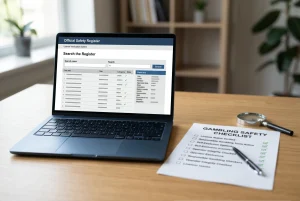
The licence number should appear at the bottom of the casino’s homepage. From there, the UKGC register can be used to check the operator’s details and confirm that the licence is current. The registered business name matters: a brand and the company named on its licence may differ, so both should be identifiable rather than assumed to match.
Verification Steps
- Locate the licence number in the website footer
- Check the number against the official UKGC register
- Confirm the registered business name matches the operator
This check is particularly useful where a casino is reached through a mobile browser or app. Branding, payment logos and polished pages are not evidence of a UK licence. The number in the footer provides a route to verify the operator against the regulator’s register before any deposit is made.
A phone-credit payment does not change the standard. If the operator cannot be matched to a current UKGC licence, the payment method is no substitute for regulatory authorisation. A licensed operator serving British customers is accountable within the UK framework; a site’s own claim that it is licensed is not the verification itself.
The practical order is straightforward: open the casino homepage, locate the licence number in the footer, then check the number and operator against the UKGC register. Only after the licence details match should Pay by Phone be treated as a payment option at a verified UK-licensed casino.
Phone-Credit Deposits and Bonus Terms
A bonus and a Pay by Phone deposit are separate parts of the transaction. A casino may advertise a no-deposit bonus, but that does not establish that it accepts phone-credit payments; payment eligibility and bonus eligibility need to be checked separately in the operator’s terms.
The headline bonus amount is not the amount available to withdraw. A specialist review describes wagering requirements of 35x to 40x the bonus amount as a common benchmark, but individual offers set their own conditions. The calculation applies to the stated bonus under the offer’s rules, so the required wagering can outweigh the apparent value of a small reward.
Time limits affect whether that wagering can be completed. The same type of review reports windows ranging from 7 to 14 days, with some offers allowing only 72 hours. Those terms are offer-specific and should be treated as deadlines, not as an assumed standard. A bonus that expires before its wagering conditions are met may have no cash value.
Best Offshore Casinos for UK Players: UK Law
Maximum bet limits and game weighting also change the calculation: eligible games may contribute differently, while a maximum stake can restrict how quickly wagering is completed. A cashout cap then sets a ceiling on winnings that can be withdrawn from the promotion. Specialist reviews report caps in the £100 to £200 range, but the offer’s own terms determine the applicable amount.
For mobile slots, the practical check is therefore not simply whether a bonus appears beside a game. The terms must state whether the bonus applies to that play, which games count, the deadline, any maximum bet and the cashout limit. The deposit method does not remove those conditions or turn bonus funds into unrestricted cash.
Making a Phone-Credit Deposit: Amount and Billing
A phone-credit deposit starts with the amount entered on the casino’s payment screen. A specialist review describes the amount used for this type of transaction as falling between £5 and £30; that is a reported range, not a promise that every mobile casino or network accepts each value. The amount available on the screen, and any amount the payment method permits, determine what can be submitted.
Once the deposit is authorised, the charge follows the mobile account’s billing arrangement. For a contract phone, it appears on the next mobile phone bill. With pay-as-you-go service, the amount is taken from the available credit. The casino balance and the phone account therefore show the transaction in different places: one records the deposited funds, while the other records the payment.
The figure entered should be checked against the amount shown for confirmation before the transaction is completed. If the displayed amount is not the intended deposit, cancelling before confirmation avoids submitting the wrong value. A successful payment should then be reflected in the casino account, while the corresponding charge appears through the bill or prepaid-credit balance.
For anyone comparing a deposit with phone credit at a mobile casino, the practical calculation is the amount submitted and the billing route attached to the phone plan. A contract customer sees the charge on a bill; a pay-as-you-go customer loses that amount from stored credit. The method changes where the cost is recorded, not the need to check the final amount before confirming.
Are there any fees for using phone credit?
Some mobile networks add a premium-rate fee, usually £0.50 to £1.50, for Pay by Phone transactions.
Can I set deposit limits on mobile?
Yes. UK-licensed operators must let you set deposit limits in your account settings, daily, weekly or monthly.
How long should a mobile casino withdrawal take in 2026?
For UK-licensed casinos, e-wallet withdrawals are typically expected within 24 hours; bank transfers take 3–5 business days and debit card withdrawals 1–3 business days.
Can I use pay by phone on pay-as-you-go?
Yes. The deposit is deducted from your available pay-as-you-go credit.