Compare app and browser access alongside deposits, withdrawals, bonus conditions and the checks that shape mobile casino use.
App or Mobile Browser: How Casino Access Works
A mobile casino can be reached through a dedicated app or by opening the operator’s site in a phone browser. Both routes lead to an account and a mobile interface, but they are not the same kind of access. An app is installed and launched as a separate product; browser play begins at a web address and runs inside the browser. The practical choice is therefore less about the label “app” and more about how quickly the service can be opened, how it behaves during a session and whether the interface feels responsive.
Most UKGC-licensed casinos offer instant play through mobile browsers. That makes browser access a substantive option rather than a fallback for operators without a dedicated app. It also means that searching for the best casino apps does not answer the more basic question: whether an app is necessary for the way a particular service is used. If a casino’s browser version is complete and responsive, installing a separate application may add little to the actual access experience.
Online Casino No Registration UK: What It Means
What “instant play” means
Instant play describes access through a browser without first installing a dedicated casino application. The operator’s mobile site loads in the browser, and the player uses its menus and account pages there. “Instant” refers to avoiding an installation step; it does not mean that every page opens immediately or that performance is independent of the connection, device or site design.
This distinction matters because an app icon can suggest a more direct route without proving that the underlying experience is different. A dedicated app may package an interface for mobile use, while a browser route presents the operator’s mobile site. Either can provide a convenient way to return to the casino, but only the actual implementation determines what happens after the initial tap.
Browser access also keeps the route straightforward: open the operator’s site, sign in and move through its mobile interface. There is no need to treat an app as the default simply because the service is used on a phone. For someone who visits occasionally, avoiding another installed application may be the more practical arrangement. For frequent use, a dedicated app can make the service easier to locate and reopen. That is a question of routine and interface preference, not a guarantee of superior performance.
Foreign Casinos for UK Players: UKGC Rules
The comparison should be made at the level of the actual service. A browser version that exposes the needed account and casino sections may be sufficient. An app that opens quickly but offers a less complete interface would not automatically be the better access route. The word “app” describes how a product is launched, not the quality of every screen behind it.
Dedicated app does not always mean fully native
A dedicated casino app can be built in different ways. Some apps use a native wrapper: an application layer designed to connect the mobile interface with functions on the device. Others rely substantially on a WebView, which displays web content within an app. To the user, both may appear as installed apps with an icon and an app-like frame. The difference is in the implementation, not necessarily in the first impression.
A native wrapper may make an interface feel more directly connected to the device, while a WebView-based app can behave more like the operator’s site displayed inside an application. Neither label, by itself, settles whether the whole experience is good. A wrapper can still lead to a poorly arranged interface; a WebView can present a clear one. The useful comparison is what the product does in practice: how it opens, whether the controls respond cleanly and whether navigation remains consistent.
A specialist review has described a sharp response-time difference between the two approaches: in its account, a spin control in a native wrapper responded at the moment of touch, while a WebView embed showed a noticeable delay of roughly half a second. That is a reported observation, not a universal specification for casino apps. It should not be read as a promise that every native wrapper will respond instantly or that every WebView will lag. Implementation, device conditions and the particular interface can all affect the result.
An installed app icon does not guarantee a fully native build; some may rely on embedded web content that behaves similarly to a mobile browser.
The distinction is still useful when an app feels unexpectedly slow. An installed icon does not prove that the product is a fully native build. If much of the casino is being displayed through embedded web content, some parts may feel closer to browser use than to a purpose-built application. Conversely, a browser route can be well designed and responsive. The implementation provides context for what is being observed; it does not replace direct assessment of the service.
Where responsiveness shows up
Responsiveness is not simply a matter of how quickly the first screen appears. It includes the time between an action and a visible response, whether menus open predictably, and whether the interface remains usable while moving between sections. A delay can make an otherwise attractive app feel less precise. But the difference is meaningful only when it can be separated from other causes, such as a slow connection or a page that is still loading.
That is why a single impression should not be turned into a general rule about apps or browsers. A casino may feel quick on one occasion and less so on another. The useful question is whether the delay is repeatable in the same part of the interface, not whether the word “app” appears on the product. A browser-based version may be adequate for routine access, while an app may suit a user who prefers a dedicated launch point. Neither route earns a performance advantage merely by its name.
UK Mobile Casinos That Accept Phone-Credit Deposits
The implementation can also vary within the same product. An application may use an app-like shell for its menus and rely on embedded web content for other sections. The browser version may share design elements with that application. As a result, “native app versus website” can be too neat a distinction for the experience being compared. A more accurate description is often whether the interface behaves like a purpose-built mobile product or like web pages contained in an app.
For the access decision, that difference matters most when the delay affects navigation or makes the service feel unresponsive. It does not establish that one route provides better casino content, better account terms or a better outcome. Those are separate questions. Here, the practical issue is whether the route into the service works reliably and whether the controls feel prompt enough for comfortable use.
How to compare the two routes
A useful comparison starts with the same operator and similar conditions. Open the mobile site in a browser, then compare it with the dedicated app if one is offered. Notice whether the main sections are easy to find, whether the interface fits the screen and whether a repeated action receives a prompt response. This is more informative than comparing unrelated casinos, because differences in site design can otherwise be mistaken for differences between app and browser technology.
Do
- Compare the mobile site and the app using the same operator
- Observe how quickly menus open and how controls respond
- Check if the interface fits the screen properly
Don’t
- Compare unrelated casinos to test technology differences
- Assume an app is automatically more responsive than a browser
- Use a single impression to form a general rule about all apps
The comparison should also account for what “access” means in daily use. A browser route avoids adding a separate installed product and works through the operator’s mobile site. An app offers a dedicated entry point and may package the interface differently. If both reach the same account and present the same essential sections, the choice may come down to navigation and response rather than a substantial difference in function.
A quick launch is not the only measure. An app that opens directly to a useful screen can be convenient, but the benefit diminishes if navigation after launch is awkward. A browser page may take an extra step to reach, yet still provide a clean interface once open. The point is not to award the app a default advantage; it is to compare the full path from opening the service to reaching the intended section.
The same caution applies to claims about responsiveness. The specialist review’s reported timing difference is specific to what it observed, not a standard test result for the UK market. It is a reason to pay attention to implementation, rather than proof that all WebView embeds are slow. If the observed delay is slight or inconsistent, the distinction may make little practical difference. If it is repeated and noticeable, the app’s technical approach becomes more relevant.
Choosing access, not chasing a label
For UK mobile casino access, browser play is already available at most UKGC-licensed casinos, so an app is not automatically required. The browser route can be enough when it provides the necessary mobile interface and responds well. A dedicated app can be preferable when its launch and navigation suit a regular routine, but the presence of an icon does not establish that it is more responsive.
Best Offshore Casinos for UK Players: UK Law
The more useful comparison is between the actual browser version and the actual application. Check how each opens, how easily its sections can be reached and whether its controls respond consistently. Where an app uses a native wrapper or embedded WebView, that may help explain the feel of the interface, but it is not a substitute for observing it. “App” is a delivery format; responsiveness is a property of the implementation.
For anyone weighing the best mobile casino apps against browser access, the decision can remain practical. If the mobile site is clear and usable, instant play avoids the extra step of installation. If a dedicated app provides a better-fitting route into the same service, it may be the more convenient choice. The answer depends on the operator’s implementation and the access pattern, not on the assumption that installed software is inherently faster.
Our top casino picks for the UK
- EvoSpinBonus: 125% up to €2500 + 125 Free Spins · Payout speed: 1-3 business days
- ZombillionBonus: Welcome Pack 250% up to £4000 + 200 FS · Payout speed: 1-3 business days
- ChanzeBonus: Slots Welcome Bonus #1 200% up to €500 · Payout speed: 1-3 business days
- BritsinoBonus: Welcome Package – Get your £2,200 + 2,000 FS · Payout speed: 1-3 business days
- JetsetspinsBonus: 200% Bonus + 100 Free Spins + Free Royal Wheel · Payout speed: 1-3 business days
- Revery PlayBonus: 100% up to€1,000+ 100 FS · Payout speed: 1-3 business days
- NightWinBonus: £900 + 400 free spins · Payout speed: 1-3 business days
- DieselwinBonus: Welcome Pack 250% up to £4000 + 200 FS · Payout speed: 1-3 business days
- BeOnBetBonus: 100% up to €500 + 100 FS · Payout speed: 1-3 business days
- AmunbetBonus: Join now and get 450% up to 2,700 GBP + 450 FS · Payout speed: 1-3 business days
Real-Money Play: Deposits, Withdrawals and Limits
A real-money casino app moves funds through the operator’s cashier, but the key terms are set at account level: the minimum deposit, the available payment methods, any withdrawal processing time and the deposit limit. These are separate conditions. A payment method that makes a deposit straightforward does not, by itself, establish how quickly a withdrawal will arrive.
Deposit amount and payment route
A specialist review of mobile casinos reported that £5 was the minimum deposit at most of the apps it assessed, while some accepted £2. Those figures are a snapshot of the reviewed services, not a fixed rule for every operator. The cashier’s current terms determine the amount that can be deposited, and the minimum may differ between payment methods within the same account.
Minimum deposit amounts can vary by operator and often depend on the specific payment method chosen.
The deposit method can also govern the route back out. In most cases, the method used to fund the account is the one required for withdrawal. This means a payment option should be assessed in both directions before it is used: how it handles the deposit, and whether it can receive a withdrawal. Where a different route is required, the operator’s cashier or payment terms should explain the process.
Deposits and withdrawals are not necessarily processed on the same timetable. A deposit may appear in the account before a later withdrawal has passed the operator’s checks and reached the payment provider. The displayed withdrawal estimate therefore matters more than the speed of the initial payment.
Withdrawal timing
A specialist review recorded an e-wallet withdrawal arriving in two hours, while the bank-transfer examples in that review took three to five business days and debit-card withdrawals took one to three business days. These are reported observations from one review, not a dependable promise for every casino app or payment provider. Processing can vary, so the estimate shown by the operator should be checked before relying on a particular arrival date.
It is useful to distinguish operator processing from the time taken by the payment method. A withdrawal can remain pending while the operator handles it, then take additional time to reach the account. The relevant conditions are the operator’s processing estimate, the chosen withdrawal route and any account checks still outstanding. A fast deposit does not prove that any of those steps will be equally fast in reverse.
Casino Sites Not Registered with GamStop in the UK
Set a deposit limit before play
UKGC-licensed operators must provide deposit limits. These can be set as daily, weekly or monthly limits through account settings. The limit is a control on how much can be deposited over the selected period; it is not a withdrawal limit and does not change the payment method required to receive funds.
For a useful control, the selected amount needs to reflect the total intended spend across the account, rather than the size of one transaction. Once set, the limit can help prevent further deposits beyond that boundary during the chosen period. The operator must also make account-level limit controls accessible, and new customers must be prompted to set a financial limit before making their first deposit.
A limit is most effective when treated as a spending boundary rather than an estimate of what may be affordable later. It should be set before depositing, while the decision is separate from any game outcome. That keeps the control meaningful instead of turning it into a record of spending already made.
What happens after a withdrawal request
For UK-licensed operators, a withdrawal request cannot be cancelled by the operator without the customer’s active consent. This protection matters once a balance has been requested for payment: the operator cannot simply return the funds to the playable account unless the customer agrees. A withdrawal should therefore be considered a payment instruction, not a temporary hold that the operator can reverse at will.
Attention Once a withdrawal request is made, the operator cannot cancel it without your active consent.
The practical check is to review the withdrawal method and the displayed processing terms before confirming the request. If the selected route is the same one used for the deposit, the return path is generally clear; the remaining question is the operator’s and payment provider’s timing. Any links on this page may be affiliate links, meaning GAMSTOP may be paid if a reader clicks through and deposits.
Slot Apps: Bonus Terms That Change the Cash Value
A bonus shown in a slot app is not its cash value. The amount that can be withdrawn depends on the offer’s wagering requirements, the deadline for meeting them and any cap on winnings. Maximum-bet rules and game weighting can also affect whether play counts towards the requirement.
A specialist review describes wagering requirements of 35x to 40x the bonus amount as a standard range. The multiplier matters more than the headline offer: a bonus of a given size creates a wagering target of 35 to 40 times that amount. Until the target is met under the stated rules, the bonus and any related winnings may not be available for withdrawal.
The terms must also identify what counts towards that target. Game weighting determines how much a bet on a particular game contributes. If a game contributes only partly, the balance of eligible wagering takes longer to complete than the raw target suggests. A maximum-bet limit can create a separate risk: exceeding it may affect the bonus withdrawal, even if the remaining wagering requirement is small. The permitted stake and eligible games therefore belong in the calculation, not in the footnotes.
Trusted UK Casino Checks: Licence and Terms
Time limits turn that calculation into a deadline. A specialist review reports that offers may allow 7 to 14 days for completion, while some provide only 72 hours. The stated period should be checked before accepting an offer; a short window can make the full wagering target impractical, regardless of the bonus amount. The relevant clock and expiry terms should be read as written, rather than inferred from when play begins.
A specialist review also puts maximum bonus-winnings caps at £100 to £200. A cap sets the ceiling on what can be retained from the offer, even when play produces a larger balance. That makes the cap a direct limit on cash value, not a minor condition. If the cap is below the amount the bonus balance might otherwise reach, additional play does not raise the permitted payout beyond it.
For a useful comparison between slot-app offers, put the terms side by side: bonus amount, wagering multiplier, eligible-game weighting, maximum permitted bet, completion deadline and cashout cap. The calculation is then straightforward in principle: determine the wagering target, establish how much eligible play contributes, and compare the possible withdrawal with the stated cap. An offer with a larger headline amount can leave less withdrawable value if its requirements are heavier or its cap is tighter.
The offer rules, rather than the app’s label, determine the financial result. “Slot bonus” describes the packaging; the wagering target and withdrawal ceiling determine what may reach the account as cash.
Financial Terms
The actual cash value of a bonus is determined by wagering requirements and withdrawal caps, not the headline amount.
Casino Games on Mobile: What the App Can Affect
A mobile casino’s interface can change how quickly a game control appears to respond, even when the game itself is unchanged. The relevant distinction is not simply whether the screen is labelled an app. Some apps use a native wrapper around the service; others display the game through an embedded WebView. That implementation can affect the path between a touch and the response shown on screen.
A specialist review reported that, in its comparison, a native wrapper’s spin button responded within a millisecond of being touched, while a WebView embed showed a noticeable half-second delay. Those timings describe that reported comparison, not a guaranteed result for every casino game app. Device condition, connection quality and the specific implementation can also shape the experience, so the figures are not a reliable prediction for every session.
The practical difference is most visible in control feedback. With a short response, a tap and the button’s reaction feel closely connected. With a delay, the screen may appear not to have registered the touch straight away. That can make a game feel less immediate, even if the underlying game outcome is not affected. A slower response should not be confused with evidence that a game is unfair or that its result has been changed; it concerns the interface’s reaction to input.
Online Casino Payouts in the UK: RTP Explained
When comparing mobile casino games, the useful test is therefore how the controls behave in ordinary use, rather than whether the product is marketed as the best casino game app. Buttons should register taps clearly, and the interface should make it apparent when an action has been accepted. Repeatedly tapping a control because the first response is delayed can create uncertainty about which input has been received. Responsiveness is a usability measure, not a measure of winning chances.
This applies across a mobile casino games app, including slot-style play, but it does not establish that one category or individual game performs better. A well-presented screen cannot compensate for unclear control feedback; equally, a quick button response says nothing about the financial terms attached to play. The distinction is simple: implementation affects the feel of operating the game, while the game’s outcome and any offer conditions are separate matters.
Free Spins and Bonuses: Calculate the Conditions First
A free-spin offer is not a cash payout. Any winnings may be subject to wagering requirements, a deadline and a maximum cashout. Those terms determine how much can become withdrawable; the headline number of spins does not.
A specialist review described bonus wagering requirements in the range of 35x to 40x the bonus amount. The multiplication base matters: the terms need to say whether wagering applies to the bonus alone or to a different amount. If the requirement is based on the bonus, the calculation is the bonus value multiplied by the stated wagering multiple. Until that total is met, the balance remains subject to the offer conditions.
Bonus Wagering
Bonus wagering requirements often range from 35x to 40x the bonus amount. The total target is met when the required amount of play is completed within the stated deadline.
Time can make the calculation impractical. The same type of review reported deadlines ranging from 7 to 14 days, with some offers allowing only 72 hours. A short window leaves less time to complete the required play. If the deadline passes first, the offer may expire under its terms, so the time limit should be checked before accepting spins or bonus funds.
The cashout cap is the final ceiling
A specialist review also described bonus winnings caps between £100 and £200. That range is not a promise about any particular casino app or offer: the individual promotion’s terms set the actual cap. If eligible winnings exceed that limit, the amount above it may not be payable as cash.
The result is a two-stage calculation. First, determine the wagering total and whether it can be completed before the deadline. Then check the maximum cashout. Completing wagering does not remove a cap, and a high potential return does not change the deadline.
Free spins can also have conditions attached to the winnings they produce. The offer terms should state whether those winnings are added as cash or bonus funds, what wagering applies, and when the offer expires. Without those details, the apparent value cannot be translated into a reliable cash figure.
For a casino app with free spins, the useful comparison is therefore not the number of spins alone. It is the bonus amount, the wagering multiple and its calculation base, the time allowed, and the maximum cashout. A free slots app with no real-money promotion is a different proposition: entertainment value does not establish a withdrawable balance.
Android Casino Apps: Check the Licence Before the Install
An Android casino app is only as trustworthy as the operator behind it. The app’s name, appearance or presence on a device does not establish that the company may legally offer gambling to people in the UK. The relevant check is whether the operator holds a current UK Gambling Commission licence.
Casinos & Safety: UK Licensing and Player Checks
Online gambling is legal in the UK when it is provided by a licensed operator. Companies offering real-money gambling to customers in England, Scotland and Wales must hold the appropriate UK licence, regardless of where the company is based. A licence therefore carries more weight than the app’s branding: it places the operator within the UK regulatory system and provides the strongest layer of consumer protection available in this market.
Where to find the licence number
The operator’s homepage is the starting point. Its UKGC licence number can be found at the bottom of the page, often in the footer alongside regulatory information. The app may not display that detail as clearly, so checking the website before installing is a practical way to identify the company responsible for the service.
The number should be associated with the same operator named in the app’s terms and account information. If the app and website appear to refer to different businesses, the connection needs to be clear before any account is opened. A familiar logo is not a substitute for identifying the licensed company.
Licence Check
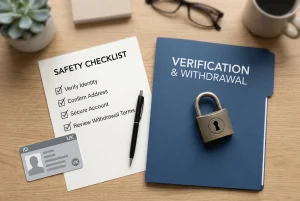
- Visit the operator’s official homepage
- Locate the UKGC licence number in the footer
- Verify the number on the official UKGC register
- Ensure the licence matches the business name in the app terms
This check applies whether the search is for a casino app for Android, an app for slots, or a mobile casino intended for play while away from home. It also helps keep comparisons with an iPhone app on the right basis: device compatibility concerns access, while the operator’s licence concerns whether the service is authorised for UK players.
Make the check before installing
A licence number is a useful starting point, not a decorative footer detail. The operator must be licensed to serve the relevant UK market; an app’s availability or polished presentation does not answer that question. For a UK player, the operator’s licensing status is the essential threshold before considering how the app works or what it offers.
Once the operator has been identified, the licence number at the bottom of its homepage provides the detail needed for a UKGC check. If that information is absent or the business behind the app is unclear, there is no sound basis for treating the app as a licensed UK casino.
UK Casino Apps: Licence and Player Protection
A casino app is not a separate legal category from the gambling service behind it. For UK players, online casino gambling is legal when the operator holds the required UK Gambling Commission (UKGC) licence. The same test applies whether the account is opened through an app or a mobile browser: the operator’s legal status matters more than the format on the screen.
International Casinos for UK Players: Rules and Risks
A licence number is commonly displayed at the bottom of an operator’s homepage. That number can be checked against the UKGC register, which helps confirm that the business serving the account is authorised for the British market. A polished interface, a prominent sign-up offer or a familiar app name does not replace that check. The licence belongs to the operator, not to the appearance of its software.
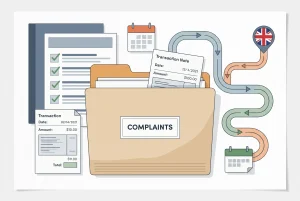
Player protection also includes a route for complaints that cannot be settled directly. A specialist review records that, since October 2023, UK-licensed operators have been required to belong to an approved alternative dispute-resolution provider. The operator’s complaints procedure is the first step: the complaint should be raised there and the response retained. If a legitimate withdrawal is refused and the internal process fails to resolve the matter, the customer can escalate it to the relevant ADR body.
That process is distinct from checking whether a withdrawal is still being reviewed. A complaint is about an unresolved dispute with the operator; ADR is the external route available after the operator’s own process has failed. The operator should identify its approved provider and explain how to submit a case. Keeping the complaint, the operator’s replies and relevant account records together makes the issue easier to present.
For a UK casino app, the practical baseline is therefore straightforward: identify the company operating the account, check its UKGC licence, and locate its complaints and ADR information before relying on the service. Legal status is not an endorsement of every feature or offer. It establishes that the operator is within the UK regulatory framework and gives the customer a defined escalation route if a dispute remains unresolved.
Player Safety
- Always verify the UKGC licence number before installing an app
- Use the operator’s internal complaints process before escalating to ADR
- Check for an approved alternative dispute-resolution provider
Live Dealer Play on Mobile: Access and Payment Timing
Live dealer play on a phone depends on two separate steps: opening the casino service and funding the account. A live table may be reached through a dedicated app or, where the operator supports it, through instant play in a mobile browser. Most UKGC-licensed casinos provide browser-based instant play, so installing an app is not automatically a condition of mobile access.
The route into the lobby does not establish how responsive a live table will be. Dealer video, table controls and the connection all contribute to the experience; the label “app” alone does not show which casino will load fastest. A fair comparison needs to be based on the same practical checks: whether the live section opens on the phone, whether the table is usable at its screen size, and whether controls respond as expected. No general ranking can substitute for those checks across different devices and connections.
Payment timing is a separate measure. A table can open promptly while a deposit still waits for payment processing, or funds can arrive quickly while the live section takes longer to load. A specialist review reported instant Apple Pay deposits in the apps it tested, completed in two taps. That is a report about those tested apps, not a guarantee for every operator or every payment attempt.
This distinction matters when assessing a live dealer casino app: access is about reaching and using the table; payment is about when the balance becomes available. Neither should be inferred from the other. An operator’s payment information and the actual deposit flow are more relevant to funding time than the presence of a live dealer tab.
For UK play, the operator must hold a UK Gambling Commission licence. Within that boundary, the practical choice is not simply app versus browser. It is whether the available route opens the live service reliably and whether the chosen payment method makes funds available in time. A “best” label does not answer either question on its own.
Best Offshore Casino Sites: Licensing and Risks
iOS and Bingo Apps: Deposit Methods and Costs
On an iPhone or iPad, the payment screen matters more than the label on the app. Casino and bingo apps may offer different deposit methods, and the amount accepted at the cashier can vary by operator. A specialist review reports that many apps set a £5 minimum deposit, while some allow deposits from £2. The minimum is a practical entry cost, not a measure of how much play that deposit will provide.
Apple Pay can make the deposit step brief: a review of tested apps recorded instant deposits completed in two taps. That describes those tests, not a guarantee for every operator or bank. The casino must support Apple Pay, and the payment still depends on successful authorisation. Debit-card deposits were also reported as usually instant in a specialist review, although some banks flag gambling transactions. A declined or delayed card payment is therefore a bank decision as well as an app issue.
PayPal can be convenient where it is offered, but currency matters. A specialist review notes that conversion fees may apply when the account is used to play in a currency other than pounds sterling. Keeping the casino balance and payment in pounds avoids that particular conversion question; any fee shown by PayPal or the operator should be checked before confirming.
A bingo app does not automatically have the same cashier options as a casino app, and an iOS listing alone says nothing about its minimum deposit. The useful comparison is the amount accepted, the payment method available, and whether the transaction is approved—not the app’s name or category. A “no-deposit” label also does not describe a deposit method; it refers to an offer, whose conditions should be read separately from the cashier terms.
This page may receive a commission if a reader follows an affiliate link and deposits.
How long should a mobile casino withdrawal take in 2026?
For a UK-licensed operator, an e-wallet withdrawal should generally take under 24 hours; PayPal took 2 hours in the fastest observed case. Bank transfers typically take 3–5 business days, while debit card withdrawals take 1–3 business days.
Which payment methods are fastest for mobile cash-outs?
E-wallets are fastest: PayPal took 2 hours in the fastest observed case, and e-wallet withdrawals from UK-licensed operators have a realistic benchmark of under 24 hours. Bank transfers and debit card withdrawals typically take longer.
How does the ADR scheme work for payout disputes?
If a casino refuses a legitimate withdrawal and its internal complaints process does not resolve the issue, you can escalate the dispute to its approved ADR provider. UK-licensed operators have been required to belong to an approved ADR provider since October 2023.
What happens if I don’t pay my phone bill?
A pay-by-phone casino deposit is charged to your next mobile phone bill, or deducted from your pay-as-you-go credit.