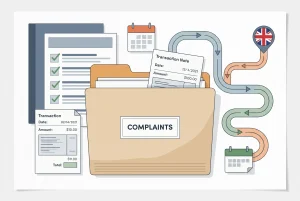
An international label does not establish UK authorisation; the operator’s licensing position is the key distinction.
What “International” Means in the UK Market
“International casino” is a broad description, not a UK licensing category. In the British market, the useful distinction is whether an online gambling operator holds a licence from the UK Gambling Commission. A foreign casino, in this context, is an operator that accepts British customers without that licence.
The word “international” can describe a site’s branding, audience or intended reach. It does not establish that the operator is authorised to provide gambling services in Britain. Nor does it identify a particular regulator or standard. To understand what the label means, the operator’s licensing position matters more than the language used to describe its website.
A casino licensed offshore holds its permission from a regulator outside the UK. That licence is not a UK Gambling Commission licence, and it does not place the operator under the Commission’s regulatory system. The distinction is not a matter of wording: a foreign licence and a UK licence are separate authorisations issued by different authorities.
For Great Britain, the UK Gambling Commission is the relevant regulator for remote gambling operators serving the market. An operator offering online gambling services in England, Scotland or Wales must hold the appropriate Commission licence. Without it, the operator is not legally entitled to offer those services there. A licence held elsewhere does not replace the required UK authorisation.
This means that “international online casinos UK” can refer to two materially different things: operators with an international presence that also hold a UK licence, and offshore operators that accept British customers without one. The first group is licensed for the British market; the second is not. A site’s country of registration, an overseas licence badge or the fact that its pages are available in English does not resolve that distinction.
The category is therefore defined by the relationship between the operator and the UK market, not simply by geography. A company can be based abroad and still hold a UK Gambling Commission licence for its British-facing gambling services. Conversely, an offshore casino may accept British customers while lacking the licence required to serve them. “Foreign” describes the relevant licensing position here; it is not a synonym for every operator headquartered outside the country.
British Casinos Not on GamStop: Rules and Risks
That distinction also explains why a search for the best international casino can produce descriptions that are difficult to compare. One site may use “international” to mean that it operates in several countries; another may use it to refer to an offshore casino available to British visitors. Those descriptions do not tell whether the operator holds a UK licence. The licence status is the decisive point for the market classification.
A UKGC-licensed operator is within the Commission’s regulatory framework for its licensed services. An offshore operator without that licence is outside that framework, even if it holds a licence from another jurisdiction. The two categories should not be treated as interchangeable simply because both offer online casino games or display a licensing statement.
For a British-facing site, the basic distinction is straightforward: a UK Gambling Commission licence means the operator is authorised to offer the relevant services in the regulated market; an offshore licence alone does not. The term “international casino” supplies no additional assurance about UK authorisation. It is a description of reach, not proof of permission.
This is the starting point for interpreting the wider terminology. “International casino online”, “online casino international” and similar phrases may point to the same general subject, but they do not define a separate class in UK regulation. The classification turns on whether the operator accepts British customers and holds a UK Gambling Commission licence. Where it accepts them without that licence, it is a foreign casino in the UK-market sense and remains outside UKGC regulation.
Access, UK Rules and the Limits of a Site’s Availability
A casino website opening in a British browser is evidence of technical access, not evidence that its operator is authorised to serve customers in Great Britain. Those are separate questions. A site may accept a registration or display its games while lacking the licence required for an operator offering real-money gambling to customers in England, Scotland and Wales.
The relevant distinction is between access and permission. Remote gambling operators selling into the British market must hold a licence from the UK Gambling Commission, wherever the operator is based. A licence issued elsewhere does not replace that requirement. Offshore casinos operate outside the UKGC system, and the Commission does not regulate them as British-licensed operators. An international casino site can therefore be reachable without being authorised for the British market.
A casino website being visible in a British browser is a sign of technical access, but it does not prove the operator is authorised to serve customers in Great Britain.
A working website is not a UK licence
Availability can look persuasive because it is immediate: a page loads, its registration form accepts details, or a deposit route appears. None of those events changes the operator’s regulatory status. They show only what the site’s systems permit at that moment. A company’s stated location, overseas licence or willingness to accept a British customer does not establish that it holds the UKGC licence needed to provide gambling facilities in Great Britain.
This matters because the licensing obligation attaches to the operator’s conduct, not merely to where its servers or offices are located. A business based abroad that offers gambling to customers in Great Britain still needs the relevant UK licence. Describing a site as “international” does not create a separate regulatory category or an exception to that rule.
The reverse is also true: a website’s access controls do not grant it permission to operate. Blocking visitors may prevent some access, but the block itself is not a licence. Accepting visitors does not confer authorisation either. Availability and lawful operation are not interchangeable measures.
Access restrictions can be inconsistent
Some casinos licensed outside the UK are expected to prevent British visitors from using their services. A report by gambling.com says that some do not enforce such restrictions, while a basic VPN may allow a user to get around an access block. That is a reported observation, not a dependable description of every operator or a permanent feature of the market. Site controls and access policies can change.
US casinos for UK players: access and risks
A visitor may consequently encounter different outcomes: a page may be unavailable, a registration attempt may be rejected, or the site may appear to allow access. These outcomes should not be read as a reliable test of regulatory permission. A technical block can be incomplete, and a page that loads can remain unauthorised for the British market.
VPN access adds another layer of uncertainty rather than resolving the licensing issue. Changing the apparent location of a connection may affect what a site displays, but it does not turn an offshore operator into a UKGC-licensed one. Nor does a site’s willingness to accept a connection establish that it is entitled to provide gambling facilities to a British customer. The distinction remains with the operator and its licence, not with the route used to reach its website.
Advertising is part of the operator’s conduct
The rules concern more than the games available on a site. An operator without a UKGC licence must not advertise its gambling services in the UK or provide gambling facilities to customers in England, Scotland and Wales. These are restrictions on the operator’s activity. A foreign address or overseas licence does not remove them when the business is targeting or serving the British market.
A promotion appearing to British users should not be treated as proof that the advertiser is authorised. The same applies to a link, sponsored placement or social post that directs traffic to an offshore casino. Visibility is a feature of distribution; it is not regulatory approval. The legal position depends on whether the operator holds the required UKGC licence, not on how widely its name or offer circulates.
Regulatory Status vs. Marketing
Ranking or promotional descriptions cannot establish that an operator may serve the UK. Even if a site is accessible and marketing is visible, it remains outside UKGC oversight if it lacks the required licence.
This also explains why “best international casinos” is not a regulatory category. A ranking or promotional description cannot establish that an operator may serve the UK. Where an offshore site accepts British visitors without the required licence, its accessibility and marketing do not make that service compliant. It remains outside UKGC oversight, including the Commission’s operator requirements such as mandated affordability checks.
The practical boundary is therefore clear even when a website’s behaviour is not: British availability may be technically possible, but operators selling into Great Britain need UKGC authorisation. A foreign licence, a functioning registration page, or an advertisement encountered in the UK is not a substitute. The site’s reach describes what can be opened; its UKGC status determines whether it is authorised to provide the service.
Our top casino picks for the UK
- EvoSpinBonus: 125% up to €2500 + 125 Free Spins · Payout speed: 1-3 business days
- ZombillionBonus: Welcome Pack 250% up to £4000 + 200 FS · Payout speed: 1-3 business days
- ChanzeBonus: Slots Welcome Bonus #1 200% up to €500 · Payout speed: 1-3 business days
- BritsinoBonus: Welcome Package – Get your £2,200 + 2,000 FS · Payout speed: 1-3 business days
- JetsetspinsBonus: 200% Bonus + 100 Free Spins + Free Royal Wheel · Payout speed: 1-3 business days
- Revery PlayBonus: 100% up to€1,000+ 100 FS · Payout speed: 1-3 business days
- NightWinBonus: £900 + 400 free spins · Payout speed: 1-3 business days
- DieselwinBonus: Welcome Pack 250% up to £4000 + 200 FS · Payout speed: 1-3 business days
- BeOnBetBonus: 100% up to €500 + 100 FS · Payout speed: 1-3 business days
- AmunbetBonus: Join now and get 450% up to 2,700 GBP + 450 FS · Payout speed: 1-3 business days
What UK Players Risk When They Use an Offshore Casino
The legal position of the operator and that of the player are separate. A British player does not commit a criminal offence merely by placing a bet with a casino licensed outside the UK. There is no UK law that prohibits an individual from betting with an overseas operator, and the player does not face a criminal penalty simply for choosing one.
That does not make the operator authorised to serve the British market. Remote gambling businesses offering services to customers in Great Britain must hold a UK Gambling Commission licence. An offshore licence does not replace it. A casino may therefore be licensed in another jurisdiction while remaining outside the UKGC system. The player’s lack of criminal liability should not be mistaken for a regulatory endorsement of the site.
Non-UK Registered Casinos: Regulation and Risks
The distinction matters because the UKGC cannot provide its usual oversight of an operator that does not hold its licence. Offshore casinos are not subject to UKGC enforcement, and the protections attached to UK regulation cannot be assumed to apply. A claim that a business is licensed abroad answers a different question from whether it is licensed to serve customers in Britain.
The gap between a dispute and a remedy
The practical risk is clearest when a disagreement concerns money. A customer may believe that a withdrawal is due, while the operator disputes the account, the terms or the transaction. With a UKGC-licensed operator, the business is within the British regulator’s system. With an offshore casino outside that system, the UKGC has no authority to enforce its rules against the operator.
Gambling.com has reported cases in which unlicensed sites refused to pay winnings, leaving customers without legal recourse. That report should be read as a warning about a possible outcome, not as a claim that every offshore casino withholds money. The important point is the limited remedy if a dispute does arise: a player cannot rely on UKGC oversight to compel an offshore operator to resolve it.
A foreign licence may impose obligations under the rules of its own jurisdiction, but that is not equivalent to UKGC regulation. The applicable regulator, complaint route and practical ability to obtain a remedy may differ. A licence badge alone does not establish that a British customer can recover disputed funds, or that UK protections apply.
Self-exclusion does not travel with the player
GamStop covers UKGC-licensed operators. Once a player registers with the scheme, they are excluded from every UK-licensed site. Offshore casinos outside the Commission’s remit are not part of GamStop, so the exclusion does not automatically prevent an account being opened there.
Attention GamStop does not cover offshore casinos, meaning self-exclusion from UK-licensed sites may not prevent access to foreign operators.
A specialist affiliate review has described a GamStop-excluded player being able to register with a foreign casino quickly and deposit without the safeguards associated with UK-licensed sites. That possibility is not a reason to treat an offshore site as a workaround. It is the reverse: a self-exclusion intended to interrupt gambling at regulated operators may not block access outside that system.
The boundary has a direct consequence. GamStop does not extend to international casino sites simply because they accept British customers or describe themselves as available in the UK. A person relying on the scheme cannot assume that it will stop access at a casino that is not connected to it. The absence of that block also means the site cannot be presented as providing the same self-exclusion protection.
Fewer UK-mandated safeguards
Offshore operators do not offer UKGC-mandated affordability checks. That absence is significant because it removes a UK regulatory safeguard from the operator’s processes; it should not be recast as proof that the operator has assessed whether gambling is affordable. More broadly, UKGC requirements and interventions do not bind a casino merely because British players can reach its website.
This is why “not illegal for the player” is an incomplete measure of risk. It describes the individual’s criminal position, not the standard of oversight, the availability of self-exclusion or the chances of resolving a payment dispute. A player may face no criminal penalty while still accepting a weaker route to protection if the operator fails to honour a commitment.
For anyone considering international casinos for UK players, the relevant distinction is therefore not simply domestic versus foreign ownership. It is whether the operator holds a UKGC licence and is accountable within the British regulatory framework. Where it does not, the UKGC cannot supply the missing oversight, GamStop does not apply, and a reported refusal to pay may leave the customer without an effective UK remedy. Those are separate risks from the legality of the player’s act, and the first does not cancel the others.
Gibraltar casino licence in the UK: what it means
Bonus Terms: The Cash Value Behind the Headline
A welcome offer is not a cash amount until its conditions are met. The headline may combine a deposit match, free spins or another promotion, but the useful comparison is between the bonus credited and the qualifying bets required before bonus funds can become withdrawable. A specialist affiliate review reports that foreign casinos can advertise larger welcome packages because they are not bound by UKGC restrictions on bonus terms, wagering requirements and promotional language. A larger headline, by itself, says nothing about the value left after those terms are applied.
The same type of specialist review identifies deposit matches, free-spin packages, no-deposit bonuses and cashback offers among the common formats at foreign casinos serving British players. Each puts a different figure in the headline. A deposit match adds bonus funds in relation to a qualifying deposit; free spins provide spins rather than an equivalent cash balance; a no-deposit promotion offers a bonus without requiring a deposit as its entry condition; and cashback returns an amount calculated under the offer’s terms. These labels describe the structure, not the amount that can ultimately be withdrawn.
Turn wagering into a betting total
A wagering requirement is a multiplier applied to a stated bonus amount. To calculate the qualifying betting turnover, multiply the bonus by the wagering figure. The result is the total amount of bets that must count towards the requirement; it is not the amount of money the player will necessarily lose, nor is it a guaranteed cash return.
Wagering Calculation
Step 1: Identify the bonus and requirement
Take a £20 bonus with a 35x wagering requirement.
Step 2: Multiply the values
£20 × 35 = £700.
Step 3: Determine the total turnover
The total amount of bets required is £700 before the bonus funds convert to withdrawable cash.
A specialist affiliate review illustrates the calculation with a £20 bonus carrying a 35x requirement: £20 × 35 = £700 in qualifying bets. The balance advertised as a bonus therefore comes with a turnover condition of £700 before it can be cashed out. That is the relevant comparison: £20 of promotional credit is not £20 of immediately available cash.
The same arithmetic applies to a matched deposit. A 100% match on a £100 deposit creates a £100 bonus. With a 35x wagering condition on that bonus, the calculation is £100 × 35 = £3,500 in qualifying bets before the bonus funds convert to withdrawable cash. The deposit and the bonus are separate figures; the example’s wagering total is calculated from the bonus amount, not by treating the combined deposit-and-bonus balance as the base.
Those examples are calculations attached to specified terms, not a statement that every international casino uses the same multiplier or applies it to the same balance. The offer’s wording determines what counts. A comparison should identify the wagering base, the qualifying activity and the point at which the requirement is treated as complete. If any of those conditions are unclear, the headline cannot be translated reliably into a cash value.
No-deposit and free-spin offers
An international casino no-deposit bonus can look more valuable because it does not require a deposit to trigger the offer. That removes one entry cost, not necessarily the conditions attached to any resulting bonus funds or winnings. The distinction matters for searches for free spins without a deposit: spins are an opportunity to play, not a cash amount. The terms should state how any winnings are treated and what requirements apply before they can be withdrawn.
The same caution applies to a no-deposit bonus at an international casino not on GamStop. The phrase identifies an offer and an operator’s position outside the UK self-exclusion scheme; it does not establish that the promotion is generous or that its proceeds are readily available. Offshore casinos are not regulated by the UK Gambling Commission, and they do not offer UKGC-mandated affordability checks. A promotional calculation cannot replace those protections.
For cashback, the headline is incomplete unless the terms explain what activity qualifies and how the return is calculated. For any format, the practical reading is the same: separate cash from promotional credit, find the wagering base, and calculate the required turnover. A bonus becomes financially legible only after the headline has been reduced to its conditions and final cash-conversion point.
Live Roulette: What the Available Evidence Can Support
Live roulette combines roulette rules with a game presented through a live video stream. That format is distinct from a digital roulette game generated by software, but the label alone says little about the conditions that matter: the rules in force, the available stake range, how bets are settled and whether the table is accessible on a mobile device.
An international live casino may display roulette as part of a broader catalogue, but a category label is not a comparison. A useful assessment would need details for each table and operator, including the stated rules and limits. Without those, claims about the best international roulette casino or a particular table’s suitability have no measurable basis. A list of names without comparable terms would be packaging, not analysis.
A live stream of a game describes the format of the presentation, but it does not provide details about the operator’s licence, table rules, or player protections.
The live presentation also does not change the underlying financial calculation. A roulette bet can lose, and a stream does not reduce that risk. Any promotional balance attached to play has its own conditions; the bonus headline should not be treated as cash available for withdrawal. The relevant comparison is between the table’s terms and the amount at stake, not the atmosphere suggested by the video.
Mobile access is another separate question. A casino being described as mobile-friendly does not establish that every live table works on every device, or that its controls are equally clear on a smaller screen. A sound comparison would require evidence about the actual interface and table rules rather than an assumption based on the word “mobile.”
For British customers, regulatory status remains material even when the product is live roulette. Offshore casinos are not regulated by the UK Gambling Commission, and offshore operators do not provide UKGC-mandated affordability checks. A live stream is not a substitute for those protections, nor does it give an offshore operator the UKGC’s oversight.
The defensible distinction is therefore between format and evidence. “Live” describes how a game is presented; it does not establish the operator’s licence, the table’s rules or the player’s protections. A comparison of live roulette options requires those terms to be stated clearly and consistently. Where they are not, the category can be described, but a ranking of tables or studios cannot be justified.
Real-Money Play: Deposits, Withdrawals and Tax
A real-money balance moves through distinct stages: a deposit is credited to the casino account, a withdrawal is requested, and the payment provider or bank then completes the transfer. The time shown for a payment method may not include an operator’s internal review or processing queue, so it is not necessarily the time until funds reach a bank account.
For Skrill and Neteller, reports on international casinos commonly place processing within 24 hours, with many transactions completed in under 12 hours. Those figures describe casino processing, not a guaranteed arrival time: the receiving provider can add a further step. A bank transfer is slower. A specialist review reports that transfers can take five to seven business days, with some casinos adding their own processing delay before the bank timeline begins.
That difference matters when comparing international casinos for real-money play. The payment route sets only part of the timetable; the operator’s withdrawal procedures also affect when a request is released. Withdrawal limits, pending periods and verification requirements differ between operators, so a headline processing time is not a complete cashflow estimate. Funds requested for withdrawal should not be treated as available in a bank account until the transfer has arrived.
The regulatory position also affects what those timelines mean. An offshore casino is not regulated by the UK Gambling Commission, and it does not provide the UKGC’s oversight or UKGC-mandated affordability checks. A stated payment schedule is therefore an operator’s own process, not a UKGC service standard. Offshore status does not change the UK tax treatment of winnings, but it does change the regulatory framework around the account.
Gambling winnings are not subject to UK income tax, whether they come from a UKGC-licensed operator or a casino licensed overseas. The tax treatment is therefore separate from the route by which a deposit or withdrawal is made. For a British player assessing an international casino, the practical calculation is the amount deposited, the amount requested for withdrawal and the time taken for cleared funds to arrive; the tax due on gambling winnings remains nil.
Key Takeaways
- Payment processing times can vary depending on the operator and the provider.
- An offshore casino is not subject to UKGC oversight or mandated affordability checks.
- Gambling winnings are not subject to UK income tax.
Reviews, Ownership Links and Conflicts of Interest
An international casino review is more useful when it separates what can be checked from what is being recommended. Published terms describe the operator’s stated conditions; they do not, by themselves, show who benefits when customers lose or whether a favourable assessment is commercially independent.
Santeda offers a concrete example of why the distinction matters. Its Curaçao licence does not authorise it to operate in the UK or the US. Separately, a contract between Santeda and SIS gave SIS a percentage of revenue generated by losing bets placed through Santeda’s brands. That arrangement is a commercial link to gambling losses, not merely a shared branding detail. It is relevant when weighing material about those brands, though it does not establish that any particular review was influenced by the contract.
A careful assessment should therefore identify the operator behind a brand, the licence it holds, and any disclosed commercial relationship relevant to the coverage. The wording of a review can then be read against that context. A factual description of terms is different from a recommendation, and neither should be treated as independent evidence simply because it appears in a review format.
This matters for international casino reviews covering real-money play as well as for pages focused on roulette. A review that names a game or describes an account feature does not establish that the operator is authorised to serve British customers. Offshore casinos are not regulated by the UK Gambling Commission and are not subject to its mandated affordability checks. Those differences should remain visible rather than being buried beneath ratings or promotional language.
The Santeda–SIS arrangement also illustrates why commercial disclosures need precise wording. A revenue share tied to losing bets is not the same as a general sponsorship, and it should not be softened into an unspecified partnership. At the same time, the contract alone does not prove that every assessment of a Santeda brand is biased. The sound approach is to report the relationship, distinguish it from verified operator terms, and let readers judge how much weight to give the resulting coverage.
Casino Apps, Account Security and Verification
An app icon does not establish who regulates the casino behind it. Non-GamStop casinos operate outside the UK Gambling Commission’s system, even where an operator advertises encryption or other security measures. Those are separate questions: encryption concerns the protection of information in transit or storage; regulation concerns the rules and oversight applying to the operator.
Some non-GamStop casinos describe their security as including advanced encryption to protect personal and financial data. That claim is relevant, but it is not evidence of UKGC supervision or equivalent player protections. Offshore operators are not subject to UKGC enforcement and do not provide the UKGC-mandated affordability checks. A polished app interface cannot fill either gap.
Verification is another practical distinction. UKGC-licensed operators must verify a customer’s identity before processing a withdrawal, and age must be checked before a customer is allowed to deposit. The timing and procedures at an offshore casino may differ; UKGC requirements should not be assumed to apply there. Identity documents can also contain sensitive data, so an app’s presence in a store or a security statement alone does not establish how a particular operator handles verification information.
Attention An app’s security features or presence in a store do not confirm that the operator is regulated by the UK Gambling Commission.
For a British player, the useful assessment is therefore not simply whether an international casino app opens or accepts account details. It is whether the operator’s regulatory status is clear, what protections actually apply, and what the published verification process requires. Security language describes a technical measure; it does not convert an offshore casino into a UK-licensed one. When those categories are treated as interchangeable, the label “secure” carries more weight than the evidence supports.
Casino Games: What Can and Cannot Be Compared
A comparison of casino games is useful only when it identifies what is actually being compared. A category label such as slots, table games or live dealer describes a format, not a specific game. It does not establish the rules, features or terms attached to an individual title.
For a meaningful comparison, the details need to be tied to a named game: its provider, rules, available features and any published return information. Even then, those details describe the game, not the conditions of the casino account. Game availability and account terms are separate questions, and a catalogue label alone cannot settle either one.
That distinction matters when assessing international casino games. A site’s stated range is not a measure of value, fairness or player protection. Those are different issues, and a game list cannot answer them. In particular, offshore casinos are not regulated by the UK Gambling Commission and do not provide UKGC-mandated affordability checks. Their game selection should not be treated as a substitute for those protections.
The same caution applies to broad claims about variety. A long list may contain many titles, but length alone says nothing about the rules or features of each game. Conversely, a short list does not establish that the available games are poor value. Without comparable details, the count is packaging rather than analysis.
Non-UKGC Licensed Casinos: Licences and Risks
A sound comparison therefore separates three things: the game category, the individual title and the operator’s terms. Only the first can be discussed at a general level without a specific game identified. Claims about named titles, providers or measurable game characteristics require details that can be checked against the actual game. That is a narrower basis for comparison, but it is also the one that can support a clear conclusion.
Crypto Deposits and the Cost of Faster Withdrawals
Crypto can be offered as a deposit method at an international casino, but the payment label does not settle the cost of using it. The value of the funds can change while they are held or before a withdrawal is converted back into pounds. A balance that shows the same number of coins may therefore represent a different cash value at each stage.
A specialist casino review has reported that crypto withdrawals from foreign casinos can clear in under an hour, faster than fiat withdrawals. That is a reported processing speed, not a guaranteed arrival time or a promise that every operator will handle a payment on the same schedule. The apparent speed advantage needs to be weighed against the possibility that the crypto’s value moves before the funds are exchanged or spent. Fast settlement does not fix the exchange value.
The calculation is therefore not simply “withdrawal time”. It is the amount deposited, the value when it is converted, and the value when it is later received or sold. If those points differ, the change in value can offset some or all of the benefit of a quicker transfer. The relevant terms should make clear which currency the account balance uses and how a crypto transaction is valued; without that information, the displayed balance is not a reliable measure of what will be recovered in pounds.
A crypto payment option also says nothing about the operator’s regulatory status. Offshore casinos are not regulated by the UK Gambling Commission and do not provide UKGC-mandated affordability checks. A fast crypto withdrawal does not supply either protection. The payment route and the operator’s oversight are separate questions, and speed is only one line in the final account.
Are foreign casinos safe for UK players to use?
Not necessarily: foreign casinos are outside UKGC regulation, and some unlicensed sites have refused to pay winnings, leaving customers with no legal recourse. An overseas licence does not provide UKGC oversight.
Is it legal for UK residents to use casino sites that operate outside the UK’s licensing framework?
Yes, playing at an overseas casino is not illegal for an individual UK resident. However, an unlicensed operator cannot legally provide gambling services to customers in England, Scotland or Wales.
Are bonuses at foreign casinos actually better than at UKGC-licensed sites?
Foreign casinos often offer larger welcome packages because they are not bound by UKGC restrictions on bonus terms and promotions. Check the wagering requirement: for example, a £20 bonus with a 35x requirement means £700 in qualifying bets before cash-out.
How do I know if an online casino is safe?
Check whether the operator holds a UK Gambling Commission licence; an overseas licence or a website that accepts British visitors does not establish UK authorisation. Unlicensed foreign casinos sit outside UKGC regulation, and some have refused to pay winnings.
What happens if I have a dispute with a foreign casino?
A foreign casino outside the UKGC framework is not regulated by the Commission, and customers of unlicensed sites have in some cases been left without legal recourse when winnings were withheld.
What does wagering requirement actually mean in practice?
It is the amount you must bet on qualifying games before bonus funds can be withdrawn. For example, a 35x requirement on a £20 bonus means placing £700 in qualifying bets.