Compare game variants and play formats, while keeping the show-inspired theme distinct from each slot’s actual rules.
Deal or No Deal Slots: The Game-Show Format and Its Limits
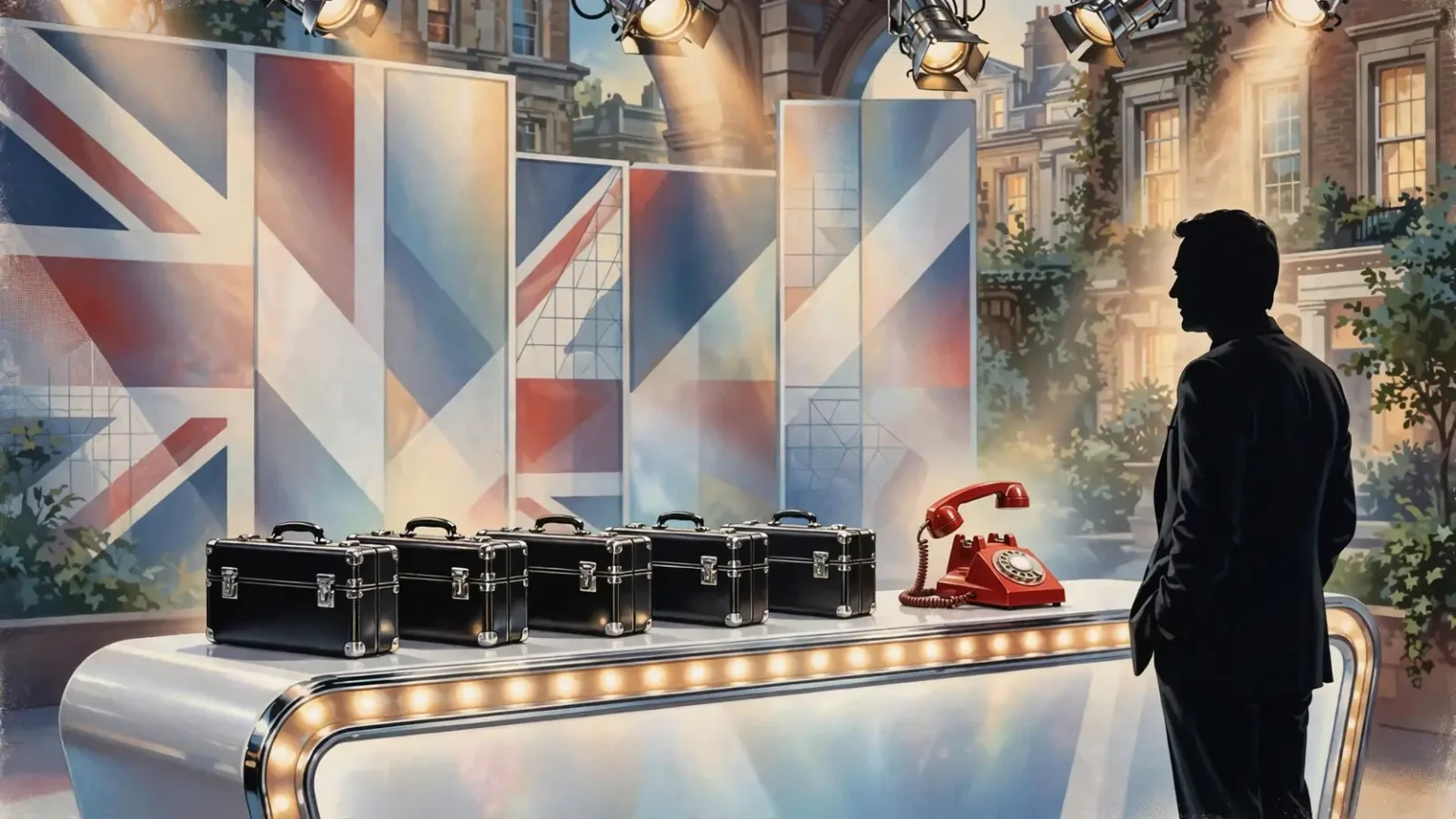
Deal or No Deal slots borrow the vocabulary and visual premise of the television game show: a player faces a decision, while a banker’s offer represents a possible alternative to continuing. That resemblance describes the theme, not a guarantee that every game carrying the brand reproduces the show’s rules. Titles can differ, and a familiar set of references does not establish the mechanics of a particular slot.
One important condition applies to the game described in specialist review coverage: players have to qualify before they can play. The qualification stage is therefore part of the game’s structure, rather than an optional flourish that can be assumed away. A player who has not qualified cannot proceed to the play stage. The exact qualification process should be taken from the rules displayed for the specific game; the game-show theme alone does not explain what is required.
The banker’s offer is another feature that needs careful interpretation. A specialist review reports that offers can vary greatly because of the random number generator (RNG). That is a report about the game described there, not a dependable rule for every Deal or No Deal slot. Nor does an offer, simply by appearing in a game, establish that it is favourable. Its value has to be assessed against the choice available at that moment and the game’s stated rules. The word “banker” supplies atmosphere; it does not make the offer a reliable financial benchmark.
An RNG determines outcomes through random processes. In practical terms, the reported variability means that an earlier offer cannot be treated as a forecast of a later one, and a pattern of previous outcomes is not a calculation of what comes next. There is no basis for assuming that the banker will improve an offer after a particular sequence or that qualifying creates a predictable route to a specific result. Those expectations would turn a themed feature into a promise the mechanics do not support.
Casino Games: Slots, Live Tables and More in the UK
This distinction matters when comparing Deal or No Deal casino slots. The brand identifies a shared theme, but it does not establish identical qualification rules, offer behaviour or other game features across titles. Each game needs to be read on its own terms. The relevant information is the rules and feature descriptions attached to that particular title, not the television format and not the name of another game in the same series.
The format also has a clear limit as a decision-making model. A television contestant’s choices are presented as part of a show; a slot’s outcome is governed by its own game design and random processes. A dramatic pause or a banker’s offer can make a decision feel more personal, but presentation does not remove uncertainty. If an offer changes, that change should be understood as part of the game’s operation, not as evidence that the game has read a player’s strategy or is responding to a planned sequence.
French Roulette Online Casinos in the UK: Rules & Tables
In Britain, this game-specific question sits within a regulated gambling market. The UK Gambling Commission oversees commercial gambling in Great Britain and is the sole regulator for that activity. Its remit covers remote gambling offered to consumers in Great Britain even when the operator’s key equipment is located elsewhere. The Commission issues operating licences to businesses and personal licences to individuals working in relevant operating roles. The location of a casino’s equipment, on its own, does not determine whether its remote gambling service falls within the British regulatory framework.
That regulatory context does not certify a particular slot as a good-value choice, nor does a licence alter how its qualification stage or RNG works. Regulation and game design answer different questions: one concerns the operator’s authority to provide gambling services in the market, while the other concerns the rules and outcomes of the individual game. Treating those as separate checks avoids confusing legal status with the likelihood of a favourable result.
For anyone assessing a Deal or No Deal slot in the UK, the useful starting point is therefore the exact title and its displayed rules. Confirm whether qualification is required, what the game says about the banker feature, and how outcomes are determined. The game-show premise can explain why those features are presented as decisions. It cannot supply missing rules or turn a variable offer into a predictable return.
The qualification stage is a structured part of the game, and players must meet specific requirements before they can proceed to the play stage.
Our top casino picks for the UK
- EvoSpinBonus: 125% up to €2500 + 125 Free Spins · Payout speed: 1-3 business days
- ZombillionBonus: Welcome Pack 250% up to £4000 + 200 FS · Payout speed: 1-3 business days
- ChanzeBonus: Slots Welcome Bonus #1 200% up to €500 · Payout speed: 1-3 business days
- BritsinoBonus: Welcome Package – Get your £2,200 + 2,000 FS · Payout speed: 1-3 business days
- JetsetspinsBonus: 200% Bonus + 100 Free Spins + Free Royal Wheel · Payout speed: 1-3 business days
- Revery PlayBonus: 100% up to€1,000+ 100 FS · Payout speed: 1-3 business days
- NightWinBonus: £900 + 400 free spins · Payout speed: 1-3 business days
- DieselwinBonus: Welcome Pack 250% up to £4000 + 200 FS · Payout speed: 1-3 business days
- BeOnBetBonus: 100% up to €500 + 100 FS · Payout speed: 1-3 business days
- AmunbetBonus: Join now and get 450% up to 2,700 GBP + 450 FS · Payout speed: 1-3 business days
Online Deal or No Deal Slots: What the Slot Format Means
An online Deal or No Deal slot is a digital casino game presented under the Deal or No Deal name. The slot format matters: it is a game played through casino software, not automatically the television programme recreated as a complete interactive experience. Branding may borrow the show’s visual language or central premise, but it does not establish how a particular title works.
The name can appear across separate products, and the rules of one should not be carried over to another. A feature associated with one game is not evidence that every Deal or No Deal title has the same feature. The same applies to presentation, symbols, bonus rounds and the way a game resolves a spin. A title should be assessed by its own rules, rather than by what its branding seems to promise. A familiar name is not a ruleset.
That distinction is useful when “video slot” and “online slot game” are used interchangeably. Both describe a digital slot format, but neither term identifies a specific set of mechanics. The label tells the reader what broad kind of casino product is being discussed; it does not settle the details of a named Deal or No Deal game. Those details belong to the individual title.
Fastest payout online casinos in the UK: payout times
Brand and format are separate things
Deal or No Deal is recognisable as a game-show brand, while an online slot is a casino product. A game can use the brand without reproducing the show’s complete structure. A digital title may have its own interface and rules; its name alone cannot establish that a player chooses the same options as a television contestant, follows the same sequence or encounters the same outcomes.
This is not a minor distinction. When the product is a slot, its financial result depends on the game’s own rules and the amount staked in each game cycle. The familiar theme is presentation. It should not be treated as evidence of a better return, a particular feature or a connection between the possible outcomes of different titles.
The range of titles under the brand also means that “Deal or No Deal slots” is a category label, not the name of one universal game. Deal or No Deal Lightning Spins, Deal or No Deal Megaways and Deal or No Deal Golden Box Megaways are separate product names. The names identify different titles; they do not make their play rules interchangeable. A comparison therefore needs to be title-specific. Grouping them together may be convenient for browsing, but it is not enough to calculate how any individual game behaves.
The UK setting changes the practical meaning
In Great Britain, an online casino offering real-money gambling to customers must hold the relevant UK Gambling Commission operating licence, regardless of where its key equipment is located. Online gambling is legal in the UK at licensed and regulated sites for people aged eighteen and over. A website’s use of a familiar game-show name does not determine whether its gambling operation is authorised.
Regulatory Compliance
Online gambling is only legal in the UK at licensed and regulated sites. A website’s use of a game-show branding does not confirm its authorisation to operate.
The Gambling Commission is the regulator for commercial gambling in Great Britain. It licenses businesses that provide gambling services and sets requirements for remote operators serving consumers there. The Gambling Act 2005 governs gambling in England, Wales and Scotland; it does not govern Northern Ireland. These distinctions matter because “UK” is often used casually, while the legal framework is not identical in every part of the country.
A licensed site must verify a customer’s age before allowing a deposit. It must also prompt a new customer to set a financial limit before the first deposit and provide account-level controls for managing limits. These are operator responsibilities, not features supplied by the Deal or No Deal brand.
UK rules also place a ceiling on the stake for an online slot game cycle: £2 for customers aged eighteen to twenty-four, and £5 for customers aged twenty-five and over. Online slot autoplay is banned in Britain, and at least two and a half seconds must pass from the start of one game cycle before the next can begin. A description of a slot as “online” does not remove those requirements.
Accordingly, “playing a Deal or No Deal slot online” has two separate parts: the identity and rules of the specific game, and the legal conditions applying to the casino supplying it. The brand answers neither question by itself. The game title identifies what to examine; the operator’s licence establishes whether the real-money service is permitted to serve customers in Great Britain. A careful distinction between those two things leaves less room for packaging to do the work of evidence.
Keno Casinos in the UK: Licence, Payouts and Play
Deal or No Deal Megaways and Golden Box Megaways
Deal or No Deal Megaways and Deal or No Deal Golden Box Megaways are the two titles to distinguish when the Megaways mechanic is the point of comparison. The useful review question is not how large the headline number looks, but what must happen for a spin to produce a win and how the game resolves that win.
The mechanic can offer as many as 117,649 ways to win. That is a maximum count of possible winning symbol arrangements under the Megaways system, not a payout figure or a measure of how often a win occurs. A larger count does not, on its own, establish that a game returns more money or is more favourable. Those are separate questions from the number of ways available on a spin.
A winning combination requires between two and six matching symbols on a payline. The count of matching symbols therefore matters alongside the number of ways: the headline maximum cannot be read as meaning that every symbol arrangement wins. The condition is specific—matching symbols must meet the game’s win requirement on a payline. A review that reports only the maximum ways leaves out the part that explains how an outcome qualifies.
When a win occurs, the matching symbols disappear and new symbols take their places in a cascade. The replacement symbols may create another winning combination, so one spin can resolve through successive sets of symbols rather than stopping immediately after its first win. Each cascade depends on what appears next; the mechanic does not make a further win automatic. The sequence is part of how a result is settled, not evidence that a spin must continue producing wins.
Megaways Mechanics
The Megaways system can offer up to 117,649 ways to win. This count refers to the maximum possible winning symbol arrangements and is not a guarantee of a payout or frequency of wins.
Winning combinations require matching symbols on a payline. When a win occurs, symbols disappear and are replaced in a cascade, which may trigger successive wins.
That distinction matters when comparing Deal or No Deal Megaways with Golden Box Megaways. The shared Megaways description establishes the broad structure: a high possible ways count, a qualifying match on a payline and replacement symbols after a win. The names alone do not establish that every other feature, payout arrangement or game setting is identical.
Searches for a demo or free-play version raise a different issue from the way Megaways wins resolve. The title name and mechanic do not establish whether a particular operator currently offers a free mode. Any listing needs to identify the exact game and the conditions under which it can be opened; otherwise, the presence of “Megaways” in a label is not enough to confirm that it is the same title. No conclusion about the availability of free play follows from the game mechanic itself.
The same care applies when a title is described with a shortened or altered name. Deal or No Deal Megaways and Deal or No Deal Golden Box Megaways should not be treated as interchangeable with other Deal or No Deal games merely because the branding is similar. For a title-specific review, the name on the game itself is a more useful starting point than a loose reference to “the Golden Box” or “Megaways”.
The practical reading is therefore narrow. The Megaways feature sets a ceiling of 117,649 ways to win; a result still needs the required matching symbols on a payline; and a win can trigger replacement symbols that may produce another result. None of those mechanics, taken alone, supplies a return figure or a basis for predicting a particular spin.
Aviator Casino Game UK: Licensing, Payments and Play
Playing a Deal or No Deal Slot Machine Online
“Slot machine” can mean a physical cabinet or an online game built around the same general format. Online, the game is accessed through a casino website or app rather than a machine on a casino floor. The label alone does not identify a particular Deal or No Deal title, its rules or whether it can be opened without staking money. Those details depend on the individual game and how it is offered.
That distinction matters when assessing a free version. Free play is an access option, not something guaranteed by a game’s name or by its appearance in an online casino. A game page may describe a title without establishing that a no-stake mode is available. Nor does a demo-style presentation, where offered, establish the terms of real-money play. The two forms should not be treated as interchangeable: one concerns access without a cash stake; the other involves gambling with money.
For a money decision, the relevant unit is the game cycle and the stake attached to it. In Britain, the total stake for an online slot game cycle cannot exceed £5 for customers aged 25 and over, or £2 for those aged 18 to 24. Online slot spins must also take at least 2.5 seconds before another game cycle can begin. Autoplay is not permitted. These rules apply to online slots generally; they do not establish a special feature or exemption for a Deal or No Deal title.
Do
- Check the exact game title and its specific rules
- Verify the operator’s UK Gambling Commission licence
- Confirm the age verification and limit-setting processes
Don’t
- Assume a branded game follows the TV show’s rules
- Treat a demo or free mode as a guarantee of real-money terms
- Assume an offshore bonus is part of the UK regulatory system
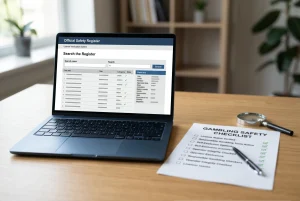
Real-money availability has a separate regulatory test. Online gambling is legal in the UK for adults aged 18 and over at sites holding a UK Gambling Commission operating licence. Remote operators offering gambling to consumers in Great Britain need the relevant licence even when their key equipment is elsewhere. A game’s branding does not replace that requirement. The Commission’s public register is the place to check an operator’s licence before depositing.
Age verification is required before an operator allows a customer to deposit. A UK-licensed casino must also provide account-level limit controls and responsible-gambling tools, including self-exclusion. These are features of the regulated service, not properties of the slot machine itself. A title page may explain how a game works, but it cannot establish the operator’s licence status or the customer’s account conditions.
The phrase “play online” therefore covers several separate questions: which title is being offered, whether it is available for real-money play, whether a free mode exists, and whether the casino offering it is licensed for the British market. Combining those questions into one assumption makes the result unreliable. A named game is not automatically free to play, and a free mode, where offered, does not by itself say anything about the conditions attached to real-money access.
For a machine-style experience online, the useful distinction is between the game’s format and its access terms. The title identifies the product; the casino determines how it is presented and whether it is available for real-money play. A free-play option should be treated as a separate mode rather than assumed from the word “slot machine.”
Monopoly Live Casino UK: Rules, Licensing and Play
Deal or No Deal Slots in Free Play
Free play is a way to try a slot without placing a real-money stake. It is not the same thing as free spins attached to a promotion: one describes a play mode, while the other describes spins offered under specific promotional terms. The distinction matters because the word “free” does not, by itself, explain what a casino provides or what conditions apply.
A Deal or No Deal title should not be assumed to have a free-play version simply because the game exists online. Nor does the same title name establish that every casino offering it provides the same access. The game’s listing at the operator is the relevant place to check whether a non-cash mode is available. If the listing does not identify one, the title alone is not evidence of access.
Free play and real-money play also answer different questions. A free mode concerns whether a stake is being placed; a real-money game involves gambling with funds. In Great Britain, online gambling is legal for players aged 18 and over when the operator holds a UK Gambling Commission licence. The Commission regulates remote gambling offered to consumers in Great Britain, including where the operator’s key equipment is located elsewhere. A free-play label should not be treated as proof that an operator is licensed for real-money gambling.
The account of a game may also distinguish practice access from a promotional offer. Free spins are not automatically a cash balance, and their presence should not be inferred from the words “free play”. Any offer needs to be assessed on its own stated terms rather than treated as a feature of every Deal or No Deal slot. Without clear terms on the operator’s page, there is no basis for calculating a promotional value.
Checking Free Play
- Identify the exact game title
- Look for an explicit free-play or demo option on the casino’s page
- Confirm if the non-cash mode is available for that specific title
A useful check is therefore narrow: identify the exact game title, then look for an explicit free-play or demo option on the casino’s own game page. A general page about Deal or No Deal slots does not establish that a particular title can be launched without a real-money stake. Likewise, seeing a free-play option for one title says nothing about another title carrying the same television theme.
This keeps the comparison factual. Free access, free spins and real-money play are separate arrangements, and the game’s branding does not settle which arrangement is available. For real-money gambling in Great Britain, the operator must hold the relevant Gambling Commission licence; free-play wording is not a substitute for checking the nature of the service.
Deal or No Deal Double Action: What Can Be Verified
“Double Action” identifies a separate Deal or No Deal slot title; it should not be treated as another name for Deal or No Deal Megaways or Golden Box Megaways. The shared television branding does not establish shared gameplay. In particular, the Megaways titles’ reel behaviour and win rules cannot be assigned to Double Action simply because the names belong to the same franchise.
That distinction matters when assessing a review. A useful account of a slot would describe its actual game rules, features and payout information, rather than infer them from a related title. Without reliable details about Double Action’s own design, claims about its bonus rounds, symbols, volatility, return to player or likely performance would be speculation. A confident tone would not make those claims more measurable.
The title alone also does not show where the game is available to British players or under what terms. Availability can depend on the operator and its catalogue; a name appearing in a search result is not proof that a game can be opened at a particular casino. Nor does the franchise name establish that a particular listing is the same product described elsewhere. The game title and the operator’s own game information need to match before the two can be treated as equivalent.
Live Baccarat Online Casinos in the UK: What to Check
For British real-money play, the legal distinction is separate from the game’s branding. Remote gambling operators serving consumers in Great Britain must hold the relevant UK Gambling Commission licence, regardless of where their equipment is located. A licence applies to the operator, not as a guarantee about a slot’s features or returns. Game-specific information still has to come from the operator’s presentation of that title.
The defensible position on a Double Action review is therefore narrow: it is a distinct title, and its mechanics should not be borrowed from the Megaways games. Any assessment that assigns it a feature set, rating or financial expectation needs evidence specific to Double Action. Without that, a numerical verdict would be decoration rather than analysis.
Deal or No Deal: What’s in Your Box Slot and RTP
Deal or No Deal: What’s in Your Box is a distinct title, and its name alone does not establish how the game plays. No confirmed RTP figure or game-specific mechanics can be stated for it. That leaves two separate points to check: what the game does, and what return figure, if any, is attached to that exact version.
Fast Payout Online Casinos in the UK: Understanding Claims
RTP is a theoretical return measure, not a promise about an individual session. Without a confirmed figure for What’s in Your Box, there is no sound basis for quoting a percentage or comparing its return with another Deal or No Deal game. A figure from a similarly named slot would not fill the gap: titles within the same branded range need not share rules or settings.
The same restraint applies to features. The title does not establish whether play involves bonus rounds, a particular reel layout, banker decisions or another game-show element. Those details should not be inferred from the television format or transferred from Megaways, Golden Box Megaways, Double Action or Perfect Play. A branded resemblance is not a mechanic.
For a meaningful assessment, the exact game identity and its own rules matter. If a game information panel or rules screen gives an RTP, that figure should be tied to the specific title and version being played. If no such figure is shown, a comparison based on an assumed percentage has no reliable basis. The title can be identified; its return and mechanics cannot be responsibly filled in by analogy.
Casino Dice Games in the UK: Formats and Odds
That distinction matters financially. A familiar name may suggest a recognisable format, but it does not establish expected return, volatility, feature frequency or potential outcomes. Those are separate characteristics, and none can be calculated from the words “What’s in Your Box”. Until reliable, title-specific details are available, the only defensible description is that the game’s RTP and mechanics remain unconfirmed.
The Deal or No Deal Perfect Play Slot
The Perfect Play name should be treated as a distinct Deal or No Deal title, not as another name for Deal or No Deal Megaways or Golden Box Megaways. Similar branding does not establish shared rules, symbols, bonus rounds or payout behaviour. In particular, the Megaways games’ changing reels and cascading wins cannot be attributed to Perfect Play without title-specific rules.
That distinction matters when comparing game information. A return-to-player figure, where published, belongs to a specific game configuration; it is not a series-wide statistic. The same applies to volatility, paylines, qualifying conditions and any bonus feature. A title label alone provides none of those measures. A review that assigns Perfect Play mechanics based on another Deal or No Deal game is describing the wrong product, however familiar the branding may look.
For a meaningful assessment, the game’s own information needs to identify the exact title and state its rules. The paytable and help screen are the relevant places to establish how wins are formed and what features apply. If an operator’s listing gives only the name, that is not enough to calculate expected returns or compare play conditions. No numeric performance claim should be inferred from the word “Perfect” either; it is part of the title, not a published measure.
The UK context also affects where a real-money version may be offered. Remote gambling operators serving consumers in Great Britain must hold the relevant UK Gambling Commission licence, regardless of where their equipment is located. Online gambling is legal in the UK for adults aged eighteen or over when the operator holds that licence. Those requirements concern the operator and market, not the game’s individual mechanics.
Summary
- Brand identity and game mechanics are separate; do not assume shared rules across titles.
- UK regulation applies to the operator and their licence, not the individual game’s design.
- Always verify specific game details, such as RTP and features, through the official operator’s rules.
Accordingly, Perfect Play is best kept separate from other Deal or No Deal slots unless its own game information confirms a connection in features or rules. Without title-specific specifications, a feature review or performance comparison would be guesswork rather than analysis.
Deal or No Deal Casino No-Deposit Bonuses
A no-deposit bonus linked to Deal or No Deal should not be treated as an available offer unless a named operator publishes it and sets out its terms. A search result or promotional headline is not a payable amount.
The useful calculation begins with the operator’s written conditions, not the headline. The terms would need to identify what is credited, whether it can be withdrawn, what must happen before withdrawal, who qualifies and when the offer ends. Without those details, the bonus has no measurable cash value. No assumptions about wagering requirements, account status or time limits can fill that gap.
For British customers, real-money online gambling is legal only with an operator holding a UK Gambling Commission licence. The requirement applies to businesses serving the British market even when their equipment is located elsewhere. A bonus advertised by an offshore casino does not make that casino part of the UK regulatory system.
The regulatory distinction matters more than the Deal or No Deal branding. A branded promotion does not establish that an offer exists, that it applies to a particular game or that its conditions are suitable. Any claimed deal should be checked against the operator’s own published terms and its current entry on the Commission’s public register before funds are deposited. Age checks apply before an operator permits a customer to deposit.
Until an operator states the offer and its full conditions, the correct amount to include in a budget is zero. That is not a judgement about the appeal of a promotion; it is the only calculation supported when no confirmed offer can be priced.
Live Blackjack Online Casinos in the UK: What to Check
Deal or No Deal Scratchcards
A scratchcard and an online slot are different products, even when they use the same television-game-show name. The scratchcard format centres on revealing covered panels on a ticket; a slot uses spinning reels and game rules that depend on its particular title. One format does not establish the availability or features of the other.
The Deal or No Deal name alone is not enough to identify a scratchcard product. It does not show whether a ticket is sold by a lottery, offered digitally by an operator, or connected to a casino game. Nor does it establish the price, prize structure, entry conditions or result. Those details would need to come from the specific product and its authorised seller.
For customers in Great Britain, the legal category matters. The Gambling Act 2005 covers England, Wales and Scotland, while Northern Ireland is outside that Act. Remote gambling operators serving consumers in Great Britain must hold the relevant UK Gambling Commission licence, regardless of where their equipment is located. The Commission issues operating licences to businesses and personal licences to individuals working in gambling operations. A scratchcard’s branding does not, by itself, settle which rules apply; the product type and the organisation offering it do.
That distinction prevents an online slot’s mechanics from being attributed to a scratchcard, or a lottery ticket’s terms from being assumed to apply to a casino product. The shared title is branding, not evidence that the products share a supplier, payment route or prize calculation.
A Deal or No Deal scratchcard should therefore be assessed as its own named product, with the seller and applicable terms identified before any payment. Without those specifics, claims about availability, cost, odds or prizes would be guesswork. The format can be described in general terms; the commercial details cannot be inferred from the name.