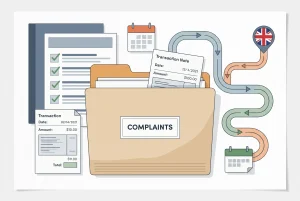
A practical guide to UK licence checks, live table play, blackjack decisions and the terms attached to bonuses.
Checking a UK Blackjack Casino Before Depositing
A blackjack site’s name is not proof that its operator is licensed. A familiar brand can be run by a different company from the one a player expects, while a site’s own licence statement is still a claim made by the site. For a UK-facing online casino, the useful check is the UK Gambling Commission’s public register: identify the business behind the offer and confirm that its record covers the relevant gambling activity.
The Commission regulates gambling activity in the UK, including online casinos. In Great Britain, it is the sole regulator for commercial gambling. Its remit over remote gambling offered to consumers there does not depend on where the operator keeps its key equipment. A business serving customers in Great Britain must therefore hold the relevant Commission licence; operating from elsewhere does not remove that requirement.
The register distinguishes business permissions from personal permissions. The Commission issues operating licences to businesses and personal licences to individuals working in relevant roles. A personal licence, a logo on a webpage or a general statement that a casino is “regulated” does not establish that the company taking deposits has the required operating permission. The business record is the starting point.
What the register needs to confirm
Search for the operator’s legal business name, not only the casino’s trading name. Then compare the record with the details on the casino site, including its terms and conditions and any company information identifying who provides the gambling service. The point is to connect the public record to the entity that would hold the account and accept deposits. A brand can be memorable; the contracting business is the relevant party.
Casino Games: Slots, Live Tables and More in the UK
Check the licence status and the activities covered by the record. A listing alone is not enough if it does not show the appropriate permission for the service being offered. The casino may display several product categories, but the relevant question here is whether the operator’s Commission record authorises remote casino gambling. The register is the independent reference point; a site’s own wording is not a substitute for matching its business and activity to that record.
The domain matters as well. Compare the address in the browser with any domains associated with the operator in the register. A licence held by a business does not, by itself, show that every site using a similar name belongs to that business. If the company name, trading name and web address do not line up, the gap should be resolved before funds are deposited. Similar branding is not a corporate relationship.
A specialist review reported that a check of the public register dated 26 September 2026 found no LuckyPays entry under that brand or the stated domain, including luckypays.io. That is a dated register finding, not a permanent statement about a later search. It illustrates why a current check should be made against the precise operator and domain rather than relying on a review, a search result or a logo. Register entries can change; a saved screenshot or an older article cannot establish today’s status.
Why the licence check matters
A UK Gambling Commission licence places the operator within the local regulatory system for the relevant activity. It is not a guarantee that every transaction or customer-service interaction will be satisfactory. It does, however, give the player a verifiable basis for identifying the responsible business and the regulator whose rules apply. Where the register does not support the site’s claim, the claim has not been verified.
DO
- Check the operator’s legal business name on the UK Gambling Commission register.
- Verify the site domain matches the domain associated with the licence in the register.
- Confirm the licence covers the specific activity of remote casino gambling.
DON’T
- Rely solely on a casino’s trading name or a logo on a webpage.
- Assume a brand is safe based on a general statement that it is “regulated”.
- Use a site without matching its business and activity to the public record.
A licensed remote operator also has obligations that are relevant before the first deposit. It must verify a customer’s age before allowing funds to be deposited, and new customers must be prompted to set a financial limit before their first deposit, with account-level controls available. Licensees must provide an internal complaints process and access to an approved Alternative Dispute Resolution service. Responsible gambling tools, including self-exclusion, must also be available. These are regulatory responsibilities, not optional features that a brand can establish merely by describing itself as safe.
The Commission’s register is therefore more useful than an operator’s assurances because it records the regulator’s position on the business and its permissions. It also gives a route to check whether the site is connected to the licensed entity it names. If the record cannot be matched, the sensible accounting treatment is to regard the operator’s status as unconfirmed, not to treat a polished page as evidence.
Before depositing at a blackjack casino, verify the operating licence number on the UK Gambling Commission’s public register, then match the licensed business, permitted activity and site domain to the casino being used. Do not rely on a search snippet or a badge without checking the underlying record. Gambling should be limited to money that can be afforded to lose.
Our top casino picks for the UK
- EvoSpinBonus: 125% up to €2500 + 125 Free Spins · Payout speed: 1-3 business days
- ZombillionBonus: Welcome Pack 250% up to £4000 + 200 FS · Payout speed: 1-3 business days
- ChanzeBonus: Slots Welcome Bonus #1 200% up to €500 · Payout speed: 1-3 business days
- BritsinoBonus: Welcome Package – Get your £2,200 + 2,000 FS · Payout speed: 1-3 business days
- JetsetspinsBonus: 200% Bonus + 100 Free Spins + Free Royal Wheel · Payout speed: 1-3 business days
- Revery PlayBonus: 100% up to€1,000+ 100 FS · Payout speed: 1-3 business days
- NightWinBonus: £900 + 400 free spins · Payout speed: 1-3 business days
- DieselwinBonus: Welcome Pack 250% up to £4000 + 200 FS · Payout speed: 1-3 business days
- BeOnBetBonus: 100% up to €500 + 100 FS · Payout speed: 1-3 business days
- AmunbetBonus: Join now and get 450% up to 2,700 GBP + 450 FS · Payout speed: 1-3 business days
What “Best” Means When the Offer Has to Add Up
A useful comparison of blackjack casinos is not a ranking based on a welcome banner or a polished table lobby. It is a check of what can be verified before money is committed: whether the operator is authorised for the British market, which payment methods are permitted, what account limits can be set, and how a dispute can be taken further. A brand name is not a substitute for those conditions.
Live Baccarat Online Casinos in the UK: What to Check
The phrase “best blackjack casino in the UK” has little value unless “best” is defined in terms that affect the account. A prominent promotion may have conditions that reduce its practical value; a broad game menu does not establish that a particular table suits a player’s budget. The comparison should therefore separate evidence from presentation. Terms that can be checked matter. Claims without clear conditions do not improve the calculation.
Compare the conditions, not the headline
Begin with the operator’s status on the UK Gambling Commission’s public register. The register is the relevant reference for checking whether the business is authorised to provide gambling to consumers in Great Britain. The check should match the operator and the service being used, rather than relying on a familiar brand name, a logo, or a statement on the casino’s own site. A licence check is a threshold condition, not a measure of value: it does not make an offer generous or remove the need to read its terms.
Then examine what the account permits. A casino’s payment page should explain which methods it accepts and any relevant restrictions. UK-licensed operators cannot accept credit cards for gambling, including credit-card funds routed through a money service business. A wallet that allows credit-card money to fund gambling cannot be used for that purpose either. If the available payment route is unclear, its convenience cannot be treated as established.
The same discipline applies to account controls. Operators must verify a customer’s age before allowing a deposit. New customers must be prompted to set a financial limit before their first deposit, and accessible account-level limit controls must be available. These are operational terms, not decorative responsible-gambling statements. A comparison can note whether the controls are clearly explained and reachable from the account area, without assuming that a casino is preferable merely because it displays more responsible-play language.
Crazy Time Live Casino Game Show in the UK
Work out what the offer is worth
An offer should be evaluated from its full conditions rather than its headline. Check who is eligible, what actions trigger the offer, whether particular products or payment methods are excluded, and what must happen before any promotional value can be withdrawn. If the terms do not explain those points clearly, the headline figure is not a reliable measure of what the account will receive. No calculation is complete if its conditions are omitted.
Payment terms also affect the practical value of an offer. A method may be accepted for deposits but treated differently for withdrawals, or it may be excluded from a promotion. Those details belong in the comparison because they can change whether the advertised offer is usable. The relevant question is not whether a payment method sounds quick or familiar; it is whether the operator states how it applies to the transaction and the promotion.
Limits deserve the same attention. Account-level controls determine how much can be deposited or spent, while any offer may impose separate eligibility or use conditions. These should not be blurred together. A player’s chosen limit is a control on account activity; a promotion’s terms define access to that promotion. Neither should be inferred from a banner or from another casino’s wording.
Include the route for resolving a problem
A comparison is incomplete if it covers deposits but not complaints. UK Gambling Commission licensees must provide an internal complaints process and access to an approved Alternative Dispute Resolution service. The operator should explain how to raise a complaint and how the matter can proceed if the internal response does not resolve it. A stated route is more useful than a general assurance that customer service is available.
Keno Casinos in the UK: Licence, Payouts and Play
This also gives the comparison a practical test: can the relevant terms be found and understood before depositing? Clear information allows the cost and restrictions to be assessed in advance. Vague wording shifts uncertainty onto the account holder, which is not a benefit simply because the offer appears attractive.
For a fair comparison, record the evidence consistently: licence details checked against the public register, payment restrictions, account controls, offer eligibility and complaint routes. Then distinguish mandatory protections from features that genuinely alter the offer. There is no single “best online casino for blackjack” independent of those terms; value depends on the conditions that apply to the account and on whether they fit the player’s intended use.
The final measure is not the largest banner or the longest menu. It is the offer after restrictions, payment rules and account controls have been counted. Gambling can result in loss, so only money that can be afforded to lose should be used.
Live Blackjack: The Dealer, the Table and the Stream
A live-dealer blackjack table combines a human dealer and a streamed casino table with software that handles the player interface. The dealer deals physical cards in view of a camera; the screen carries the video alongside controls for placing a wager and selecting available actions. The result is different from a software-rendered blackjack game, where graphics and game logic create the table experience without a visible dealer conducting the round.
A live-dealer game is a hybrid experience that links a physical broadcast of a dealer and cards to an interactive digital game interface.
The stream is the defining feature, but it is only one part of the experience. The interface also has to register selections, display the current table state and return the result to the player’s screen. Those elements depend on software even though the cards are dealt at a physical table. A live-dealer game is therefore neither a conventional video stream nor a purely computer-generated table: it links a broadcast to an interactive game interface.
That distinction affects what can be observed. A camera shows the dealer and the table, while the interface communicates the options available to the player and the status of the game. The picture may make the setting feel more like a casino, but the betting controls, account balance and game information remain digital. Visual presentation is not a substitute for reading the table’s terms or understanding how its controls work.
A stream can also involve a short delay between an event at the table and its appearance on screen. That does not, by itself, indicate a problem; video and interface updates have to travel through a technical system. The practical point is that the displayed state matters. Players should rely on the table’s on-screen prompts rather than assume that a gesture or a moment visible in the video has already registered as an action.
Software-rendered blackjack removes the live camera and dealer from the format. It may present a polished table and animated cards, but those images are generated by the game rather than showing a physical table in progress. In live blackjack, the dealer and cards are visible; in a software game, the interface represents the dealing process. Neither presentation changes the underlying fact that the player is using an online product and making a wager through an account.
Fast Payout Online Casinos in the UK: Understanding Claims
The dealer’s presence should not be mistaken for personal service in the ordinary sense. The table is arranged for many players to participate through the same stream, with actions submitted individually through the interface. A dealer may speak or respond within the format, but the game is not a private session unless the product specifically says so. A camera view can add context, not alter the conditions attached to the table.
Grosvenor provides a UK example of how established the live format has become: the operator introduced live casino games in 2013, with Blackjack among the card and casino games on offer. The date is useful as context, not as evidence that every live table has the same presentation or features. A live-dealer blackjack casino can differ by its studio, camera angles, interface and table terms, so the label alone does not describe the whole product.
Before playing blackjack for real money, the cost remains the wager placed through the interface, not the apparent realism of the stream. The camera, dealer and table design are presentation features; they do not turn a game into a dependable source of income. Only gamble with money that can be afforded to lose.
How a Blackjack Hand Resolves—and What a Win Means
A casino blackjack hand begins with cards dealt to the player and the dealer. In a live game, the dealer handles the cards at the table; online, the same sequence is presented through the live stream. The aim is to finish with a hand total closer to twenty-one than the dealer’s, without going over. Reaching twenty-one is not necessary to win.
Natural Blackjack
A starting hand containing an ace and a card that completes a total of twenty-one.
Card values determine the total. Number cards count at their face value, picture cards share a set value, and an ace can count as either one or eleven, whichever keeps the hand from exceeding twenty-one. That flexibility can change as further cards arrive: an ace that initially counts high may need to count low to keep the hand in play.
After the initial deal, the player decides whether to take another card or keep the current total. Taking a card is commonly called hitting; keeping the hand is standing. A new card may improve the total, leave it unchanged in practical terms, or push it over twenty-one. A hand that exceeds twenty-one is a bust and loses, regardless of what the dealer later draws.
The dealer’s turn follows the table’s stated rules. The dealer reveals any concealed card and draws or stands according to those rules, rather than making the same discretionary choices as the player. The exact procedure can vary between tables, so the displayed rules matter. If the dealer busts, a player whose hand has not busted wins. If neither side busts, the totals are compared: the higher total wins, while equal totals generally produce a push, returning the stake rather than treating it as a win or loss. The table’s own rules govern settlement.
A starting hand containing an ace and a card that completes twenty-one is often called a natural blackjack. Its treatment may differ from an ordinary hand that reaches the same total after drawing. Whether it pays differently, and how a tie is handled, depends on the table terms. The label alone does not establish the amount returned.
Fastest payout online casinos in the UK: payout times
This sequence explains how casino blackjack works, but it does not provide a dependable method for winning over time. A player can make a sound decision and still lose when the next card changes the hand; a favourable result can also come from a decision that was not sound. Each completed hand has an outcome, but a short run of wins does not show that future hands will follow the same pattern.
The return from a winning hand is not always identical to the original stake. Ordinary wins, natural blackjacks, pushes and side wagers may be settled differently, subject to the table rules. The payout information therefore belongs beside the game’s rules, not in assumptions carried over from another table. A displayed win records the result of that hand; it is not evidence of a repeatable source of income.
The practical distinction is simple: a hand can be won, but no sequence of decisions turns blackjack into a guaranteed profit. Wagers can be lost, including during a session that began with wins. Play only with money that can be afforded to lose.
Live Casino Tables Beyond Blackjack
A live casino lobby can place blackjack beside games that share the studio setting but not the same kind of decision-making. Roulette is a wheel game, while Texas Hold’em is a card game with a different structure from blackjack. Other live titles may use a wheel or a game-show presentation. The label “live” describes the format, not a common set of rules or a promise that every table suits the same preferences.
Blackjack
A card game centred on a player’s hand against the dealer’s hand.
Roulette
A wheel-based game that presents a different kind of outcome.
Texas Hold’em
A poker-style card game with a different structure from blackjack.
Grosvenor’s live casino launch in 2013 included Blackjack, Texas Hold’em and Roulette among its card and casino games. That history provides a specific UK example of a live offering extending beyond blackjack. It does not establish what is currently available at every operator, or even what is listed by a particular operator today. A catalogue should be checked at the casino itself; a title appearing in one operator’s range is not evidence of universal availability.
The distinction matters when comparing tables. Blackjack remains a card game centred on a player’s hand against the dealer’s. Roulette instead presents a wheel-based outcome, while Texas Hold’em belongs to poker. These are not interchangeable versions of blackjack: the wager, decisions and way an outcome is settled depend on the individual game. Familiar studio presentation can make a mixed lobby look like one product, but the underlying formats remain separate.
Several other names may appear in live casino selections, including Common Draw, Crazy Time, Dream Catcher and Lightning Roulette. The names identify particular titles, not guaranteed parts of every UK casino’s live section. Even where a title is listed, its presence alone says little about its rules, table conditions or whether it is the right fit. Those details belong to the individual game information shown by the operator.
Live Dream Catcher Casino UK: How to Find the Game
There can also be overlap in broad labels. Roulette may be grouped with table games, while a wheel-based show title may sit in a live games category despite looking unlike a conventional casino table. Category names are useful for navigation, not a substitute for checking what the game involves. A blackjack casino game and a roulette title may share a live dealer environment, yet they ask for different kinds of participation and resolve wagers by different processes.
For a blackjack-focused player, the surrounding selection is context rather than a reason to switch games. A broader lobby can contain card tables, roulette and other live formats, but each should be assessed on its own terms. Availability varies by operator, and no single list describes every UK live casino.
Starting a Live Blackjack Session
A live table session begins with account access, not with a wager. The operator must verify a customer’s age before allowing a deposit. Before funding the account, check the operator’s licence number against the UK Gambling Commission’s public register; a familiar brand name or a claim on the site is not a substitute for the register entry.
New customers must be prompted to set a financial limit before making their first deposit. That control belongs before the payment decision, not after a session has started. Account-level limit settings must also remain accessible, so a limit can be reviewed or changed without searching through unrelated menus. Set a figure consistent with money available to lose, and do not treat it as a target to reach. Only gamble what can be afforded to lose.
Setting a financial limit before your first deposit provides a controlled way to manage your session budget.
Once the account is ready, open the casino’s live section and select a blackjack table. Before joining, read the table information and the applicable game terms. Confirm the minimum and maximum stakes shown for that table, how the game operates, and whether any conditions apply to the selected format. Limits can differ between tables; the amount displayed at one table should not be assumed to apply elsewhere.
The displayed stake is only one part of the decision. Check that it fits the account limit and the planned session budget before choosing a seat or placing a wager. If the table’s terms are unclear, or its available stakes do not fit the budget, leaving the table is the cleanest result. A live stream does not change the arithmetic.
Some casinos may provide a free-play or practice option, but its availability and function depend on the operator. Check whether it uses non-cash credits and whether it is separate from real-money play; do not assume that a practice balance can be withdrawn or transferred. Free play can familiarise a player with the table interface, but it does not establish what a real-money session will cost.
Before play starts, check the account’s remaining limit and the table’s stake range once more. Keep the session within the amount set aside, and stop when that amount is spent or the account limit is reached. If the controls or table terms do not make the cost clear, postponing the session is a more precise decision than guessing.
French Roulette Online Casinos in the UK: Rules & Tables
Blackjack Decisions: Strategy Without a Winning Guarantee
A blackjack strategy is a plan for making decisions under stated table rules. It can make choices more consistent, but it cannot turn a casino game into a dependable source of income. A chart or strategy guide is useful only when it matches the rules in force; a recommendation detached from those conditions is incomplete.
Basic strategy sets out a decision for each combination of the player’s hand and the dealer’s visible card. The action may be to hit, stand, double or split, where those options are available. Different table rules can change the appropriate choice, so a strategy copied from another game should not be treated as universal. The table’s information and the strategy reference need to correspond.
That distinction matters in a live casino. The dealer and cards are visible, but the stream does not make a decision more profitable. A prepared reference can reduce hesitation, while a slower pace can make it easier to follow a plan. Neither changes the underlying risk or guarantees a favourable outcome.
A blackjack strategy comparison should therefore focus on decision consistency, the assumptions behind the advice and how it handles risk—not claims of a winning system. Systems that increase or reduce wagers after particular results do not remove the house advantage. They change the size and timing of exposure; a run of losses can still exceed the amount set aside for play.
Bankroll discipline is separate from hand strategy. A session budget is a ceiling on money at risk, not a target to recover losses or a forecast of what a session will return. Wagers should remain within that limit, and a loss should not trigger larger stakes in an attempt to get even. Only money that can be afforded to lose should be used for gambling.
Strategy Reality
A blackjack strategy can ensure decision consistency, but it cannot guarantee a profit or protect against all losses.
A practical approach is to decide in advance what amount is available, use a strategy matched to the table, and stop when the budget is exhausted. If the rules or available choices are unclear, pausing is more controlled than guessing. The value of a strategy lies in making decisions orderly; it does not promise profit, protect a bankroll from every loss, or make continued play financially necessary.
Live Blackjack in the UK in 2026: The Terms That Matter
A live blackjack offer is defined by more than the table image or the word “live”. Its practical value depends on the conditions attached to play: the available wager range, the rules used at the table, how payouts are calculated and which features carry a separate cost. Those terms should be readable before a session begins, not inferred from a promotional description.
Table rules affect how a wager is settled. The written rules should make clear how the dealer’s hand is treated, what options are available after the initial deal and whether optional wagers sit alongside the main hand. A side wager is a separate exposure, not a free addition to the game. If the table information does not explain a feature clearly, its cost cannot be assessed reliably.
Limits matter in both directions. A table’s minimum wager may not fit a cautious budget, while its maximum may be irrelevant if the available account limit is lower. The useful figure is the amount that can actually be wagered under the combined table and account conditions. Session controls should be considered before play; an accessible limit is more useful when set before it is needed.
Online Bingo UK: How Tickets and Casino Games Differ
Responsible-play provisions are part of the offer’s operating conditions, not decorative account settings. Remote operators must prompt new customers to set a financial limit before their first deposit and provide accessible account-level limit controls. UK-licensed casinos must also offer responsible-gambling tools, including self-exclusion. These controls do not make a wager risk-free. Only money that can be afforded to lose should be used for gambling.
Blackjack must also be kept distinct from online slots when comparing restrictions. Great Britain’s online slot stake limits concern slot play; they are not a blackjack stake schedule. A slot rule should not be carried across to a live blackjack table simply because both are offered through an online casino. The table’s own terms determine its stated wager range.
The cost of a live blackjack session is therefore found in the actual conditions: the table rules, available wagers, optional features and account controls. A polished stream cannot improve a settlement rule, and a responsible-play tool cannot turn an unaffordable wager into a sensible one.
Bonuses, Bitcoin and the Cost of the Conditions
A blackjack bonus is not a cash addition with no strings attached. Its value depends on the offer’s eligibility rules, the games that count towards release, any wagering requirement, the expiry conditions and the amount that can ultimately be withdrawn. A headline figure, where one is shown, is only the starting balance for that calculation.
Attention Check if live blackjack specifically contributes to a bonus, as some terms may exclude certain games or count them differently.
For a blackjack casino bonus in the UK, the key detail is whether live blackjack contributes to the promotion at all. Some terms may exclude particular games or count them differently from others. If blackjack is excluded, a bonus displayed beside a blackjack table may have no practical value for that session. If it is included, the contribution rules still determine how much play is required before any resulting balance can be withdrawn. The terms should be read before acceptance, not after a balance has been built around an assumption.
A no-deposit bonus removes the initial funding step, not the conditions attached to the offer. Eligibility may be restricted, and winnings may remain subject to play-through, withdrawal or account requirements. “No deposit” describes one part of the transaction; it does not establish that the resulting funds are unrestricted.
Payment claims need the same treatment. Bitcoin should not be assumed to be accepted merely because it appears in a search result, an advertisement or a discussion of online casinos. Availability, account eligibility, minimum or maximum transaction rules, processing arrangements and withdrawal conditions must be confirmed in the operator’s own terms. A method that can fund an account does not automatically follow as a method for receiving withdrawals.
Credit cards cannot be used for gambling payments at UK-licensed casinos. This also covers credit-card funding routed through a money service business, and a wallet cannot be used where it allows credit-card funds to finance gambling. A payment label does not change the source of the money.
The useful comparison is therefore the final position: funds paid in, any bonus credited, the play conditions attached, and the amount that can be withdrawn under the rules. If those conditions make the promotion more restrictive than the intended blackjack session, declining it may be the cheaper option. Any gambling should be limited to money that can be afforded to lose.
Blackjack Rules—and the Slot Limits That Do Not Apply
Casino blackjack rules set out how cards are dealt, which decisions are available and how the final hand is settled. The table’s own rules matter: they define the permitted actions and the payment terms for a winning hand. A short rules panel can therefore affect the value of a wager as much as the game’s familiar objective. It is worth checking the table information rather than assuming every casino uses identical terms.
The Great Britain stake limits for online slots are a separate matter. A specialist review reports a maximum slot stake of £5 per game cycle for adults aged 25 or over, and £2 for adults aged 18 to 24. Those figures concern online slots, not blackjack. The same review distinguishes roulette and blackjack from slots, stating that the slot limits do not apply to either table game.
That distinction is useful, but it does not mean blackjack has no conditions or that every table accepts the same wager. The stake options and rules are set out for the particular game; they should be read as table terms, not inferred from restrictions that apply to another game category. A slot limit is not a blackjack limit, and a blackjack table’s available stakes are not evidence of a slot allowance.
The term “rules” also covers more than the sequence of a hand. It includes what actions are available and how the table calculates a result. Those details should be clear before a wager is placed. Where the rules are not readily visible, the cost of guessing falls on the player.
Slot regulations should not be used as a shortcut for understanding table games. Blackjack and roulette sit outside the stated slot stake limits, but responsible budgeting still applies: only gamble what can be afforded to lose. A legal distinction between game categories is not a measure of affordability, nor does it make a wager a reliable way to make money.
What are the online slot stake limits in Great Britain?
The maximum stake per game cycle is £5 for adults aged 25 and over and £2 for adults aged 18 to 24. These limits do not apply to roulette or blackjack.
Are online casino games licensed and regulated?
Yes. The UK Gambling Commission regulates online gambling, and operators serving customers in Great Britain must hold the relevant licence.
What licensing and regulations apply to online casinos in the UK?
The UK Gambling Commission regulates commercial gambling in Great Britain, including remote gambling offered to its consumers, and operators must hold the relevant licence. Its register lists business operating licences separately from personal licences issued to individuals.