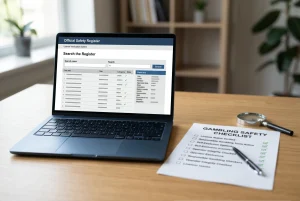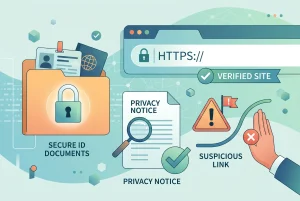
Casino payment options can differ in legality, deposit acceptance and conditions, so a cashier logo does not tell the whole story.
How Casino Payment Methods Differ at the Point of Deposit
A useful comparison of online casino payment methods starts with a basic distinction: a method can appear in a cashier without being suitable for every transaction. The relevant questions are whether it can legally fund gambling, whether the casino accepts it for deposits, and what conditions apply at the point of payment. A label or logo answers only the acceptance question, and sometimes only for the transaction being viewed.
Separate legality from availability
For the British market, the first filter is whether the proposed funding route can be used for gambling under the applicable rules. Remote operators serving customers in Great Britain must hold a UK Gambling Commission licence. UK-licensed casinos cannot accept credit cards for gambling, including where a money service business is used to route credit-card funds. A payment route that reaches the casino indirectly does not make the underlying funding source irrelevant.
Wallets require the same distinction. A wallet may be a separate service from the card or account used to fund it, but operators cannot accept wallet payments where that wallet allows credit-card funds to be used for gambling. The practical point is that the payment method’s name alone does not establish that the funding route is permitted. The source of the money and the way it reaches the gambling account matter.
This is not a ranking issue. A method cannot be called one of the best casino payment methods merely because it is familiar or displayed prominently. Its suitability depends first on whether its use for gambling is allowed, then on whether the operator’s terms permit that particular route.
Read the cashier as a set of conditions
The cashier is the operator’s transaction interface, not a complete comparison of a method’s terms. A listed option may be subject to conditions shown only after it is selected or during confirmation. The deposit amount, any stated charges, the currency used, and the payment instructions should therefore be read together before authorising a transaction.
Casino Bonuses: Free Spins and No-Wagering Offers
The same scrutiny applies to labels such as “bank,” “card” or “wallet”. They describe broad categories, not necessarily the exact route involved. A card-linked wallet and a wallet funded from a permitted source are not automatically equivalent for gambling purposes. Where the checkout does not make the route clear, its appearance in the cashier is not enough to resolve the question.
A comparison should also separate the casino’s conditions from those of the external payment service. The operator controls what it accepts in its cashier; the service may have its own terms for using the account or instrument. Neither set of terms should be treated as a substitute for the other.
Compare the transaction, not the category name
The phrase “casino payment methods” can obscure several different features. A sound comparison records the method’s legal eligibility, the casino’s stated acceptance, the transaction conditions visible before confirmation, and any terms that affect later use of the account. These are separate checks, rather than one general judgement about convenience.
Online casino with 500% bonus: how it works
The timing and cost of a deposit should not be assumed from the method category. If the operator states a processing condition or charge, it belongs in the comparison; if it does not, a general reputation attached to the method cannot establish what that casino will do. The same applies to transaction limits: the relevant terms are those of the operator and service for the specific account, not a figure inferred from a broad label.
A deposit is also distinct from a withdrawal. Acceptance for adding funds does not, by itself, establish what routes are available for taking money out or what conditions apply to a later transaction. Those details need to be checked separately in the casino’s terms. Treating deposit availability as proof of full payment compatibility turns a partial answer into a misleading one.
What “best” can reasonably mean
There is no single best online casino payment method for every account. A defensible comparison prioritises lawful funding, clear terms and a checkout that identifies the transaction before it is authorised. Cost, stated processing conditions and any account-specific restrictions can then be compared where the operator provides them.
Do
- Confirm the funding source is permitted for gambling
- Verify the casino accepts the specific payment route
- Review transaction conditions before authorising
Don’t
- Assume a familiar method or logo guarantees suitability
- Treat deposit availability as proof of withdrawal compatibility
- Rely on a method’s category name without checking terms
The order matters. A method with attractive terms is not a viable choice if its funding route is barred for gambling. A method that is legally eligible is not necessarily accepted by a particular casino. And a method shown at checkout is not necessarily free of conditions that appear elsewhere in the operator’s terms.
For online casino payments in the UK, the point-of-deposit decision is therefore a sequence: establish that the funding source is permitted, confirm that the casino accepts the route, and review the conditions attached to the transaction. That framework is more useful than a universal league table. It distinguishes what the rules allow from what an individual casino offers, without treating a payment logo as a guarantee of either.
Our top casino picks for the UK
- EvoSpinBonus: 125% up to €2500 + 125 Free Spins · Payout speed: 1-3 business days
- ZombillionBonus: Welcome Pack 250% up to £4000 + 200 FS · Payout speed: 1-3 business days
- ChanzeBonus: Slots Welcome Bonus #1 200% up to €500 · Payout speed: 1-3 business days
- BritsinoBonus: Welcome Package – Get your £2,200 + 2,000 FS · Payout speed: 1-3 business days
- JetsetspinsBonus: 200% Bonus + 100 Free Spins + Free Royal Wheel · Payout speed: 1-3 business days
- Revery PlayBonus: 100% up to€1,000+ 100 FS · Payout speed: 1-3 business days
- NightWinBonus: £900 + 400 free spins · Payout speed: 1-3 business days
- DieselwinBonus: Welcome Pack 250% up to £4000 + 200 FS · Payout speed: 1-3 business days
- BeOnBetBonus: 100% up to €500 + 100 FS · Payout speed: 1-3 business days
- AmunbetBonus: Join now and get 450% up to 2,700 GBP + 450 FS · Payout speed: 1-3 business days
Mobile Casino Payments and Account Controls
A mobile casino deposit involves two separate decisions: how the payment is authorised on the device, and what limits apply to the gambling account afterwards. A payment screen may be designed for a small display, but the underlying checks do not change. UK-licensed operators must verify a customer’s age before allowing a deposit, and they must prompt new customers to set a financial limit before the first one.
That sequence matters. A deposit should not be treated as the first point at which account controls become relevant. The limit prompt belongs before the first deposit, not after funds have reached the account. A mobile sign-up flow that moves directly from registration to payment without presenting this control would not meet the stated requirement for new customers.
UK online casino cashback bonuses: terms and value
Check the account before confirming a deposit
On a phone, payment steps may appear across several screens: account details, the chosen deposit method, an amount field and a final confirmation. The small format makes it easier to miss a selected option or overlook text below the main button. The useful check is therefore not whether the process looks simple, but whether the amount and the account conditions are clear before authorisation.
The amount entered on the payment screen is the amount being offered for transfer. It should be compared with the deposit figure shown at confirmation, particularly if the flow returns to an earlier screen or displays a summary. Repeatedly tapping a button because the screen has not visibly changed is not a sound way to resolve uncertainty; the account balance and transaction status should be checked first.
A mobile page can also obscure the distinction between a payment account and a casino account. A completed authorisation does not, by itself, explain how the casino records the deposit or whether the funds are available for play. The account balance and transaction history provide the relevant record. If the figures do not match, further deposits should not be used as a test.
Set a financial limit before funding the account
New customers must be prompted to set a financial limit before making their first deposit. UK remote operators must also provide accessible account-level limit controls. These are account safeguards, not optional extras that can be replaced by relying on a phone’s spending settings or a payment service’s controls.
Account-level limit controls are mandatory safeguards provided by UK-licensed operators and should be set before making a first deposit.
The distinction is practical. A device or payment account may help manage transactions generally, but it does not set the casino’s own account limit. The casino control applies within the gambling account. Its location and operation should be clear enough to use from the mobile site or app, including when the account is being viewed on a smaller screen.
A limit should be treated as a boundary for deposits or gambling-related spending according to the control presented by the operator. The exact scope depends on the account setting and its terms, so labels should be read rather than inferred from the position of a toggle. A control that appears to apply to deposits should not be assumed to cover every form of play, and a general account setting should not be assumed to govern a separate payment account.
Account controls are useful only if they remain accessible after registration. A limit buried in a desktop-only menu would be of little practical use to someone managing an account by phone. UK-licensed casinos must provide account-level limit controls that are accessible, so the mobile account area should make those controls available without requiring a new deposit or a call to customer support.
Keep the mobile payment process separate from play
A mobile payment casino may allow an account to be funded from a phone, but that does not make a deposit a routine extension of browsing. Each deposit changes the account balance and can affect the amount available to gamble. Keeping payment confirmation separate from game selection creates a clear point to review the figure before proceeding.
Newest Online Casinos with No-Deposit Bonuses
This is also why an online casino mobile payment should not be judged only by the number of taps. A short route can be convenient, but it still needs to show the amount, identify the account being funded and preserve the opportunity to use the required controls. Speed without a clear record is not a financial advantage.
The same principle applies when a payment is initiated through a mobile browser rather than an installed app. The account remains subject to the operator’s age checks and limit requirements. Switching between browser tabs or apps does not remove those responsibilities, and a payment approval on the phone does not replace the casino’s own account safeguards.
Before a mobile deposit, the relevant checks are straightforward: age verification has been completed; the required financial-limit prompt has appeared before the first deposit; the account-level controls remain accessible; and the amount shown for confirmation matches the amount intended. Those checks establish what the account is permitted to do and what sum is being transferred. The handset changes the interface, not the conditions under which a UK-licensed casino may accept the deposit.
Checking Which Casinos Accept a Named Payment Service
A casino’s general payment page is not proof that a particular deposit method is available to every UK customer. Availability is confirmed at the point where the account is set up and the cashier displays its current options. A logo elsewhere on the site, or a reference in a promotional page, may not reflect the methods available for that account.
E-wallets
Includes services like PayPal, Skrill, Neteller, and Boku.
Digital Wallets
Includes Apple Pay and Google Pay.
Prepaid Services
Includes ecoPayz, AstroPay, and Paysafecard.
This applies whether the method in question is PayPal, Apple Pay, Google Pay, Revolut, Skrill, Neteller, Paysafecard or Boku. It also applies to Visa and Mastercard debit cards. The names are not interchangeable: acceptance of one service does not establish acceptance of another, even when both might appear under a broad heading such as “e-wallets” or “cards”.
Check the cashier, not just the payment page
The practical check is to open the casino’s deposit area and look for the named service among the options available to the account. If registration is required first, the relevant list may only appear after the account has been created. The presence of an option is more useful than a general claim that the casino supports online payments.
The listed method should be checked against the instructions shown when it is selected. A casino may identify which account details are needed, whether the deposit is made on the casino site or through a separate payment page, and what steps must be completed before the transaction can proceed. If the service is absent from the cashier, it should not be treated as an available deposit method merely because another page mentions it.
Acceptance for deposits and acceptance for withdrawals are separate questions. A casino may show a service as a deposit option without presenting it as a withdrawal route. The cashier and the payment terms should be checked for both directions rather than assuming that money can be returned through the same channel.
Cascading Slots in the UK: How to Read the Rules
Compare the conditions attached to the method
The payment terms can clarify whether the named service is available to UK customers, whether account details must match, and whether there are conditions specific to deposits or withdrawals. Those terms matter alongside the cashier list: an option that appears on screen may still be subject to eligibility or account checks.
A search for casinos accepting debit cards should be read just as carefully. The card must be identified as a debit card, not assumed to be eligible because Visa or Mastercard branding appears. UK-licensed remote gambling operators cannot accept credit-card payments for gambling, including credit-card funds routed through a money service business. A wallet also cannot be used where it permits credit-card funds to be used for gambling. The payment route does not remove that restriction.
Treat acceptance as casino-specific
There is no sound basis for carrying an acceptance claim from one operator to another. PayPal at one casino does not establish PayPal at another; nor does a listing for Apple Pay, Google Pay, Revolut, Skrill, Neteller, Paysafecard or Boku prove that every UK casino offers it. Even a casino’s own options may differ from what is shown in an old article or a third-party comparison.
For a UK-facing casino, the wider eligibility question is whether the operator holds the relevant UK Gambling Commission licence. Remote operators serving Great Britain consumers must be licensed, regardless of where they are based. A payment service’s name is not evidence of the casino’s regulatory status.
A useful comparison records the exact casino, the method visible in its cashier, whether the terms describe it for deposits and withdrawals, and any conditions that could prevent use. That produces a checkable answer for the account in question, rather than a broad acceptance claim that may not apply.
Verifying Acceptance
Always confirm specific payment availability in the casino’s cashier rather than relying on general website claims.
Prepaid and Alternative Payment Services
ecoPayz, AstroPay and Paysafecard are separate services, not interchangeable labels for a single deposit method. A casino’s cashier may display one, several or none of them. Their presence in a general payment-method list does not establish that a particular UK casino currently accepts them; the relevant evidence is the deposit options shown by that operator.
The distinction matters because the service name alone does not tell the full cost or conditions of a deposit. Before choosing an option, the operator’s payment information should make clear what the route permits, whether the deposit can be used for gambling, and what the account terms say about processing or withdrawals. If those points are unclear, the method cannot be assessed as a complete transaction. A deposit is not useful simply because its label is familiar.
Paysafecard is often considered alongside prepaid options, while ecoPayz and AstroPay appear as named alternatives. That grouping is useful for comparing choices, but it does not prove that all three work in the same way or are accepted on the same sites. The operator’s own cashier and terms take precedence over broad descriptions of a service. A method shown in a third-party list may be unavailable at the point of deposit.
Online casino with 100% bonus: key terms
“Mobile payment” describes a route used through a mobile device, rather than a guarantee that a particular service is available. SMS-based payment is another distinct description. Neither phrase identifies an operator or confirms the applicable terms. For mobile-payment casinos, the useful check is whether the exact route appears in the licensed operator’s current cashier and whether its stated conditions fit the intended transaction. A search result or promotional label cannot substitute for that check.
The same caution applies to lists of common or alternative casino deposit methods. A list can describe the range of names in circulation, but it cannot establish current acceptance at an individual casino. Nor does the word “alternative” establish that a route is cheaper, quicker or easier to withdraw from; those conclusions require terms specific to the operator and service.
For UK play, the legal status of the casino is a separate condition from the deposit method. Remote operators serving the British market must hold the relevant UK Gambling Commission licence, wherever the operator is located. A payment logo does not establish that licence. Checking the operator’s status and the terms for the named service keeps two separate decisions separate: whether the casino is authorised for the market, and whether its deposit route is suitable.
PayPal and Paysafecard: Bonus Eligibility Is a Separate Check
A casino may accept a deposit through PayPal or Paysafecard without treating it as a qualifying deposit for a welcome bonus. Payment acceptance and offer eligibility are separate terms: the cashier determines whether a deposit can be made, while the promotion’s conditions determine whether that deposit triggers a reward.
Bonus Eligibility
Payment acceptance does not guarantee bonus eligibility; some promotions specifically exclude e-wallets or certain deposit methods.
A specialist review reports that welcome deals can be restricted to new customers, limited to one per household and exclude some deposit methods, including e-wallets. Those conditions should be treated as offer-specific, not as a rule applying to every casino or every promotion. PayPal’s availability at the cashier, for instance, does not establish that a PayPal deposit qualifies for a welcome bonus. The same check applies to Paysafecard.
The distinction matters before a deposit is made. If an offer excludes the selected method, the deposit may still reach the casino account but fail to activate the bonus. A later deposit through another method may not correct that result if the promotion requires a qualifying first deposit or has an opt-in condition. The controlling terms are the ones attached to the particular offer at the time of registration and deposit.
The useful checks are precise:
- Does the offer apply to new customers, and is there a household restriction?
- Does it name PayPal or Paysafecard as an excluded method, or define exclusions by category?
- Must the offer be selected or claimed before depositing?
- Does the qualifying deposit have to be made through a specified method?
PayPal should be checked against any wording about e-wallets and named exclusions. Paysafecard should be checked against the promotion’s own deposit-method conditions rather than assumed to qualify because the cashier lists it. If the terms use a broad category, the operator’s support team can clarify whether the chosen service falls within it; a clear written response is more useful than an inference from a payment logo.
Even when a deposit qualifies, the bonus has its own value calculation. The reward, qualifying deposit, game contribution, expiry and withdrawal conditions determine what it is worth. Great Britain’s licensing rules also cap wagering requirements on bonus funds at ten times the bonus amount. That ceiling does not make every offer valuable: eligibility, game restrictions and withdrawal terms still determine the practical result.
The decision is therefore not simply whether a casino supports PayPal or Paysafecard. It is whether the specific deposit method satisfies the specific welcome-bonus terms, with the conditions checked before the transaction.
Online Casino 600% Bonus: Cash Value and Terms
Boku and Revolut Payments
A casino’s name-check of Boku or Revolut is not enough to establish that either service can be used for a particular deposit. Availability is an operator decision, and the relevant information is the casino’s own current cashier and terms. A service appearing in a general list, an old review or a search result does not establish that it is available to every customer.
The useful check is specific: does the casino show Boku or Revolut as a deposit option when the account is ready to be funded, and do its terms explain any conditions attached to that option? The answer may depend on the operator’s current arrangements. No conclusion about processing time, fees or account eligibility can be drawn from the service name alone.
Boku and Revolut also should not be treated as interchangeable labels for a single payment route. Each is a separate service, so the casino’s stated terms need to be checked for the one under consideration. If the cashier does not display the named option, that is not evidence that another route bearing a similar name will work. Nor does an operator’s general statement about payment services settle whether a specific route is available.
Payment Verification
- Check if the specific service is listed in the cashier
- Confirm the service is available for your account type
- Verify if the method is supported for both deposits and withdrawals
- Read any terms specific to that payment route
The operator’s status matters independently of the deposit service. In Great Britain, a business taking real-money casino bets from customers must be licensed by the UK Gambling Commission, even if the business is based elsewhere. Online casino gambling is lawful in the UK through licensed operators; a payment brand does not confer a UK licence on the casino. A Boku or Revolut option therefore cannot substitute for checking who operates the site and whether it is authorised for the British market.
The practical record to keep is the casino’s name, the service shown in its cashier, and the terms presented for that deposit. If the option is absent or the conditions are unclear, the payment should not be treated as confirmed on the basis of an external claim. If the casino’s own information conflicts across pages, the discrepancy is material: the deposit decision depends on the terms that actually apply at checkout.
The same discipline applies to references to “Boku casinos” or “Revolut casinos”. Those phrases describe a hoped-for deposit route, not a verified feature of every operator using the label. Acceptance, conditions and lawful operation are separate questions, and each requires evidence from the casino itself.
Payment Options Must Exclude Credit Cards
Online casino deposit options in the UK are constrained by the funding source, not merely by the name displayed at checkout. Remote gambling operators cannot accept credit-card payments for gambling. The restriction also covers a credit card used to fund a money service business when the money is then routed to a gambling account. Adding an intermediary does not change the purpose of the payment.
Online Casino with a 200% Bonus: What to Check
That distinction matters when comparing casino deposit methods. A brand or service may offer several ways to add funds, but a route involving credit-card money cannot be used to gamble at a UK-licensed casino. A deposit option is therefore not suitable simply because it appears in a cashier or is familiar from other online purchases. Its funding rules must be compatible with the gambling restriction.
The practical comparison is between eligible options that the operator actually accepts, not between every option a service might provide. A debit-funded route and a credit-funded route are not interchangeable for this purpose. Nor does the presence of a money service business make a credit-funded transfer permissible. If the source is credit, the route remains excluded.
This is a more useful test than declaring one deposit method the best for all casino accounts. The right choice depends first on whether its funds can lawfully be used for gambling and whether the casino accepts that route. A Neteller deposit method, for instance, should be assessed on those conditions rather than assumed to be available or suitable everywhere. The service name alone does not establish what funding source is being used or whether the operator permits the transaction.
The rule applies to casino payment options across the UK market; it is not a preference that an individual operator can waive. Where a payment flow allows credit-card funds to reach gambling through a money service business, the restriction still applies. Operators must not accept that payment for gambling.
Credit Card Ban
UK-licensed operators are prohibited from accepting credit cards for gambling, including funds routed through money service businesses.
A sound comparison therefore starts with the source of the funds and the route they take. Only after those conditions are met does it make sense to compare the options a particular casino offers. This keeps the decision focused on a payment’s eligibility, rather than treating a familiar label as proof that the deposit can be used.
Apple Pay and Google Pay at UK Casinos
Apple Pay and Google Pay are digital wallets, but their names do not determine whether a casino deposit is permitted. The relevant issue is whether the wallet allows credit-card funds to be used for gambling. A UK-licensed casino cannot accept a wallet payment on that basis.
That restriction applies even when the deposit screen presents the transaction as an Apple Pay or Google Pay payment. A wallet does not turn a credit-card-funded gambling payment into an acceptable one simply by sitting between the card and the casino. The route matters as much as the label.
This makes the wallet’s funding setup material. If it can draw on a credit card for gambling, the operator cannot accept it for that purpose. The same rule applies whether the payment is started from a casino website or an app; the interface does not change the underlying funding source. A wallet that is not being used to route credit-card funds is not automatically barred by this specific restriction, but that does not establish that a particular casino accepts it.
Apple Pay and Google Pay therefore need two separate checks. First, the casino must support the wallet as a deposit method. Second, the payment must not use a credit-card route that the operator is prohibited from accepting. Passing one check does not settle the other.
Online Casino with 300% Bonus: Terms Explained
A failed or unavailable wallet option is not evidence that a casino can accept the same credit card through another route. Nor does describing a transaction as a wallet payment remove the restriction. For licensed operators, the rule concerns the use of credit-card funds for gambling, including when a money service business is involved; a wallet cannot be used as a workaround.
The distinction is between the payment interface and the funding source behind it. Apple Pay or Google Pay may appear as the interface, but the transaction still has to comply with the UK gambling payment rules. Any casino claiming that a wallet makes credit-card gambling acceptable is not describing an exception to the rule.
A UK casino deposit made through either wallet is only a viable option when the operator accepts that wallet and the payment does not use credit-card funds for gambling. The wallet brand alone establishes neither condition.
Trustly as a Casino Payment Search
A casino may be associated with Trustly in a search result, but that does not establish that the operator accepts it or is authorised to offer gambling in the UK. These are separate checks. A deposit method is an option presented by the casino; a UK Gambling Commission licence is a regulatory requirement for an operator serving the British market.
Trustly’s name should therefore be treated as a proposed deposit route, not as evidence of a casino’s status. Availability can be confirmed in the operator’s own cashier or payment information, where the method should be explicitly listed for casino deposits. If it is absent, a mention elsewhere does not confirm that it can be used on that account. The relevant terms should also be read for any conditions attached to deposits made through the method.
UKGC Licence Check
Before depositing, always verify the operator’s licence number on the UK Gambling Commission’s public register to ensure they are authorised to serve the British market.
That check does not replace the licence check. Online gambling in the UK is legal only through licensed and regulated sites, and remote operators selling into the British market must hold the relevant UK Gambling Commission licence. A casino’s branding, professional-looking cashier or use of a recognisable payment service cannot substitute for that authorisation.
For payment security, the important distinction is between the service named at checkout and the operator receiving the gambling deposit. The payment label does not, by itself, establish who holds the casino account, which company operates the site or whether that company is licensed. Those details should be consistent across the casino’s terms and its licence information. Where the operator’s identity or regulatory status is unclear, the deposit should not proceed.
The licence number should be checked against the UK Gambling Commission’s public register before depositing. The entry needs to correspond to the operator behind the casino, rather than merely to a similarly named company or payment service. This makes the check specific: it tests the legal entity responsible for the gambling operation, not the familiarity of a brand appearing in the payment flow.
A Trustly casino payment can therefore be assessed in two stages: confirm that the casino itself lists Trustly as an available deposit method, then verify that the operator holds a current UK licence. Neither check proves the other. A payment route may be presented without establishing regulatory status, while a licensed casino may not offer that particular route. The decision rests on the operator’s verified licence and the deposit options it actually displays.
What Happens Around a Casino Payment
An online casino deposit sits inside an account-checking process, not outside it. Before a gambling account can accept a deposit, the operator must verify the customer’s age. For a UK-licensed casino, that is a condition of allowing funds into the account, not a check that can be postponed until a withdrawal is requested.
Online Casino with 400% Bonus: Terms Explained
The operator’s licence is a separate check. A familiar casino name or a payment option displayed at the cashier does not establish that the site is authorised to serve UK customers. The UK Gambling Commission’s public register is the place to verify the operator’s licence number and confirm that it has a current licence. Remote gambling operators serving the British market must hold the relevant Commission licence, wherever the business is based.
That check gives the payment process a regulatory context: a deposit is being made to an account operated under a specific licence, with UKGC requirements applying to the licensee. It does not make every transaction automatically suitable for an individual’s circumstances, but it identifies which regulator’s framework governs the operator.
If a payment-related issue becomes a complaint, the licensed operator must provide an internal complaints process. The complaint should first be raised through that process, following the operator’s stated procedure and keeping the relevant account and transaction details. If the matter remains unresolved, UKGC licensees must provide access to an approved Alternative Dispute Resolution service. ADR is an independent route for eligible disputes; it is not a substitute for checking the licence before depositing.
The same licensing check matters when reviewing online casino deposit and withdrawal methods. A list of options describes what the site presents, while the UKGC register establishes whether the operator is licensed. Those are different pieces of information. The register does not confirm the terms of a particular account or guarantee that a specific transaction will be accepted.
A sound payment review therefore has three distinct checks: age verification before the first deposit, the operator’s licence on the public register, and a clear route from internal complaints to approved ADR if a dispute cannot be resolved. Each addresses a different point in the process.
How does a free daily spin differ from a free spin bonus?
Free daily spins typically reset every 24 hours, and their winnings are usually credited as bonus funds with wagering requirements. Free spin bonuses may instead be tied to a welcome offer or qualifying deposit and can have their own expiry and withdrawal conditions.
Do all games count toward bonus wagering?
No. Slots usually contribute 100%, while blackjack and roulette may contribute less or be excluded; live dealer games often contribute nothing.
What should I check before claiming UK free spins?
Check whether you are eligible, whether a qualifying deposit or stake and promo code are required, and which games count toward wagering. Also review the expiry period and any maximum withdrawal limit on winnings.