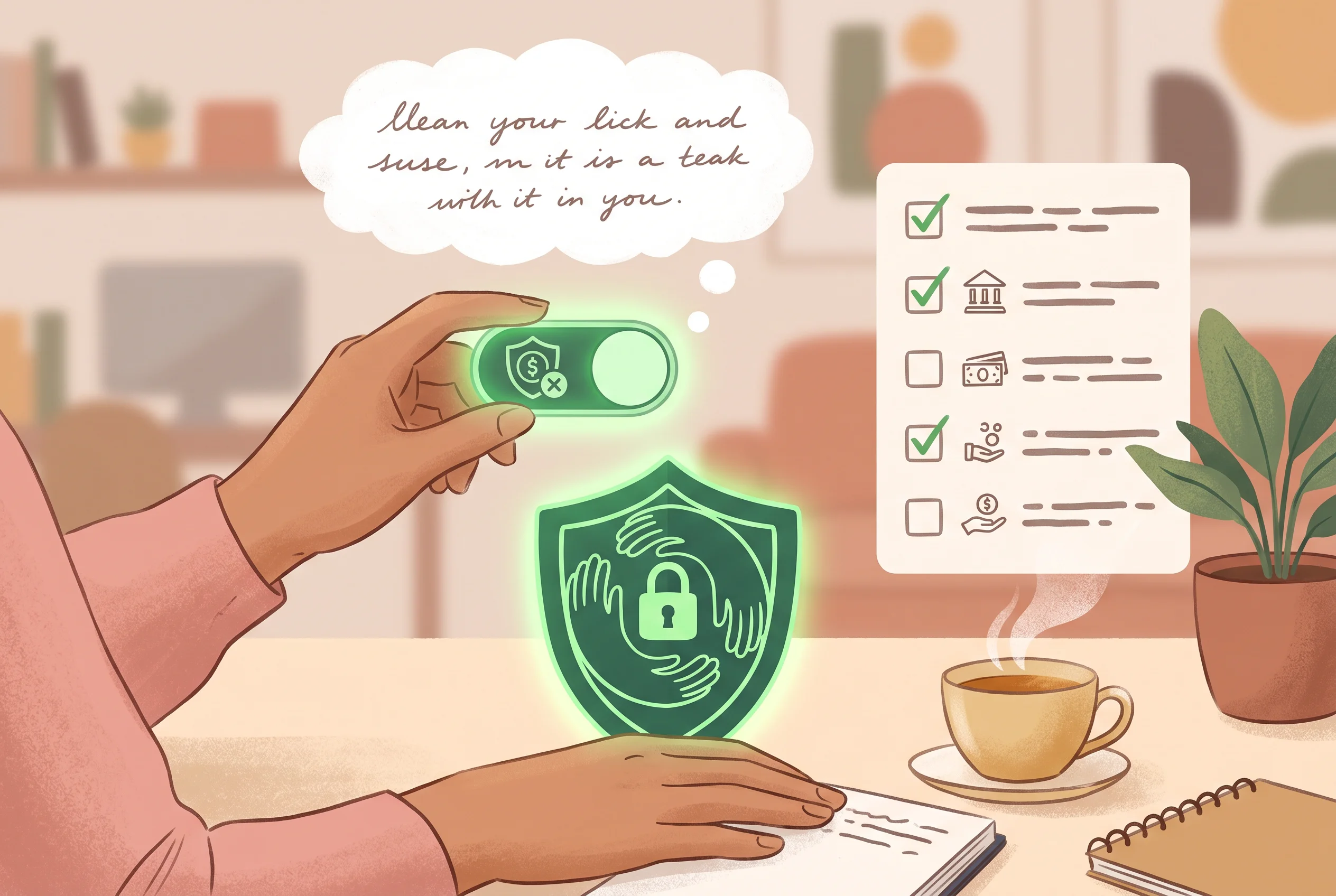

If you are reading about gambling sites outside GAMSTOP because a protection tool is already in place, treat that as important information, not as an obstacle to work around. Self-exclusion, bank gambling blocks and spending controls are designed to create space between a person and gambling access. Trying to defeat them can make a difficult situation worse.
This page is a practical support guide. It explains GAMSTOP, bank blocks and support routes in plain language without making medical, legal or financial promises. It does not list gambling sites, explain how to bypass controls or present gambling as a way to solve money stress.
Start with the purpose of the control
GAMSTOP is a self-exclusion system. Its purpose is protective: it helps people restrict access to online gambling companies in the Great Britain licensed context. A bank gambling block has a similar protective idea from a money-control angle: it can help stop transactions categorised as gambling. These tools are not moral judgments. They are practical barriers that create time, friction and distance.
That matters because the phrase “not on GAMSTOP” can be framed online as though it solves a problem. For a person who has self-excluded, the real problem may be the pressure to gamble despite a decision made earlier. In that situation, a site outside a protection system is not a safer alternative. It may be a sign to pause and look for support before money, documents or more account activity are involved.
If you are not self-excluded and are trying to understand a site’s trust signals, use the licence and safety checks page. If you are already worried about control, this page should come first.
Which protection route fits the situation?
| Situation | What it may mean | Practical next step |
|---|---|---|
| You are already self-excluded and looking for another site. | The urge to gamble may be pushing against a protection you chose earlier. | Do not treat outside access as a solution. Use official GAMSTOP account information and consider recognised support before acting. |
| You are worried about spending but have not set controls. | You may need friction before the next deposit, not more gambling options. | Consider bank gambling blocks, account limits where available, and a conversation with a support service or trusted person. |
| Your bank block stopped a payment. | The block may be doing the job it was set up to do. | Pause before changing settings. Read the bank’s own guidance and think about why the block was useful. |
| You are in a dispute with a gambling business. | Complaint handling and personal support may both be needed. | Keep records for the dispute, but avoid gambling again to “recover” the money. |
| Debt, rent, bills or family money are affected. | The gambling issue has moved beyond entertainment. | Use support routes and speak to someone sooner rather than trying to win back losses. |
GAMSTOP should not be treated as a barrier to defeat
A self-exclusion decision can be made at a calm moment and challenged later by an urge to gamble. That does not make the original decision wrong. It often means the protection is being tested at the exact moment it is needed. If a page, advert or message presents outside-GAMSTOP access as a clever shortcut, be cautious. That framing can encourage the behaviour the protection was meant to interrupt.
Use official GAMSTOP information for account and self-exclusion questions. Do not rely on strangers, operator marketing or affiliate pages for claims about how a self-exclusion applies. If you are unsure about your status, check the official route rather than creating a new gambling account in the hope that it will be different.
It can also help to remove immediate friction points: log out of gambling accounts, avoid browsing lists of sites, and move money out of easy spending reach where that is appropriate for you. These are not cures. They are small practical steps that reduce the chance of acting on a short-lived urge.
Bank gambling blocks and money controls
Bank gambling blocks can help stop transactions categorised as gambling. The details can vary by bank, so the safest wording is simple: read your bank’s own information in the app or official website, understand how the block works, and avoid turning it off during a strong urge to gamble. A block that feels inconvenient in the moment may be protecting rent, bills or savings.
Money controls can also include lower account limits, separate accounts for bills, asking a trusted person to help you create friction, or removing saved card details from gambling accounts. Do not share bank login details with anyone. If debt or missed bills are already involved, gambling more is not a money plan; it adds uncertainty to an already stressful situation.
If a disputed withdrawal is making you want to deposit again, separate the two issues. Use a written complaint route for the dispute and a protective route for spending. The page on complaints and ADR routes explains how to keep a dispute organised without using more gambling as leverage.
Recognised support resources
GamCare and GambleAware are recognised support resources for people affected by gambling harm and money stress. Use their official websites or trusted routes to check current contact options, opening hours and service boundaries. Do not rely on copied numbers, old screenshots or social-media comments for contact details.
Support does not have to begin with a dramatic statement. It can begin with a practical sentence: “I am trying not to gamble today,” “I have a bank block and I want to keep it on,” or “I am worried about deposits affecting bills.” A clear first sentence can make it easier to speak to a support worker, a trusted friend or a family member.
If you feel at immediate risk of harm, seek urgent local help through emergency or crisis routes available to you. This page cannot assess your personal situation, but it can point to one safe principle: when gambling pressure feels urgent, do not make the next decision alone.
A pause plan for the next hour
- Close the gambling page. Do not keep the deposit or registration page open while deciding.
- Move to a different task. Make food, shower, leave the room or step outside if safe to do so.
- Tell one person or support route what is happening. A short message is enough.
- Keep the block in place. Do not change a bank block or self-exclusion setting during the urge.
- Write down the money risk. Name the bill, account or person that would be affected by another deposit.
- Return to any complaint later. A dispute can be written more clearly when the pressure has passed.
This plan is deliberately simple. It is not treatment advice and it does not pretend that one hour solves everything. It creates time for the strongest urge to reduce and for another person or support route to become part of the decision.
What not to do when a protection is in place
- Do not look for instructions to bypass GAMSTOP, bank blocks or account controls.
- Do not use someone else’s identity, card or account.
- Do not upload documents to a site you have not checked.
- Do not treat a blocked payment as proof that you need a different payment method.
- Do not gamble to fix debt, bills, rent, family pressure or a previous loss.
- Do not stay alone with the decision if you feel unable to stop.
If you still want to understand money and account rules for a site, read them after the urge has reduced, not during it. The pages on payments and withdrawals and licence checks are useful only when they support safer decision-making, not when they are used to keep gambling against a protection.
Related pages: licence and safety checks, payments and withdrawals, and complaints and ADR routes.