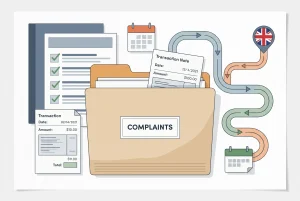
The operator’s licence and the regulator overseeing its gambling activity determine whether a casino is regulated for the British market.
What UK Regulation Covers—and What It Does Not
A UK-regulated online casino is one whose operator holds a licence from the UK Gambling Commission (UKGC) to serve the relevant British market. The defining point is the regulator responsible for the operator’s gambling activity, not the location of the company’s headquarters, the language of the website or the currency displayed. A company based abroad can fall within UKGC oversight when it holds the required UK licence; a British-facing website does not become UK-regulated merely because it is accessible from Britain.
The term describes a regulatory relationship. The UKGC is the authority overseeing the licensed operator, while the operator is the business providing gambling services. A casino brand may appear as the public-facing name, but the regulatory status attaches to the operator and its licensed activity. That distinction matters: a familiar name or a polished website is not, by itself, evidence of UKGC regulation.
A licence from another jurisdiction is a separate status. Online casinos operating outside UKGC oversight may hold licences issued elsewhere, including in Malta, Curaçao, Gibraltar or Anjouan. Those licences identify a different regulator and framework. They do not become UKGC licences because the same site can be viewed in the United Kingdom, nor does the word “licensed” alone specify which authority is responsible.
This is why “licensed and regulated” needs a jurisdiction attached to it. An operator can be licensed by a regulator outside the UK without being regulated by the UKGC. The two descriptions are not interchangeable: one identifies oversight by a named foreign authority, while the other refers specifically to the UK regulator. A non-UK-regulated casino, in this sense, is a site operating without UKGC oversight, even if it has a licence from another jurisdiction.
The distinction is not a ranking of websites by appearance or a synonym for whether a casino is genuine. It is a way to identify which regulator’s framework applies to the operator. The word “regulated” without the regulator’s name leaves out the information needed to understand the status being claimed. “Licensed in another jurisdiction” is more precise than treating every licence as though it carried the same scope.
Non-UK Registered Casinos: Regulation and Risks
The market labels can therefore describe different things. “UK-regulated” points to UKGC oversight; “licensed outside the UK” points to a licence issued by a non-UK authority. A site may fall into the second category without falling into the first. Calling it a non-UK-regulated casino communicates the absence of UKGC oversight, not necessarily the absence of every form of licensing.
The distinction also concerns the operator rather than the casino games themselves. A game’s presence on a website does not tell which regulator oversees the business offering it. Likewise, the country in which a company is established does not, on its own, settle whether its gambling operation is UK-regulated. The relevant classification is the operator’s relationship with the UKGC for the service in question.
“UK-regulated casino” means a casino service provided by an operator holding the relevant UKGC licence. “Non-UK-regulated casino” means a service without UKGC oversight; it may instead be associated with a licence from a jurisdiction such as Malta, Curaçao, Gibraltar or Anjouan. “Licensed outside the UK” describes the source of a licence, not an extension of UK regulation.
These labels should not be collapsed into a single idea of “licensed”. That word identifies a permission issued by some authority, but the authority itself determines which regulatory system the licence belongs to. For a comparison between UK-regulated online casinos and sites regulated elsewhere, the first question is therefore not simply whether a licence is mentioned. It is which regulator is responsible for the operator.
The Legal Position for British Players
The legal position separates two questions that are often treated as one: whether an operator may offer gambling to customers in Great Britain, and whether an individual player commits an offence by using a service licensed elsewhere. The Gambling Act 2005 is directed at the supply of gambling services into the British market. Its licensing obligation falls on operators, rather than making the player responsible for obtaining the operator’s licence.
A company that offers remote gambling to customers in Great Britain must hold a UK Gambling Commission licence, even if it is based abroad. A licence from another country does not replace that requirement. Where an overseas-licensed casino accepts British customers without UKGC authorisation, the operator is outside the rules that apply to licensed services serving this market. The commercial decision to take those customers does not transfer the operator’s licensing duty to them.
That distinction matters when describing non-UK-regulated casinos accepting UK players. The phrase can refer to sites that are available to British customers but do not hold a UKGC licence. It does not mean that the UK has approved their offer, or that an overseas licence gives them permission to operate in Great Britain. The legal concern is the operator’s provision of gambling services into the market.
The position of the player is different. UK legislation does not expressly make it an offence for a British citizen to use a gambling service licensed in another country. In addition, a person who gambles on a site that lacks a UK licence does not, on that basis alone, commit a criminal offence under UK law. This is a narrow statement about individual criminal liability; it does not turn an unlicensed service into a UK-authorised one.
It is therefore possible for two statements to be true at once: an operator may be in breach of the licensing requirement by supplying services into Great Britain without the relevant UKGC licence, while the customer using that site is not committing a criminal offence simply by placing bets there. Treating the operator’s obligation and the player’s liability as interchangeable produces the wrong answer to both questions.
Non-Gamban Casinos in the UK: What It Means
The wording also needs care around “legal”. Online gambling offered to customers in Great Britain is lawful through operators holding the required UKGC licence. A foreign licence, by itself, does not make an offshore service a legally authorised option for the British market. At the same time, the fact that the operator is not licensed locally does not establish that a British player has committed a crime merely by using the service. Regulatory status and player criminal liability are separate tests.
Searches for offshore casinos for UK players or non-GAMSTOP casinos for UK players often blur those tests into a single question about availability. A site being accessible, or being willing to register a British customer, does not establish that it is entitled to serve the market. Nor does the absence of a specific criminal offence for the player amount to official approval of the operator’s conduct.
The relevant legal distinction is consequently limited but important: the UK licensing regime places the duty on businesses supplying gambling into Great Britain, while the stated rules do not criminalise an individual merely for gambling on an unlicensed site. The player’s lack of criminal liability should not be mistaken for the operator’s permission to offer services without a UKGC licence.
Outside the UKGC and Outside GAMSTOP
UK Gambling Commission oversight and GamStop membership are separate matters. A casino operating outside the UKGC system is not automatically covered by the UK’s self-exclusion scheme. Casinos not on GamStop do not take part in that scheme, so a GamStop exclusion does not provide a reliable barrier to access at such a site.
Attention GamStop self-exclusion does not automatically apply to casinos operating outside the UKGC framework.
That distinction matters because self-exclusion works only where a gambling operator participates in the system. A site may describe itself as licensed elsewhere, but that does not establish that it checks GamStop or applies a UK exclusion request. The practical question is not just where the casino is licensed; it is whether the specific operator is part of the scheme. Without that participation, GamStop cannot provide the same account-level block there.
What changes when UK safeguards do not apply
UKGC-licensed operators must provide responsible-gambling tools required under the British regulatory framework. At a casino outside that framework, those mandatory UK protections are not assured. An operator may offer its own controls, but their presence, scope and operation depend on that operator rather than on UKGC requirements. A similar-looking setting is not necessarily equivalent to a tool governed by the UK system.
This creates a difference between having a control available and being protected by a common, enforceable scheme. A site might offer account limits or exclusion features under its own terms; that does not make those controls part of GamStop or establish that they follow UK standards. If a gambling account remains open outside the scheme, an exclusion registered through GamStop does not close it by itself.
The gap is relevant to the time after a decision to stop gambling, not only to account setup. With a participating operator, the self-exclusion system is designed to apply across its members. Outside it, the restriction does not carry over automatically. Each site’s own arrangements determine what happens to an account and whether an exclusion can be requested there.
Trusted UK Casino Checks: Licence and Terms
Consumer protection and personal data
Rules on responsible gambling and data protection can be less demanding at non-UK-regulated casinos than at operators licensed by the UKGC. That does not establish that every such site handles data poorly or lacks safeguards; it does mean that UK requirements should not be assumed to apply. Policies may be set under another jurisdiction’s framework and the operator’s own terms.
There is also a financial-services protection gap. Players using offshore casinos cannot take a dispute to the UK’s Financial Ombudsman Service, and they do not receive the UK-mandated responsible-gambling tools that apply to UKGC-licensed operators. The absence of those routes changes the available remedies and controls; it is not merely a difference in website presentation.
A casino may use familiar language about safer gambling, account limits or exclusion. Those labels alone do not confirm membership of GamStop, nor do they establish access to UK-mandated protections. The material distinction is whether the operator is within the UK regulatory system and, separately, whether it participates in the national exclusion scheme.
The practical protection gap
For a player who has self-excluded through GamStop, an external casino can remain accessible if it is not part of the scheme. That is the central limitation: the exclusion does not automatically follow the person across every gambling site. Any separate account restriction offered by an individual operator has to be assessed on its own terms.
Non-GamStop Curacao Casino Sites: UK Guide
The same separation applies to responsible-gambling controls and personal information. UKGC rules cannot be treated as a default standard at a casino regulated outside the UK. The site’s own policy may provide controls, but reliance on them means relying on that operator’s procedures rather than on UK requirements.
Accordingly, “outside the UKGC” and “outside GamStop” describe related but distinct protections. UKGC status concerns the regulatory framework; GamStop concerns participation in the self-exclusion scheme. Neither label alone establishes every feature of a site, but a casino outside both systems does not provide the UK scheme’s exclusion block or the mandatory tools attached to UKGC oversight.
Non-UK Casino Licences: What the Label Means
“Non-UK regulated” describes the jurisdiction whose regulator oversees a casino, not a separate category of licence with one shared set of rules. A site may hold a licence issued outside the UK, for example in Malta, Curaçao, Gibraltar or Anjouan. The label alone does not identify which regulator is responsible or what that licence permits.
The distinction matters because a licence is not a universal permission to serve customers everywhere. It records a regulatory relationship in a particular jurisdiction; it does not, by itself, establish that the operator is authorised to serve the British market. A casino can therefore hold a foreign licence and still lack permission to operate in the UK. The words “licensed” and “available to British customers” describe different things.
Online Casino No Registration UK: What It Means
Anjouan makes that limit explicit. An Anjouan licence does not authorise an operator to run a gambling service in the United Kingdom or in other markets listed as restricted. Its presence on a casino’s website is not evidence that the site has permission to target British customers. Nor does the fact that a site can be reached online change the scope of the licence.
This is why “non-UK-regulated casino” is a jurisdictional description, not a quality mark. It does not say that every site carrying the label has the same licence, that each licence covers the same activities, or that a regulator has approved access from Britain. The issuing authority and the markets covered by its rules remain material details.
A licence claim should be read narrowly: which authority issued it, which company holds it, and what operation does it cover? A logo or licence number displayed on a casino page does not answer all of those questions on its own. In particular, an Anjouan licence should not be treated as permission to operate in a restricted market simply because the operator holds it.
The practical meaning of the label is therefore limited but useful. It signals that the casino’s regulatory connection is outside the UK system. It does not settle whether the operator may lawfully serve customers in Britain, and it does not convert a foreign licence into UK authorisation. The licence’s jurisdiction and its territorial limits have to be considered separately.
Our top casino picks for the UK
- EvoSpinBonus: 125% up to €2500 + 125 Free Spins · Payout speed: 1-3 business days
- ZombillionBonus: Welcome Pack 250% up to £4000 + 200 FS · Payout speed: 1-3 business days
- ChanzeBonus: Slots Welcome Bonus #1 200% up to €500 · Payout speed: 1-3 business days
- BritsinoBonus: Welcome Package – Get your £2,200 + 2,000 FS · Payout speed: 1-3 business days
- JetsetspinsBonus: 200% Bonus + 100 Free Spins + Free Royal Wheel · Payout speed: 1-3 business days
- Revery PlayBonus: 100% up to€1,000+ 100 FS · Payout speed: 1-3 business days
- NightWinBonus: £900 + 400 free spins · Payout speed: 1-3 business days
- DieselwinBonus: Welcome Pack 250% up to £4000 + 200 FS · Payout speed: 1-3 business days
- BeOnBetBonus: 100% up to €500 + 100 FS · Payout speed: 1-3 business days
- AmunbetBonus: Join now and get 450% up to 2,700 GBP + 450 FS · Payout speed: 1-3 business days
How Offshore Sites Handle Payments and Withdrawals
Non UK based online casinos may list credit cards, e-wallets, bank transfers and cryptocurrencies as deposit options. Some transactions are routed through alternative processors, so the payment provider shown at checkout may not be the casino itself. The available methods and processing arrangements can differ between operators.
DO
- Read the payment and withdrawal clauses together.
- Check the required verification documents.
- Review the operator’s terms for withdrawal limits.
DON’T
- Assume deposit methods guarantee the same withdrawal route.
- Rely on published withdrawal estimates without checking terms.
- Ignore potential caps on payout amounts.
A deposit option is not a promise that withdrawals will return by the same route. The casino’s terms may set different methods for paying out, require a verified account first, or impose conditions tied to the original transaction. The practical amount available to withdraw can therefore depend on more than the balance displayed on screen. Before depositing, the payment and withdrawal clauses need to be read together.
Published withdrawal estimates are not consistent. Some accounts of Casinos not on GamStop put payouts at 24 hours to 5 business days, depending on the method. Other descriptions say a withdrawal at a non-UK-regulated casino can take three or four weeks, with no regulatory clock to enforce a shorter period. These are conflicting estimates, not a single dependable timetable. The payment method alone does not settle how long a particular operator will take.
The terms can also cap the amount paid out over a set period. A specialist review has reported daily, weekly or monthly withdrawal limits at some sites; where such a cap applies, a large win may be released in instalments rather than as one payment. The relevant figure, how the limit is calculated and when it resets belong in the withdrawal terms. Without those details, a displayed balance does not establish when the full sum will reach the account.
Verification creates a separate condition. Identity and payment checks can delay a payout if documents are outstanding or details do not match. A specialist review has also described cases where an operator requested notarised documents or a video call before releasing funds. Those are not routine steps that can be assumed at every site, but they show why an advertised processing estimate should be treated as conditional.
VPN-Friendly Casinos in the UK: Access and Risks
The amount received also depends on the terms attached to the transaction. Fees, currency conversion and minimum or maximum payment conditions may affect the final sum where the operator or processor applies them. Those terms should be distinguished from the withdrawal timetable: a payment can be approved promptly and still arrive as a different amount after applicable deductions.
For a casino not regulated by the UKGC, the useful comparison is therefore not simply which deposit buttons appear on the page. It is whether the withdrawal route is stated, what verification is required, whether payout caps apply, and how the operator describes processing time. A deposit method may be easy to use while the route back out remains conditional.
Crypto Casinos and Other Routes Around Payment Restrictions
Cryptocurrency changes the payment route, not the gambling operator’s regulatory status. A casino accepting digital assets is not regulated simply because it uses crypto. For customers in Great Britain, an operator offering real-money gambling must hold a UK Gambling Commission licence; a site without one remains outside the UKGC system, whatever payment methods it accepts.
The UK ban on credit-card-funded gambling concerns the source of funds. Crypto payments can bypass that restriction because the deposit is made using cryptocurrency rather than being charged to a credit card. That distinction does not turn an unlicensed casino into a UK-regulated casino, nor does it make the payment route equivalent to a UKGC licence. Payment method and operator authorisation are separate checks.
Casinos & Safety: UK Licensing and Player Checks
The label “crypto casino” therefore says little about who regulates the operator. The relevant regulator is the authority responsible for the casino’s gambling licence, if it holds one. The cryptocurrency itself does not supply a gambling licence or determine which complaint process applies. A site may accept crypto while operating outside UKGC oversight; the payment method does not alter that position.
Crypto also introduces a practical separation between the deposit asset and ordinary card payments. The amount committed is cryptocurrency, while the casino’s terms determine how deposits and any resulting balance are handled. A deposit method does not, by itself, establish that the same method will be available for a withdrawal.
Other less conventional routes have been reported, but availability is not established across the market. One specialist review has described deposits charged to a mobile phone bill or deducted from a prepaid balance at some offshore casinos. Those are reported examples, not a general feature of non-UK-regulated sites; an operator’s current payment terms determine whether either route is offered. A phone-bill charge or prepaid deduction is also distinct from a credit-card deposit, even if the balance ultimately comes from money held elsewhere.
For comparison, offshore casinos may use e-wallets, bank transfers, cards or alternative payment processors as well as cryptocurrency. That range does not establish that every method is available at every casino, or that a payment provider’s involvement places the gambling operator under UK regulation. The operator’s licence and the terms attached to the payment route remain separate matters. A crypto option can therefore explain how a deposit avoids the credit-card restriction, but it cannot answer who regulates the casino or what protections attach to the account.
Anjouan Licensing: Complaints, Audits and Player Funds
An Anjouan casino licence does not, by itself, establish how a site tests its games, protects balances or resolves disputes. The framework does not require licensees to commission independent random-number-generator testing or audits. Those checks may be presented by an individual operator, but they are not a condition imposed across the framework. A licence should therefore not be read as evidence that game outcomes have been independently verified.
The distinction matters because game fairness and financial protection are separate questions. Even evidence of testing would not show that customer balances are held apart from company funds. Anjouan’s rules do not require segregation of player funds, so the licence does not guarantee that money deposited by customers is ring-fenced if the operator fails.
In that event, players are unsecured creditors. Their claims do not have the protection that segregation would provide, and recovery depends on what remains available through the operator’s failure process. The practical value of a displayed balance is therefore conditional: it records what the account says is owed, but does not establish that matching funds have been reserved.
Complaint handling has a separate limit. The Anjouan authority does not take up player complaints, mediate between a customer and an operator, or issue decisions on the merits of an individual dispute. The authority’s role should not be mistaken for a route to recover a disputed balance or reverse an operator’s decision.
Warning Anjouan licences do not require independent audits or segregation of player funds.
Nor does an Anjouan casino licence provide an independent dispute-resolution service comparable to the UKGC-approved ADR arrangements. A casino may have its own internal complaints process, but that is not the same as an independent body reviewing the outcome. If a disagreement remains unresolved, the licence itself does not supply that missing escalation route.
These limits apply to the framework, not necessarily to every practice adopted by every operator. A casino may choose to publish audit material or describe fund-handling procedures; such statements need to be assessed on their own terms and do not change the licence requirements. The useful distinction is between an operator’s voluntary claims and obligations imposed by its regulator. On Anjouan, the licence does not mandate RNG testing, audits or segregated funds, and the authority does not adjudicate player complaints. That is a narrow regulatory floor, not a certification of each casino’s financial or technical practices.
When Slot Games Fall Under UKGC Rules
The presence of online slot games does not, by itself, show whether a site is regulated in Great Britain. The relevant point is who operates the service and which customers it serves. An operator serving customers in Great Britain must hold a UK Gambling Commission licence, even when its business is based elsewhere.
That makes the operator’s position more important than the game catalogue. A site may display familiar slot titles, or offer a large selection of them, but those details do not establish that the operator holds the required licence. Nor does the location of the company’s headquarters remove the licensing requirement when it serves customers in Great Britain.
So, when asking how online slot gambling is regulated, the practical distinction is between the game itself and the service through which it is offered. The presence of a slot on a site is not evidence of UKGC oversight. The relevant question is whether the operator serving Great Britain holds a UK Gambling Commission licence.
This also prevents a common category error: treating a game’s availability as proof that the service is authorised for the market. A slot can appear on a non-UK-regulated site; that does not make the site UKGC-licensed. Conversely, the operator’s location outside Great Britain does not exempt it from the licensing requirement if it serves customers there.
A useful assessment therefore starts with the operator, not with the titles or software shown on the page. Game names, graphics and a slot lobby describe what is offered; they do not establish the regulatory status of the business offering it. Regulation in this context follows the operator’s relationship with the Great Britain market.
The distinction matters because a catalogue can look much like that of a licensed service while the operator falls outside UKGC oversight. Similarity of games is not similarity of regulatory status. The licensing obligation attaches to operators serving customers in Great Britain, regardless of where they are based.
Checking a Casino Licence and Its Complaint Route
A licence claim is only useful if it can be tied to the company operating the casino. The casino’s name on its website may be a trading name, so the legal company name matters when comparing the claim with a regulator’s public register. For an Anjouan casino licence, check that the register entry, the company name and the licence expiry date correspond. A name that merely resembles the casino brand is not a match.
For a UKGC licence, look for the operator in the UK Gambling Commission’s public register and confirm that the listed company is the one named in the casino’s terms. A casino’s own “licensed” badge is not the same as an entry in the regulator’s register. If the company details or licence information do not line up, the claim has not been verified.
What verification does—and does not—establish
A matching Anjouan entry confirms a connection to that licensing framework; it does not make the casino UKGC-licensed or provide UK regulatory protections. An Anjouan licence does not authorise operation in the United Kingdom. Nor does a register match guarantee that a complaint will be independently reviewed or resolved in the player’s favour.
The complaint route should be checked separately from the licence. Under Anjouan’s framework, the operator must respond to a complaint within 30 calendar days. That is a deadline for the operator’s response, not a promise of a refund, a binding ruling or an independent appeal. Anjouan-licensed casinos do not offer an independent dispute-resolution route comparable to services approved by the UK Gambling Commission, and the Anjouan authority does not adjudicate player complaints.
This leaves a practical limit: if the operator’s answer is unsatisfactory, there is no equivalent independent escalation route under that framework. A UKGC register check cannot be used to fill that gap when the casino is licensed elsewhere. Players using a non-UK-regulated casino have no recourse to UK regulators over a dispute or a change to the operator’s terms.
The useful check is therefore two-part: establish which company holds the claimed licence, then identify who can handle a complaint if the operator does not resolve it. A licence entry answers the first question only. It does not convert an offshore casino into a UKGC-regulated service.
What a UKGC-Licensed Casino Is Required to Have
A casino regulated by the UK Gambling Commission must hold the relevant UKGC licence if its operator serves customers in Great Britain. The obligation applies regardless of where the company is based: operating from outside the country does not remove the requirement.
This makes the licence a matter of the service being offered, not the operator’s address. A company may be established overseas, but if it serves customers in Great Britain, its location does not replace the UKGC licence. The same principle applies whether the operator runs one casino brand or several.
A licence issued by another jurisdiction is not a substitute. Malta, Curaçao, Gibraltar or Anjouan licensing may describe the regulator responsible elsewhere; it does not establish that the operator holds a UK Gambling Commission licence. In other words, “licensed” and “licensed to serve customers in Great Britain” are separate statements. The regulator named in a site’s terms needs to be read in that context.
That distinction also clarifies the status of a non UK regulated casino. If it operates outside the UKGC system, it does not meet the licensing requirement that applies to operators serving Great Britain. Its overseas base or foreign licence does not change that position. A site’s use of British currency, or its availability to British customers, would not itself amount to UKGC authorisation.
The practical test is therefore specific: the relevant operator must hold a UK Gambling Commission licence for the service it provides to customers in Great Britain. A foreign licence answers a different question—whether a regulator elsewhere has issued permission under its own framework. It should not be presented as evidence of UKGC oversight.
This is the reference point for reading regulatory claims. The operator’s location and the jurisdiction named on its licence may explain where it is regulated, but neither changes the requirement attached to serving customers in Great Britain.
Is it legal for a UK player to gamble at an Anjouan-licensed casino?
UK law does not explicitly prohibit British players from using gambling services licensed abroad, and playing on an unlicensed site is not, by itself, a criminal offence. An Anjouan licence does not authorise the operator to serve customers in Great Britain without a UK Gambling Commission licence.
What happens if I have a dispute with an Anjouan-licensed casino as a UK player?
The Anjouan authority does not handle or adjudicate player complaints, and these casinos do not provide an independent dispute-resolution route comparable to UKGC-approved ADR. Under Anjouan’s framework, the operator must respond to a complaint within 30 calendar days.
Can I complain to the Anjouan regulator if a casino won’t pay me?
No. The Anjouan authority does not mediate or decide player complaints, and Anjouan-licensed casinos do not offer an independent dispute-resolution route comparable to UKGC-approved ADR.
Are non UK regulated casinos legal for UK players to use?
UK law does not explicitly prohibit British citizens from using gambling services licensed abroad, and using an unlicensed site is not, on that basis alone, a criminal offence. However, operators serving customers in Great Britain need a UK Gambling Commission licence; a foreign licence does not replace it.
Are sites that are not on GamStop legal for players in the UK to access?
UK law does not explicitly prohibit British players from using gambling services licensed abroad, and using an unlicensed site is not, by itself, a criminal offence. Not being on GamStop means the site is outside the UK Gambling Commission’s self-exclusion scheme; it does not establish that the operator is authorised to serve Great Britain.
Can UK players legally play at casinos licensed in Anjouan?
UK law does not explicitly prohibit British players from using gambling services licensed abroad, and playing on an unlicensed site is not, by itself, a criminal offence. An Anjouan licence does not authorise the operator to serve customers in Great Britain without a UK Gambling Commission licence.