See how deposit limits relate to bonus terms, payment methods, real-money play and the rules for withdrawing funds.
What a £10 Minimum Deposit Actually Buys
A £10 minimum deposit sits between the lowest entry points and higher cashier thresholds found at UK casinos. Some casinos accept deposits from £1, while a specialist review recorded direct-banking minimums of £5, £10 or £20 among the operators it examined. These figures describe different account-funding rules, not different amounts of money that can be won or withdrawn. The cashier minimum is simply the smallest deposit the operator will accept under the stated conditions.
That distinction matters when comparing a £10 minimum deposit casino with a site advertising a lower threshold. A lower figure may make it possible to open and fund an account with less cash, but it does not automatically make the site cheaper in every relevant sense. An operator can set one amount as the minimum to deposit and another as the minimum required to take part in a promotion. Those are separate terms, and the smaller number does not override the larger one.
A £10 minimum is therefore a boundary, not a measure of value. It tells how much must be paid into the account at the point of funding. It does not say that £10 is the recommended amount to deposit, that the account will receive an offer, or that every payment route has that same limit. Nor does it mean that the whole sum must be wagered in one go. Those are separate questions governed by the operator’s terms and the rules attached to the account.
£2 Minimum Deposit Casinos in the UK: What to Know
The lower end of the market is real but limited. A specialist review reported six UK Gambling Commission-licensed casinos with a genuine £1 cashier minimum at the time it checked. That figure is a snapshot from a review, not a permanent count of available operators. The useful distinction is between a low figure shown in a promotion or comparison and a cashier that actually permits an account deposit at that amount. A headline number only answers the question if it applies to the chosen account and payment route.
A £10 threshold can be easier to interpret than a £1 headline, but it still needs context. A specialist review of casinos accepting direct banking described £10 as the common minimum in its sample, while also identifying operators with £5 or £20 thresholds. That does not establish a universal UK rule. It shows why the operator’s own cashier terms matter: one site may accept less, another may require more, and the amount can vary between operators even when the payment method is the same.
The promotion threshold is a second calculation. A specialist review found welcome offers with qualifying deposits in the £5-to-£10 range. That means an account may accept a deposit below the amount required to trigger a particular offer. One reviewed set of terms also included bonuses requiring a £10 qualifying deposit even where the platform accepted £5 deposits. In that case, a £5 payment funds the account but does not meet the stated offer condition. The deposit itself has not failed; it simply does not qualify.
£5 Minimum Deposit Casinos in the UK: How They Work
This is why the label “£10 minimum deposit” should not be read as “£10 buys the advertised welcome offer”. The cashier minimum answers whether the payment can be accepted. The qualifying amount answers whether the promotion can be claimed. If the promotion requires a larger qualifying deposit, depositing only the cashier minimum may leave the account funded but outside the offer. If the conditions do not clearly state which amount applies, the promotional wording is not enough to settle the point.
The practical comparison is between three stated amounts: the cashier minimum, the minimum deposit for the promotion, and the amount the account holder actually intends to put at risk. Only the first two are set by the operator’s terms; the third is a personal spending decision. A headline that combines them obscures the arithmetic. A £10 cashier minimum is neither a bonus promise nor a spending target.
For UK customers, the operator must hold the relevant Gambling Commission licence to offer remote gambling legally. That regulatory requirement does not make deposit terms uniform: licensed casinos can still set different minimums and promotion conditions. The meaningful comparison is therefore not simply between a £10 site and a £1 site. It is between the amount required to fund each account and the separate conditions attached to any offer being considered.
Minimum Deposit £10
UKGC Licence Required Yes
Credit Card Deposits Prohibited
Age Requirement 18+
Online Deposits: The Cashier Minimum Is Only One Limit
A £10 minimum deposit is an account-funding condition, not a promise that every payment button will accept the same amount. At a given UK casino, the cashier minimum is often shared across the available methods. Some operators, however, set a higher threshold for direct banking than for debit cards or e-wallets. The figure on the casino’s general payments page may therefore be less useful than the minimum shown after a method is selected.
The distinction matters when the account accepts a £10 deposit in principle but the chosen route has its own floor. A card option may allow the stated amount while direct banking requires a larger transfer. In that case, the cashier is not contradicting itself: the operator has one general minimum and a method-specific restriction. The amount actually available to deposit is the higher of the two.
Visa and Mastercard debit cards are widely accepted by UK casinos and can support low deposit amounts. That does not mean every card transaction will be available at every amount. The operator’s cashier sets the accepted range, and a payment provider may apply its own checks. The amount typed into the deposit box is not confirmation that the payment has been approved; the transaction still has to pass through the selected route.
Direct banking can work differently from a card payment. Where the casino sets a higher minimum for that method, a £10 account threshold does not override it. The key detail is the minimum attached to the direct banking option itself, not the label used for the casino overall. If that option requires more than the intended deposit, another compliant route may be available, but its own displayed terms still apply.
£3 Minimum Deposit Casinos in the UK: Key Terms
The legal funding boundary is also relevant. Since the UK Gambling Commission’s credit-card gambling ban took effect in 2020, UK gambling deposits must come from debit cards, bank accounts or e-wallets funded by debit. A credit card is not an alternative when a debit transaction is declined. Nor does routing credit-card money through a wallet make it an acceptable source for gambling funds.
E-wallets can have a cashier minimum distinct from the wallet balance or transfer process. Some specialist reviews have recorded debit cards and certain e-wallets accepting transactions as low as £1, but that is not a guarantee for every casino or account. Operators may restrict a method at the lowest deposit level, and the cashier may show a different minimum once the method is chosen. A low figure associated with a payment service should not be treated as a universal casino rule.
This is why a £10 minimum deposit online casino can still present more than one relevant threshold. The account-level amount answers whether the casino accepts deposits at that level. The method-level amount answers whether the selected payment route can be used to send it. A transaction may also be subject to approval by the payment provider. These are separate checks, not alternative descriptions of one limit.
The cashier should be read as a sequence of conditions. First, select the payment method. Then check the minimum and maximum displayed for that route, enter an amount the form accepts, and review the confirmation before authorising the transaction. If the amount is rejected, the reason may be that it falls below the method’s floor rather than the casino’s general minimum. Changing the amount without checking the method can lead to a larger deposit than intended.
Do
- Check the minimum for your specific payment method
- Verify the operator holds a UK Gambling Commission licence
- Confirm the qualifying deposit for any promotion
Don’t
- Assume a £10 deposit always triggers a welcome offer
- Use a credit card for gambling deposits
- Rely on a headline number without checking the cashier
The amount credited is another point to verify. A payment can be declined or left uncompleted, so the value entered is not necessarily the value that reaches the casino balance. The confirmation screen should identify the transaction amount before authorisation. If it does not match the intended deposit, the payment should not be treated as settled merely because the cashier displayed a successful-looking step.
Minimum withdrawal figures are separate from deposit rules. Specialist reviews have reported minimum withdrawal thresholds ranging from £1 to £5 at some UK casinos, but those figures do not establish a rule for every operator. A payment method capable of sending a small deposit does not, by itself, establish the minimum amount that can be withdrawn through that method. Deposit and cash-out conditions need to be read independently; the account’s payment menu is not a single two-way limit.
For a £10 deposit, the practical check is therefore not simply whether the casino advertises a £10 minimum. It is whether the chosen method accepts that amount, whether the source of funds complies with UK rules, and whether the cashier confirms the transaction at the intended value. A higher direct banking minimum can make the advertised threshold unavailable on that route, while a card or e-wallet option may display a different one. The cashier minimum is the starting point; the selected payment method supplies the operative figure.
How a £10 Deposit Works from Deposit to Withdrawal
A £10 deposit is an amount transferred into a casino account, not a promise that the same sum will remain available throughout play or be withdrawable on demand. The balance changes as bets are placed and winnings are added. The cashier minimum governs whether the initial payment can be made; the rules for play and cash-out govern what happens afterwards. Those are separate parts of the account’s terms.
Before the first payment, the operator must verify that the customer is at least 18 and prompt them to set a financial limit. Once the account is eligible to deposit, the payment has to be accepted and credited before it can be used for real-money play. A payment-provider charge, where one applies, also affects the arithmetic: a flat charge of £1 to £3 would take that amount from the £10 available to fund play, unless the provider handles the charge separately. The displayed cashier amount alone does not establish how much playable balance will result.
£4 Minimum Deposit Casinos in the UK: What to Check
After crediting, the balance is exposed to the chosen stakes. A £10 balance does not require a particular bet size, and it does not turn every spin into a £10 bet. Many slots are available with stakes between 10p and 20p per spin, so the amount committed to an individual spin can be a small part of the account balance. The balance can also fall quickly or rise through winnings; neither outcome is determined by the deposit amount. The relevant figures are the stake selected and the balance remaining after each round.
This distinction matters when checking a session’s remaining funds. A deposit is a starting balance, not a spending target. A player may stop while some of it remains, or the balance may be exhausted before a withdrawal is possible. If winnings are added, the account balance can exceed the original deposit; if losses reduce it, the remaining cash may be less than the operator’s minimum withdrawal amount. A £10 payment therefore says nothing by itself about the eventual cash-out sum.
Withdrawal rules introduce a separate threshold. A specialist review has reported minimum withdrawal requirements in the £10-to-£20 range at many UK casinos, but that is a report about particular operators, not a fixed rule for every account. The operator’s own cashier and withdrawal terms determine the applicable amount. If the balance is below that threshold, the request may not be available yet. If the balance meets it, that only addresses the minimum amount; it does not establish that every other condition for a withdrawal has been satisfied.
For example, a £10 deposit that remains as a £10 cash balance could meet an operator’s £10 withdrawal floor, but it would fall short of a £20 floor. This comparison assumes that the full balance remains available and that no other account condition prevents withdrawal. If play has reduced the balance, the original deposit cannot be treated as money still held in reserve. If play has increased it, the amount available to request depends on the balance shown and the operator’s rules, not on the amount first deposited.
No Minimum Deposit Casino UK: What £1 Really Gets
The movement of funds is best read as a sequence: the payment is accepted, the account balance is credited, bets reduce that balance or winnings increase it, and a withdrawal request is made against the resulting amount. The cashier minimum applies at the first step. The withdrawal floor applies at the last. They may happen to be the same figure, but one does not set the other. A casino advertising a £10 minimum deposit has not thereby promised that £10 can be withdrawn immediately.
The account balance may also include funds subject to conditions rather than unrestricted cash. In that case, the balance label alone does not establish what can be withdrawn. The relevant account and transaction terms should identify whether the funds are available for cash-out and whether any conditions remain. This is a question of how the balance is classified, not of whether the initial deposit met the cashier minimum.
For a £10 minimum deposit casino in the UK, the practical calculation is therefore not simply “deposit £10, withdraw £10”. It is: how much is credited after any transaction charge, what portion is staked, what balance remains, and what minimum the operator applies to withdrawal requests. Each figure belongs to a different point in the account’s life. Treating them as interchangeable makes a small deposit look more predictable than it is.
Assessing a £10 Casino: Terms Matter More Than the Label
A £10 cashier minimum is a funding condition, not a measure of value. It says how much must be deposited to open the account balance; it does not establish that a promotion is available, that winnings can be withdrawn immediately, or that the site’s other terms suit the intended use. A “best” £10 minimum deposit casino cannot be identified from that figure alone.
The first comparison is between the deposit threshold and the route out. A specialist review reported minimum withdrawal thresholds of £10 to £20 at many UK casinos. That is a time-sensitive report, not a fixed market rule, so the operator’s current cashier and withdrawal terms matter more than a general figure. If the withdrawal floor is higher than the balance likely to remain after play, the funds may not be cashable yet. If it matches the original deposit, that still does not mean the deposit is guaranteed to be returned: game results can change the balance, and withdrawal checks and conditions still apply.
Since 19 January 2026, UK rules cap wagering requirements on bonus funds at 10 times the bonus amount.
A £10 minimum can therefore be less restrictive than it appears, or more restrictive. The deposit may be affordable, while the withdrawal threshold makes a small remaining balance awkward to access. The useful comparison is not simply “£10 versus another casino’s minimum”; it is the amount required to fund the account alongside the conditions attached to withdrawing the resulting balance.
Promotions need a separate reading. Some casinos exclude their lowest deposit bracket from welcome offers, according to a specialist review. A cashier that accepts £10 may therefore accept the payment without treating it as a qualifying deposit. The promotion’s terms determine eligibility, not the number displayed beside the deposit button. The bonus itself also has a cost in play: wagering conditions, game restrictions and any cap on withdrawals can reduce the practical value of an advertised offer. Since 19 January 2026, UK rules cap wagering requirements on bonus funds at 10 times the bonus amount. The applicable terms should be clear before opting in; a headline bonus is not a substitute for that calculation.
A specialist review has also reported Zodiac, Luxury Casino and UK Casino Club as having a £10 minimum on UK accounts and no sign-up bonus. That is a snapshot, not a promise that their current cashier settings or account terms remain unchanged. It does, however, illustrate why a £10 threshold should not be treated as evidence of a promotional offer. A casino without a sign-up bonus may still be suitable for someone who does not want one; the relevant question is whether the ordinary deposit, play and withdrawal conditions are acceptable.
Online Casinos with No Sister Sites in the UK
“Safe” and “trusted” are separate questions from price. For British customers, a legal online casino must hold a current UK Gambling Commission operating licence. That establishes a regulatory baseline, not a guarantee that every term will suit every account. A licence does not make a withdrawal floor disappear or turn an ineligible deposit into a qualifying one.
A practical assessment can be made by recording the cashier minimum, the qualifying deposit stated in any promotion, the withdrawal threshold, and the restrictions on bonus play and cash-out. Any mismatch should be treated as a real cost or condition, not as small print that the £10 label somehow cancels. If the account is being opened without a promotion, the comparison is simpler: assess the ordinary withdrawal rules and account terms, and disregard bonus advertising that does not apply.
A £10 Deposit and Casino Bonuses: Check the Qualifying Amount
A £10 cashier minimum tells how much is needed to put money into an account. It does not, by itself, establish that the deposit qualifies for a welcome bonus. The promotion has its own qualifying-deposit condition, which may set a minimum amount or exclude particular deposits. A £10 payment therefore triggers an offer only when it meets the terms attached to that offer.
The arithmetic starts with the bonus, not the deposit. If a promotion awards bonus funds, its wagering requirement is calculated against those funds; the deposit is not automatically added to the wagering base. The terms may also restrict which games contribute and set a cap on withdrawals from bonus play. Those conditions determine how much of the advertised offer can become withdrawable, so the bonus headline is not the final value.
Understanding Wagering Requirements
If a promotion awards bonus funds, its wagering requirement is calculated against those funds. The deposit is not automatically added to the wagering base. Terms may also restrict which games contribute and set a cap on withdrawals from bonus play.
Older published bonus terms and reviews have cited wagering requirements between 30 and 65 times the bonus value. That range should not be treated as the rule for a current UK offer: from 19 January 2026, the UK Gambling Commission’s limit means bonus wagering cannot exceed 10 times the bonus funds. The applicable terms still need to be checked, because a lower requirement can apply. A requirement of 10 times the bonus means the required play is calculated from the bonus amount, not from the original deposit.
Payment method does not change that calculation at a UK-licensed casino. Direct banking deposits can qualify for welcome offers on the same basis as card or e-wallet deposits, and the promotion’s terms are the same regardless of which of those methods funded the account. Wagering, game restrictions and any maximum withdrawal cap attach to the bonus, rather than to the payment route.
A no-deposit bonus is a separate promotion: its name does not mean that a £10 deposit is required, nor does a £10 cashier minimum prove that the offer is available. The relevant conditions are whether the account is eligible, what must be completed before winnings can be withdrawn, and whether the promotion has a withdrawal cap. If a deposit is required to unlock a bonus, the qualifying amount—not merely the cashier minimum—decides whether the offer activates.
For a £10 deposit, the clean comparison is between the required qualifying deposit and the bonus terms. If the qualifying threshold is higher than £10, the deposit funds the account but does not trigger the promotion. If it qualifies, the bonus’s wagering base and restrictions determine the work attached to the offer. The deposit amount is only the entry condition; it is not a measure of the bonus’s cash value.
Anjouan Casino Licence in the UK: Legal Limits
Our top casino picks for the UK
- EvoSpinBonus: 125% up to €2500 + 125 Free Spins · Payout speed: 1-3 business days
- ZombillionBonus: Welcome Pack 250% up to £4000 + 200 FS · Payout speed: 1-3 business days
- ChanzeBonus: Slots Welcome Bonus #1 200% up to €500 · Payout speed: 1-3 business days
- BritsinoBonus: Welcome Package – Get your £2,200 + 2,000 FS · Payout speed: 1-3 business days
- JetsetspinsBonus: 200% Bonus + 100 Free Spins + Free Royal Wheel · Payout speed: 1-3 business days
- Revery PlayBonus: 100% up to€1,000+ 100 FS · Payout speed: 1-3 business days
- NightWinBonus: £900 + 400 free spins · Payout speed: 1-3 business days
- DieselwinBonus: Welcome Pack 250% up to £4000 + 200 FS · Payout speed: 1-3 business days
- BeOnBetBonus: 100% up to €500 + 100 FS · Payout speed: 1-3 business days
- AmunbetBonus: Join now and get 450% up to 2,700 GBP + 450 FS · Payout speed: 1-3 business days
Not on Gamstop: Verify the Operator Before Depositing
A £10 minimum deposit does not establish that a casino is authorised to serve customers in Britain. Nor does a claim that a site is “not on Gamstop” tell anything reliable about its legal status. The key check is whether the operator holds a current UK Gambling Commission licence for remote gambling. Operators selling into the British market must hold the relevant licence, wherever they are based.
This distinction matters when considering a £10 minimum deposit casino not on Gamstop. A site outside the UKGC system does not provide the same regulated route for complaints and dispute resolution as a UK-licensed operator. UKGC licensees must have an internal complaints process and access to an approved Alternative Dispute Resolution service. A site’s own assurances are not a substitute for checking the regulator’s register and confirming that the licence covers the gambling business being used.
Searches for a £10 minimum deposit casino in the UK not on Gamstop can also blur two separate questions: whether an operator is licensed, and whether a person is registered with a self-exclusion service. Absence from Gamstop should not be treated as proof of safety or as a reason to bypass an existing exclusion. If gambling has been excluded as a protective measure, opening another account can remove a barrier intended to prevent further play.
SMS payment language does not change the verification test. A mobile casino advertising payment by text and a £10 minimum remains subject to the same requirement if it offers real-money gambling to customers in Britain: the operator must hold a UK Gambling Commission licence. A payment option or a low cashier minimum cannot establish that requirement.
Verification Required
Always verify that an operator holds a current UK Gambling Commission licence before depositing funds. A site’s own assurances are not a substitute for the official regulator’s register.
Age is another threshold, not an optional account detail. UK players must be at least 18, and a legitimate operator must verify age before allowing deposits. Before any money is paid, the licence, the operator’s identity and the route for complaints should be clear. If those details cannot be matched to the UKGC’s records, a £10 entry point is not evidence that the site is suitable for British players.
Choosing a £10 Deposit Method Without Adding Fees
A £10 cashier minimum does not guarantee that £10 will reach the casino balance. The payment route can affect the amount credited through transaction charges, voucher denominations or the amount required to complete a payment.
Visa and Mastercard debit cards are accepted by a broad range of UK casinos and support low-value deposits. Direct banking is another option, while an e-wallet can be used only when its gambling funds come from a debit card or bank account. Credit cards are not permitted for gambling deposits, including when routed through a payment service.
The fee deserves a separate check from the cashier minimum. A specialist review has reported flat transaction charges of £1 to £3 from some payment providers. If a charge applies to a £10 payment, the cost of making the deposit rises; if it is deducted from the payment itself, less may reach the account. The payment screen and provider terms should establish which applies before the transaction is confirmed. A method with no visible charge is not necessarily fee-free if the bank or provider applies its own charge.
Paysafecard uses fixed voucher values of £5, £10, £25, £50 and £100. A single voucher can be used across several smaller deposits, so its printed value need not be committed all at once. But a £10 cashier minimum still has to be met for the individual deposit, and the voucher balance must cover it. The denomination sets the amount paid for the voucher, not the casino’s acceptance rules.
For a £10 minimum deposit casino in the UK, the practical comparison is therefore the final credited amount, not just the payment button’s label. Check that the chosen method is available on the account, that its funding source is permitted, and that any fee is clear before confirming. Set a financial limit before the first deposit; that makes the planned £10 a defined spending amount rather than an open-ended starting point.
Real-Money Play: Stakes, Spin Rules and Limits
A £10 balance is the amount available for cash play, not a recommended stake per spin or a promise of a set number of turns. Many slots allow stakes from £0.10 to £0.20 per spin, so the balance can be used in small increments. Each losing spin reduces the cash remaining; a win may add to it, but does not change the amount originally deposited.
Online slots in Britain have rules that affect how that balance is used. A spin must last at least 2.5 seconds, and autoplay is banned. The maximum stake for a slot game cycle is £5 for customers aged 25 and over. For customers aged 18 to 24, the cap is £2. These are ceilings, not target stakes: a lower permitted stake can make a small balance last longer, though it cannot prevent losses.
Cash play should be kept separate from bonus wagering. A deposit made with cash remains real-money funding; accepting a promotion can place some or all play under additional conditions. Bonus terms may restrict eligible games and stakes. While wagering bonus funds, a bet must not exceed £5 per spin. A cash balance and a bonus balance therefore cannot always be treated as one unrestricted pot.
A £10 starting amount also says nothing about how long play will continue. That depends on the stake selected, results, and whether winnings are retained or played again. Setting a financial limit before the first deposit gives the account a defined spending boundary; the operator must also provide account-level limit controls. Age verification is required before deposits are allowed, and online gambling in the UK is for people aged 18 or over at sites holding a UK Gambling Commission licence.
The useful comparison is between the chosen stake and the cash set aside, not between the deposit label and an imagined playing time. A minimum deposit is an account-entry condition. It does not make any particular stake affordable or guarantee a lasting session.
PayPal and the £10 Minimum: Check the Funding Route
A £10 minimum deposit at a UK casino does not make every PayPal payment eligible. The amount is one condition; the source of the money in the wallet is another. UK rules prohibit credit-card gambling deposits, including payments routed through a money service business. E-wallet funds used for gambling must therefore come from a debit card or another permitted source, such as a bank account.
A wallet that allows credit-card funds to be used for gambling cannot be used for a casino deposit. This is a restriction on the funding route, not a special PayPal fee or a different version of the casino’s £10 cashier minimum. A transaction can meet the stated amount and still be unsuitable if its underlying funds came from a prohibited credit source.
The practical check is the payment chain: identify how the PayPal balance was funded, then confirm that the casino accepts PayPal for deposits. The casino’s cashier may show the minimum for that method, but it does not replace the funding-source rule. If the wallet contains funds from mixed sources, the relevant issue remains whether credit-card funds can be used for gambling through that wallet.
For a £10 PayPal deposit, the amount should be available through a compliant debit-funded wallet route. A credit card linked to the wallet does not become an acceptable gambling payment simply because PayPal appears between the card and the casino. The UK’s credit-card gambling ban has applied since 2020; routing a payment through an e-wallet does not remove it.
PayPal availability and a £10 cashier minimum answer separate questions. The first concerns whether the casino offers that payment option; the second concerns the amount it accepts. Neither overrides the requirement that gambling funds come from an allowed source.
How to Check Whether a £10 Casino Is Legitimate
A £10 cashier minimum says nothing about whether a casino is authorised to serve customers in Great Britain. The operator must hold a current operating licence from the UK Gambling Commission. Its name should be checked against the Commission’s register; a logo or licence number displayed on a website is not proof by itself. Offshore status does not replace the required UK licence.
Age and account checks should happen before money can be deposited. UK players must be at least 18, and a site that accepts a deposit before verifying age is not following the required safeguard. Registration should also make the operator’s identity and account controls clear, rather than treating payment access as the only step that matters.
A licensed operator must prompt new customers to set a financial limit before the first deposit and provide accessible controls for managing account limits. If that prompt is absent, or the limit controls cannot be found, the site is failing a basic protection expected of a UK-licensed casino.
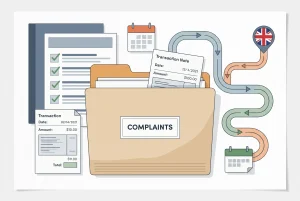
The terms should identify how to raise a complaint internally and provide access to an approved Alternative Dispute Resolution service. These routes matter if an account or payment dispute cannot be resolved directly.
Taken together, the checks are straightforward: confirm the operator’s current UK Gambling Commission licence, confirm age verification occurs before deposit, and confirm limit-setting and complaint routes are available. A low cashier minimum is only a price of entry; legitimacy depends on the operator meeting these requirements.